Why People Have Different Tax Bills
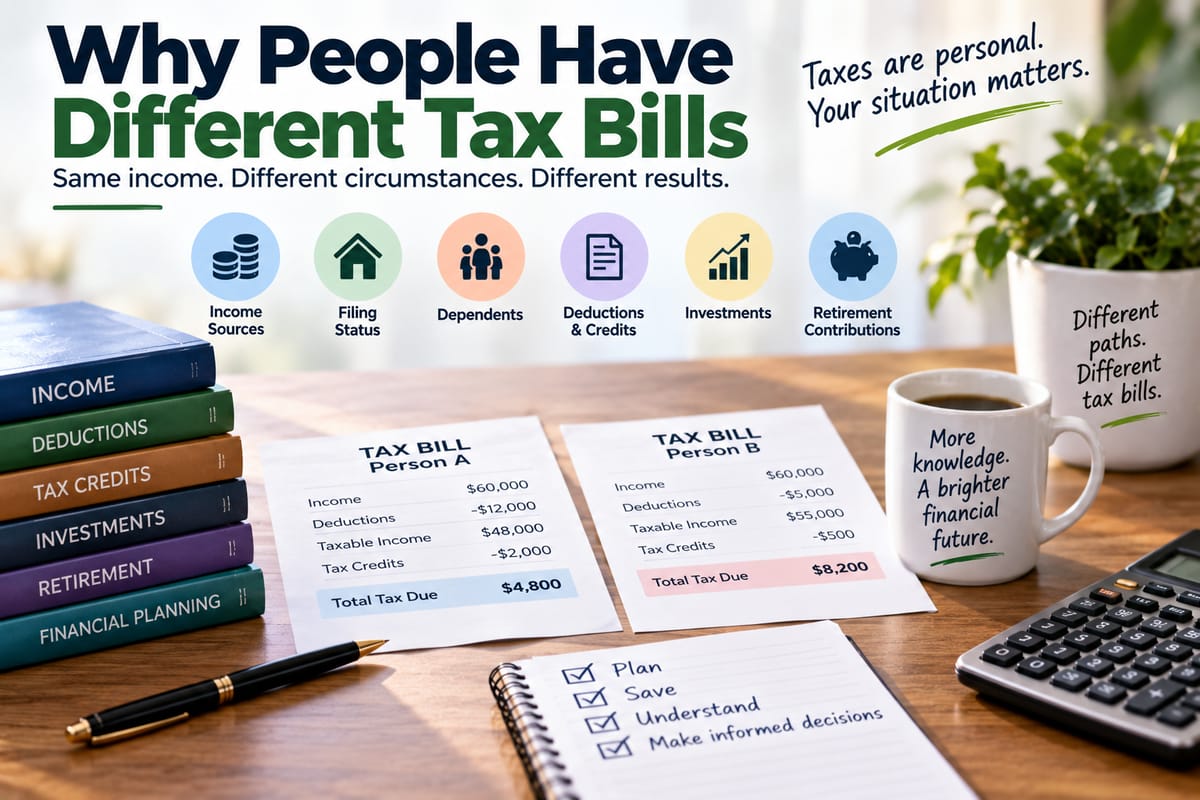
Two people can earn similar amounts of money and still end up with very different tax bills. Even people with the same salary may owe different amounts because taxes depend on more than income alone.
Filing status, taxable income, deductions, credits, types of income, retirement contributions, dependents, and other financial circumstances can all affect the final amount. Understanding these differences makes tax bills easier to interpret and can help households make more informed financial decisions throughout the year.
For a broader overview, the complete guide to personal taxes and tax planning explains how the major pieces of the individual tax system fit together.
Gross Income Is Only the Starting Point
When people compare tax bills, they often begin with gross income. Gross income is important, but it is not necessarily the amount on which the final tax liability is calculated.
A person’s total income may include wages, salaries, business income, investment income, interest, dividends, rental income, retirement distributions, and other sources. Some forms of income may receive different tax treatment.
After determining income, various adjustments, deductions, exemptions where applicable, and other rules can affect how much becomes taxable.
This distinction is one reason two households with similar earnings can have different tax liabilities.
Taxable Income Can Differ From Total Income
Taxable income is generally the amount used to determine income tax after applicable adjustments and deductions have been taken into account.
For example, two workers might each earn $80,000 during a year. One may have circumstances that reduce taxable income, while the other may have fewer deductions or adjustments.
As a result, their taxable incomes may not be identical even though their gross earnings are.
The complete guide to income taxes and taxable income provides a more detailed look at how income becomes taxable and why the distinction matters.
Filing Status Can Change the Calculation
Filing status is another important factor.
Depending on a person’s circumstances, different filing statuses may be available. These statuses can affect tax brackets, standard deductions, eligibility for certain credits, and other parts of the tax calculation.
For example, a married couple filing jointly is generally evaluated under a different tax structure from a single taxpayer. A qualifying taxpayer who files as head of household may also face different thresholds and deductions than someone filing as single.
Consequently, comparing tax bills without considering filing status can produce misleading conclusions.
Tax Brackets Do Not Mean All Income Is Taxed at One Rate
A common misunderstanding is that moving into a higher tax bracket means all of a person’s income is suddenly taxed at that higher rate.
Under a progressive income tax system, different portions of taxable income can be taxed at different rates.
For instance, if a taxpayer moves into a higher marginal bracket, only the portion of taxable income that falls within that bracket is generally subject to the higher marginal rate.
Understanding how tax brackets and marginal rates work can make it much easier to understand why earning additional income does not necessarily cause the entire tax bill to rise at the highest applicable rate.
Tax Credits Can Reduce What Someone Owes
Tax deductions and tax credits affect tax bills in different ways.
A deduction generally reduces the amount of income subject to tax. A credit, by contrast, generally reduces the amount of tax calculated.
This difference can be significant.
Two taxpayers with similar taxable incomes could qualify for different credits because of differences in their households, education expenses, dependents, or other qualifying circumstances.
Some credits may also be refundable or partially refundable under applicable rules, which can affect whether a taxpayer receives money back even after the tax liability has been reduced to zero.
Dependents Can Affect Tax Situations
Families may have tax circumstances that differ considerably from those of households without dependents.
Depending on applicable requirements, having qualifying children or other dependents can affect eligibility for certain tax benefits. Child-related credits and other provisions may change the amount a household ultimately owes.
However, simply having a child does not automatically produce the same tax result for every household. Eligibility can depend on factors such as income, age, residency, relationship, and other requirements.
This is another reason that household circumstances matter when comparing tax bills.
Retirement Contributions Can Change Taxable Income
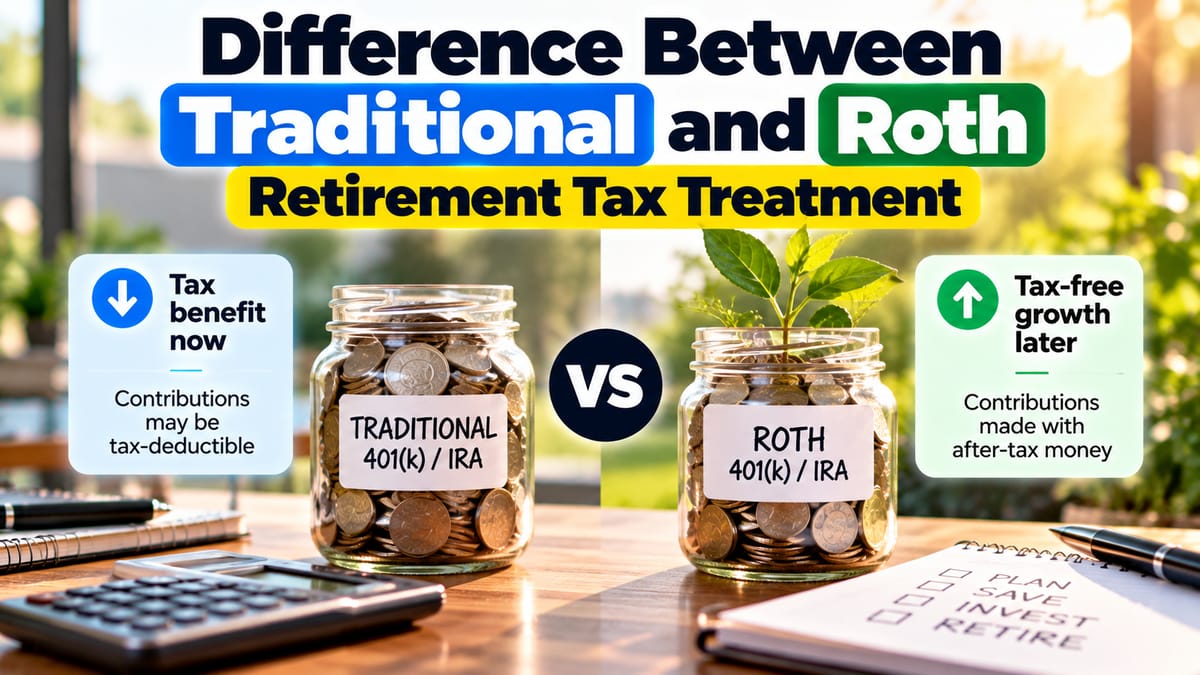
Certain retirement contributions can affect the amount of income subject to current taxation, depending on the type of account and applicable rules.
For example, contributions to certain traditional retirement arrangements may provide a tax benefit in the year they are made, subject to eligibility and contribution rules.
Other retirement accounts can have different tax treatment, with contributions and withdrawals handled under separate rules.
Because retirement saving and taxation are closely connected, the decision about where and how much to save can affect both current and future tax situations.
Different Types of Income Can Receive Different Treatment
Not all income necessarily receives identical tax treatment.
Wages, interest, dividends, capital gains, business income, and retirement distributions can be subject to different rules. Some investment income may have different rates or additional tax considerations depending on the taxpayer’s circumstances.
This means two people with the same total income can potentially have different tax liabilities if their income comes from different sources.
Someone whose income consists primarily of wages may have a different tax situation from another person who receives a combination of wages, investment income, and business income.
Withholding Is Not the Same as Tax Liability
Another reason people are sometimes surprised by their tax bills is confusion between tax withholding and actual tax liability.
Employers generally withhold money from employees’ paychecks throughout the year and send those amounts toward their tax obligations. The amount withheld is an estimate or payment toward the eventual liability rather than the final tax calculation itself.
At tax filing time, the taxpayer’s actual liability is compared with amounts already paid through withholding and other payments.
If too much was paid, the taxpayer may receive a refund. If too little was paid, additional tax may be due.
A large refund therefore does not necessarily mean someone paid less tax overall. It may simply mean more money was withheld during the year than was ultimately required.
Life Changes Can Alter Tax Bills
Major changes in a person’s life can affect taxes even when their income changes very little.
Marriage, divorce, having a child, buying a home, starting a business, changing jobs, retiring, or receiving investment income can all create new tax considerations.
For example, someone who becomes self-employed may have to consider business income, deductible expenses, estimated payments, and self-employment taxes. Someone who retires may have income from several different sources with different tax characteristics.
These changes can make one year’s tax return look very different from the previous year’s return.
Deductions Can Produce Different Results
Deductions are another major reason tax bills vary.
Taxpayers may use a standard deduction or, when eligible and beneficial, itemize qualifying deductions. The appropriate choice depends on individual circumstances.
Potential deductible expenses and adjustments can vary depending on factors such as homeownership, charitable contributions, certain medical expenses, business activities, and other qualifying circumstances.
The important point is that a taxpayer’s income alone does not tell the entire story.
Tax Planning Can Influence Financial Decisions
Taxes are also connected to decisions people make throughout the year.
Someone deciding whether to contribute to a retirement account, sell an investment, start a business, change compensation arrangements, or make a major purchase may need to consider potential tax consequences.
This does not mean a person should make every financial decision solely to reduce taxes. A transaction that produces a tax benefit may still be inappropriate financially if it does not fit the person’s broader goals.
Understanding how tax rates affect financial decisions can help put taxes into the larger context of saving, investing, spending, and long-term planning.
Why Refunds Can Be Misleading
Tax refunds are often viewed as a simple measure of how much someone paid in taxes, but that is not necessarily the case.
A refund generally represents the return of excess payments made during the year after the final tax liability has been calculated.
Consider two taxpayers with identical final tax liabilities. One may receive a large refund because substantial amounts were withheld from each paycheck. The other may receive a small refund because withholding was closer to the actual liability.
Their refunds are different, but their underlying tax liabilities could be the same.
Looking at the total tax liability, effective tax rate, withholding, credits, and taxable income provides a more complete picture.
Effective Tax Rate Helps Put the Bill in Context
The effective tax rate is another useful way to understand tax differences.
It represents the overall tax burden relative to the relevant income amount. Because progressive tax systems apply different rates to different portions of taxable income, the effective rate can be lower than a taxpayer’s highest marginal rate.
For example, someone may have a marginal rate associated with their highest taxable-income bracket while paying a lower percentage of total taxable income in federal income tax.
This distinction helps explain why statements such as “I’m in the 24% bracket” do not necessarily mean 24% of every dollar earned goes to federal income tax.
State and Local Taxes Can Also Matter
Federal income tax is only one part of the tax picture for many households.
State and local governments may impose their own income, sales, property, or other taxes. Rules differ substantially between jurisdictions.
Two people with identical federal taxable incomes can therefore face different overall tax burdens if they live in different states or local areas.
Housing costs can also influence the broader tax picture. Property taxes, for example, may be a significant household expense even though they are separate from federal income tax.
The Same Income Does Not Always Produce the Same Tax Result
The biggest lesson is that income is only one part of a person’s tax situation.
Two people can earn the same amount while having different:
- Filing statuses
- Taxable incomes
- Deductions
- Tax credits
- Dependents
- Retirement contributions
- Types of income
- Investment gains and losses
- Business expenses
- State and local tax obligations
- Tax withholding amounts
Each factor can change the final calculation.
Understanding the Difference Between Tax Rates and Tax Bills
A tax rate is only one component of a tax calculation. The final bill depends on how that rate interacts with taxable income, deductions, credits, filing status, and other applicable rules.
This is why comparing two people’s tax bills based solely on salary can be misleading.
A better approach is to look at the complete tax picture: how much income was earned, what portion became taxable, which rates applied, what deductions and credits were available, how much was already paid, and what other tax obligations existed.
Once those pieces are understood, differences in tax bills become much easier to explain—and tax planning becomes less about guessing and more about understanding how financial choices interact with the tax system.