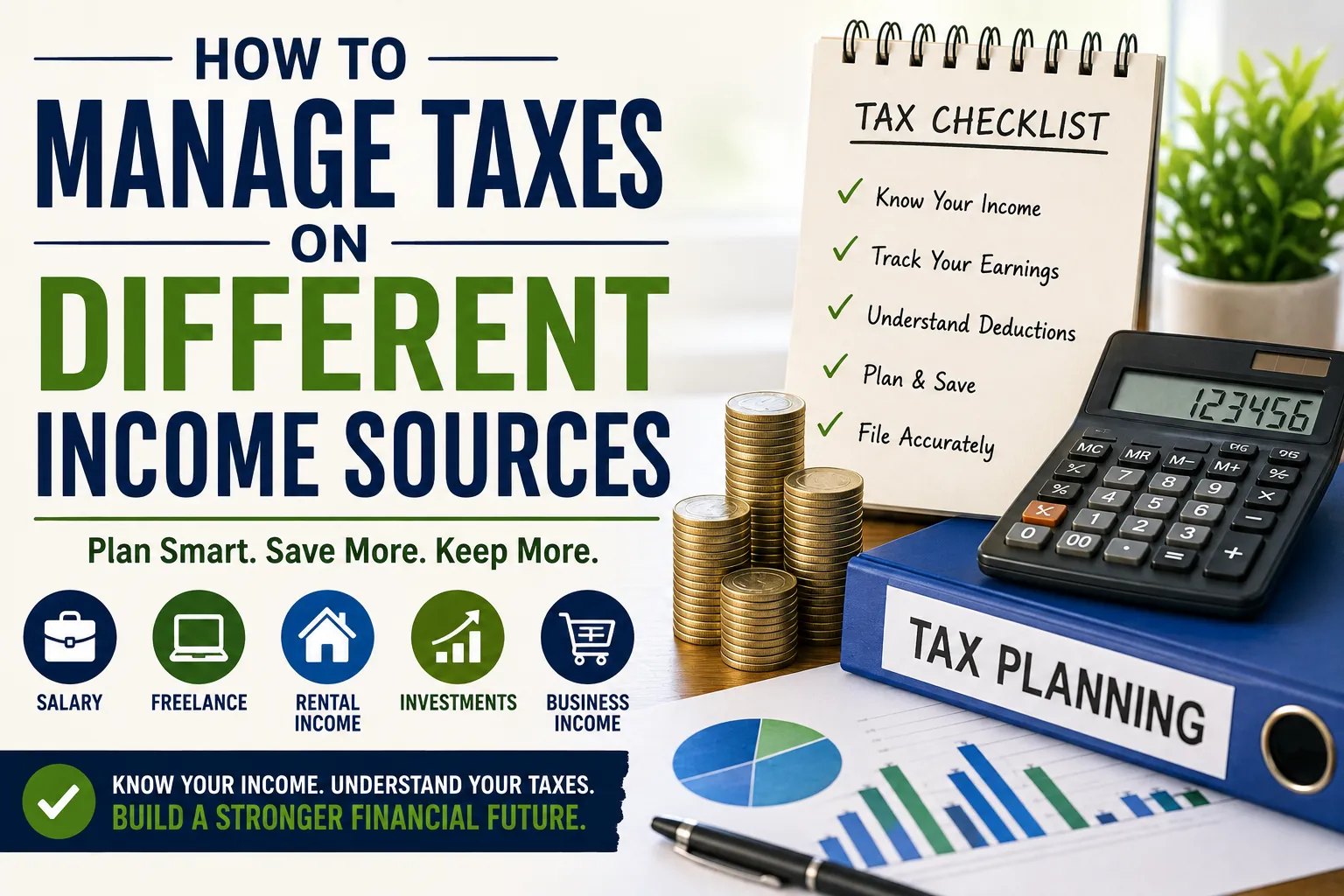
How to Manage Taxes on Different Income Sources
Having multiple income sources can be a major financial advantage. A salary can provide stability, while freelance work, business income, investments, rental property or digital activities can create additional opportunities to build wealth.
But multiple income streams can also make tax planning considerably more complicated.
Different types of income may be subject to different tax rules, withholding requirements, deductions, reporting obligations and payment schedules. In some cases, tax may already have been deducted before you receive the money. In others, you may be responsible for setting aside money and paying the tax yourself.
The exact rules depend on the country where you live, your tax residency, the nature of the income and the applicable tax laws. For example, the U.S. Internal Revenue Service recognizes wages, self-employment income, interest, dividends, capital gains, rents, royalties and other categories as potentially taxable income, while Kenya’s Kenya Revenue Authority similarly identifies employment, business, rental, dividend, interest, pension and digital-marketplace income among taxable income categories.
The most effective approach is not to wait until tax season and try to reconstruct everything at once. Instead, treat each income source as part of a larger financial system throughout the year. For a broader overview of how these different elements fit together, see the complete guide to personal taxes and tax planning.
Why Multiple Income Sources Make Taxes More Complicated
Someone who receives only employment income may have taxes deducted automatically from their paycheck.
Once additional income streams enter the picture, the situation can change.
You might receive:
- Employment income
- Freelance or consulting income
- Business profits
- Rental income
- Interest
- Dividends
- Capital gains
- Royalties
- Digital-platform income
- Pension or retirement income
Some of these sources may have tax withheld before payment. Others may not.
That creates a common problem: earning more money without realizing how much tax has actually been set aside.
The result can be an unexpected tax bill when the return is filed.
For a deeper explanation of how different forms of earnings can enter the tax system, see the complete guide to income taxes and taxable income.
Start by Identifying Every Income Source
The first step in effective tax management is knowing exactly where your money comes from.
Create a list of all income sources and update it whenever your circumstances change.
A simple table can help:
| Income source | Example | Tax may be handled through |
|---|---|---|
| Employment | Salary or wages | Employer withholding/PAYE |
| Freelancing | Consulting or creative work | Self-managed payments or withholding |
| Business | Business profits | Business/individual tax system |
| Rental | Property income | Withholding or tax return |
| Interest | Savings or investments | Withholding or tax return |
| Dividends | Company distributions | Withholding and/or tax return |
| Capital gains | Sale of investments/property | Tax return or applicable capital-gains system |
| Royalties | Intellectual property income | Withholding or tax return |
| Digital income | Online platforms/content | Applicable income-tax rules |
The categories and treatment vary by jurisdiction, but the basic exercise is useful almost everywhere.
Employment Income Is Often the Easiest to Track
For employees, tax is often collected through payroll withholding.
In the U.S., for example, employers generally withhold taxes from wages, while Kenya’s PAYE system requires employers to deduct employment taxes and remit them to the Kenya Revenue Authority.
That can make employment income relatively straightforward.
However, having tax deducted from your salary does not necessarily mean your overall tax obligations are fully covered.
If you also earn freelance income, investment income or rental income, the amount withheld from your salary may not account for those additional earnings.
This is one reason people with multiple income sources should periodically review their total tax position rather than looking only at payroll deductions.
Freelance and Side-Hustle Income Requires Extra Planning
Freelancing has become a significant source of income for many people.
You might earn money from:
- Graphic design
- Writing
- Programming
- Consulting
- Photography
- Marketing
- Tutoring
- Repairs
- Delivery services
- Online sales
- Content creation
Tax authorities generally do not treat income as tax-free simply because it is called a “side hustle.”
For example, the IRS specifically identifies freelance, independent-contractor and gig income as potentially taxable. It also notes that self-employed individuals may need to make estimated tax payments rather than relying on employer withholding.
The key habit is simple:
Do not spend all of your side-hustle revenue as though it were take-home pay.
Set aside an appropriate amount for taxes as the income arrives.
Separate Business Revenue From Business Profit
One of the most important concepts for self-employed people is the difference between revenue and profit.
Suppose your freelance business earns $40,000 during the year.
You might have legitimate business expenses of $10,000.
Your taxable business income may be based on the applicable rules for your jurisdiction and the allowable treatment of those expenses—not simply the $40,000 in gross receipts.
However, you should never assume that every expense is automatically deductible.
Tax rules determine which costs qualify, how they must be documented and whether limitations apply.
This makes accurate bookkeeping particularly important for anyone operating a business.
For more context on how deductions and credits can affect the amount of tax ultimately owed, see the complete guide to tax deductions and credits.
Keep Business and Personal Money Separate
If you operate a side business, consider maintaining separate financial records and, where practical, separate accounts.
This can make it easier to identify:
- Business revenue
- Business expenses
- Tax payments
- Owner withdrawals
- Savings
- Refunds
- Customer payments
Mixing personal and business transactions can make tax preparation unnecessarily difficult.
A separate account is not a substitute for proper accounting, but it can significantly improve organization.
Rental Income Needs Its Own System
Rental property can create a valuable income stream, but it also comes with its own tax considerations.
Depending on the jurisdiction and type of property, rental income may be subject to specific tax regimes.
In Kenya, for example, the KRA provides a specific framework for residential rental income, including a Monthly Rental Income regime for qualifying taxpayers.
In the U.S., rental income and expenses are generally addressed under specific tax rules as well.
Because rental taxation varies significantly between countries, property owners should determine which regime applies before calculating their expected tax liability.
Track Rental Expenses Carefully
Depending on local rules, potentially relevant rental expenses can include items such as:
- Property management
- Repairs
- Maintenance
- Insurance
- Property-related taxes
- Interest
- Utilities paid by the landlord
- Professional services
Not every expense will necessarily qualify for a deduction, and some costs may have to be treated differently for tax purposes.
Keep receipts, invoices, contracts and payment records.
Good documentation can be just as important as the income itself.
Interest Income Can Be Easy to Forget
Interest earned from:
- Savings accounts
- Fixed deposits
- Bonds
- Other interest-bearing investments
may be taxable depending on your jurisdiction and the specific financial product.
This income is particularly easy to overlook because you may not think of a few small interest payments as significant.
But multiple accounts can add up over a year.
The IRS, for example, identifies interest as a potentially taxable income category and notes that certain income not subject to withholding may require estimated tax payments.
Keep records of interest earned rather than waiting until filing season to search through bank statements.
Dividends Can Have Different Tax Treatment
Dividends are another common source of investment income.
The tax treatment can depend on factors such as:
- Where the company is located
- Where you are tax resident
- Whether the dividend is domestic or foreign
- Whether withholding tax applies
- Whether the dividend qualifies for a special tax rate
- Whether additional taxes apply
In Kenya, KRA provides specific withholding rules for dividends, with rates varying according to circumstances.
The important lesson is not to assume that the amount deposited into your account is necessarily the final amount you owe.
Tax may already have been withheld, but additional reporting or tax liability may still apply depending on the rules.
Capital Gains Are Different From Ordinary Income
Capital gains generally arise when you sell an asset for more than its relevant tax basis or acquisition cost.
Potential examples include:
- Shares
- Investment property
- Business assets
- Other investments
The calculation is often more complicated than simply looking at the sale price.
You may need to consider:
Sale proceeds − allowable costs/basis = taxable gain
The precise calculation depends on the asset and applicable law.
Some jurisdictions tax capital gains differently from ordinary employment or business income.
Others have exemptions, thresholds, holding-period rules or special rates.
This is an area where professional tax advice can be particularly valuable when large amounts are involved.
For a closer look at investment income, gains, losses and related tax considerations, see the guide to how investment income and capital gains are taxed.
Keep Investment Records From the Beginning
Do not wait until you sell an investment to start looking for purchase records.
Keep documentation showing:
- Purchase price
- Purchase date
- Transaction fees
- Sale price
- Sale date
- Dividends received
- Tax withheld
- Corporate actions
- Relevant exchange rates for foreign investments
Good records make future calculations much easier.
They can also help demonstrate how you arrived at the figures reported on your tax return.
Digital Income Is Still Income
The growth of online work has created many new ways to earn money.
You might generate income through:
- YouTube
- Blogging
- Affiliate marketing
- Online courses
- Freelancing platforms
- Digital products
- Social-media sponsorships
- E-commerce
- Online marketplaces
- App development
- Digital advertising
The fact that money arrives through a digital platform does not automatically make it exempt from taxation.
The IRS specifically includes various forms of gig and online-platform activity among potentially taxable income.
Kenya’s KRA also identifies income from digital marketplaces among categories subject to income tax.
Keep records of both gross payments and expenses associated with generating that income.
Understand the Difference Between Withholding and Your Final Tax Bill
One of the most important tax concepts for people with multiple income sources is withholding.
Withholding is money taken from a payment before you receive it and sent to the tax authority on your behalf.
Your final tax liability is the amount you actually owe under the tax system after considering taxable income, deductions, credits, withholding and other applicable factors.
These are not necessarily the same thing.
For example, you might receive a salary after tax has been withheld but have additional freelance income for which nothing was withheld.
Your employer’s withholding may therefore cover only part of your total liability.
Don’t Assume “Tax Already Deducted” Means You’re Finished
Imagine you earn:
- $50,000 from employment
- $15,000 from freelance work
- $5,000 in interest
Your employer may have withheld tax from the $50,000 salary.
But the additional $20,000 may have received little or no withholding.
Depending on the applicable tax system, deductions and other circumstances, you could still owe additional tax.
This is why total annual income matters more than simply looking at tax deductions from your main paycheck.
Create a Tax Reserve for Variable Income
One practical strategy is to create a separate savings account for taxes related to income that does not have sufficient withholding.
Whenever you receive freelance, business, rental or other variable income, transfer a portion into that account.
For example:
Client payment: $2,000
Instead of treating the entire $2,000 as spendable money, you might immediately move an estimated tax reserve into a separate account.
The exact percentage should be based on your circumstances and local tax rules rather than a universal rule.
The purpose is simply to prevent tax money from becoming mixed with everyday spending.
Use Conservative Estimates
Tax planning involves uncertainty.
Your income may change.
Your deductions may change.
Tax laws may change.
Investment gains may be higher or lower than expected.
For that reason, avoid assuming that a single optimistic estimate is guaranteed.
If you’re self-employed or have variable income, review your expected tax position periodically and adjust your reserve accordingly.
In the U.S., for example, estimated tax payments are designed for income that is not sufficiently covered by withholding, including self-employment, interest, dividends, rent and capital gains.
Keep a Running Income Statement
A simple spreadsheet can help you stay organized.
You could create columns for:
| Date | Income Source | Gross Income | Tax Withheld | Expenses | Net Income | Tax Reserve |
|---|---|---|---|---|---|---|
| Jan. 10 | Freelance | $1,500 | $0 | $200 | $1,300 | $___ |
| Jan. 25 | Salary | $4,000 | $___ | — | $___ | — |
| Feb. 5 | Interest | $80 | $___ | — | $___ | $___ |
| Feb. 15 | Rental | $1,000 | $___ | $150 | $850 | $___ |
The exact columns can be adapted to your situation.
The objective is to know what you earned, what was withheld and what expenses may be relevant before the end of the tax year.
Track Income Monthly Instead of Annually
Trying to reconstruct an entire year’s finances in one sitting is difficult.
Monthly tracking is easier.
At the end of each month, record:
- Total employment income
- Freelance income
- Business revenue
- Rental income
- Interest
- Dividends
- Investment sales
- Other income
- Tax already withheld
- Relevant expenses
This gives you a running picture of your financial position.
Keep Tax Documents in One Place
Create a dedicated digital or physical tax folder.
Depending on your income sources, it might contain:
- Payslips
- Tax certificates
- Bank statements
- Investment statements
- Dividend statements
- Rental records
- Invoices
- Business receipts
- Expense records
- Donation records
- Tax-payment confirmations
Digital copies can be useful, but keep records in a secure location and follow applicable record-retention requirements.
Know Which Expenses May Be Deductible
Tax deductions can reduce taxable income in jurisdictions that allow them.
But deductions are not simply a list of everything you spent money on.
The expense generally needs to meet specific legal requirements.
For a business, the relevant question may be whether an expense was incurred in producing income and satisfies the applicable rules.
Potential examples might include:
- Business equipment
- Professional services
- Advertising
- Certain software
- Business travel
- Office expenses
The details differ substantially between countries and even between different types of taxpayers.
When uncertain, verify the rule rather than assuming.
Don’t Manufacture Expenses Just to Reduce Tax
Tax planning is legitimate.
Creating fake expenses or claiming personal spending as business expenses is not.
A good tax strategy reduces taxes through deductions, exemptions, credits and structures that the law actually permits.
The goal is tax efficiency, not tax evasion.
Keep documentation that supports legitimate claims and consult a qualified professional when the rules are unclear.
Understand Tax Credits as Well as Deductions
A deduction and a tax credit are not the same.
A deduction generally reduces the amount of income subject to tax.
A credit generally reduces the tax itself, subject to the applicable rules.
Because credits can have a direct impact on tax liability, taxpayers should review which credits may be available to them.
Eligibility varies considerably depending on jurisdiction, income, family circumstances and other factors.
Consider the Timing of Income and Expenses
Tax planning can sometimes involve timing.
For example, a business owner may have some flexibility regarding when certain transactions occur.
An investor may decide when to sell an asset.
A freelancer may have several invoices scheduled around the end of a tax year.
However, tax rules determine when income is considered received or earned, and businesses may use different accounting methods.
Do not deliberately delay or accelerate income simply to manipulate taxes without understanding the applicable rules.
Be Careful With Foreign Income
People who earn money internationally may face additional complexity.
You could live in one country while:
- Working for a foreign employer
- Freelancing for overseas clients
- Owning foreign investments
- Receiving foreign dividends
- Renting out property abroad
- Operating an international business
Possible issues include:
- Foreign tax credits
- Withholding taxes
- Double taxation
- Currency conversion
- Foreign reporting requirements
- Tax residency
- Tax treaties
International tax rules can become complicated very quickly.
Professional advice is often worthwhile when foreign income represents a significant part of your finances.
Currency Conversion Can Matter
If you earn foreign currency, keep records of:
- Amount received
- Currency
- Date received
- Exchange rate used
- Local-currency equivalent
- Fees
Tax authorities may require income and expenses to be reported in the local currency.
The appropriate exchange-rate methodology can vary.
Avoid estimating currency conversions months later when original transaction records are available.
Retirement Income Requires Planning Too
Retirement can change the composition of your income.
Instead of receiving a salary, you might receive money from:
- Pension plans
- Retirement accounts
- Annuities
- Investments
- Rental properties
- Business interests
Different sources may have different tax treatments.
This makes retirement tax planning particularly important.
The objective is not simply to minimize taxes in one year, but to understand how withdrawals and income sources interact over several years.
Review Your Tax Position After Major Life Changes
Your tax situation can change significantly when you:
- Start a new job
- Leave employment
- Start a business
- Get married
- Have children
- Buy rental property
- Sell investments
- Retire
- Move to another country
- Begin earning foreign income
Major changes should trigger a review of your overall tax position rather than being treated as isolated events.
For a broader look at how events such as marriage, employment changes, retirement, property transactions and other milestones can affect taxes, see how major life changes can affect your taxes.
Don’t Wait Until Tax Season
Tax planning and tax filing are different activities.
Filing tells the tax authority what happened.
Planning helps you manage what is happening before the deadline arrives.
If you discover in the final week of the tax year that you owe a large amount, your options may be limited.
If you identify the issue months earlier, you have more time to:
- Increase savings
- Adjust withholding
- Make required estimated payments
- Organize records
- Review eligible deductions
- Consult a professional
- Correct bookkeeping problems
That extra time can make tax season dramatically less stressful.
A Simple Quarterly Tax Checkup
If you have multiple income sources, consider reviewing your taxes at least every few months.
Step 1: Add Up Income
Calculate what you’ve earned from every source.
Step 2: Review Tax Already Paid
Record withholding and other tax payments.
Step 3: Update Your Estimated Liability
Use the current rules applicable to you.
Step 4: Review Expenses and Deductions
Make sure supporting documentation is available.
Step 5: Adjust Your Tax Reserve
Increase or decrease your savings based on your updated estimate.
Step 6: Check Upcoming Deadlines
Make sure any required payments or filings are scheduled.
This simple routine can prevent a large amount of last-minute work.
Common Tax Mistakes With Multiple Income Sources
Several mistakes appear repeatedly.
Treating Side Income as Tax-Free
Calling something a hobby, side hustle or casual gig does not automatically determine its tax treatment.
Spending Gross Income
If $5,000 enters your business account, that does not necessarily mean you have $5,000 available for personal spending.
Ignoring Small Income Sources
Small amounts can add up and may still have reporting requirements.
Forgetting Investment Income
Interest and dividends can be easy to overlook.
Mixing Personal and Business Expenses
This makes recordkeeping and tax reporting harder.
Failing to Track Tax Withheld
You need accurate records of taxes already paid.
Waiting Until Filing Season
Late planning reduces your options.
Assuming Another Person’s Tax Strategy Applies to You
Tax outcomes depend on individual circumstances.
Use Technology to Stay Organized
You do not need sophisticated accounting software to start.
A spreadsheet can be enough for a relatively simple financial situation.
As income becomes more complex, accounting and tax software can help automate:
- Income categorization
- Expense tracking
- Invoice management
- Bank reconciliation
- Reporting
- Record storage
Automation can reduce administrative work, but you should still review your records.
A software system can process incorrect information just as efficiently as correct information.
When Should You Hire a Tax Professional?
Professional tax advice can be particularly valuable when you have:
- Several businesses
- Significant investment income
- Rental properties
- International income
- Large capital gains
- Complex deductions
- Partnerships
- Trusts
- Major asset sales
- A substantial change in income
- A tax dispute or audit
You do not necessarily need a tax professional for every simple tax situation.
But the more complicated your income becomes, the more valuable professional guidance can be.
Questions to Ask a Tax Professional
If you hire an adviser, don’t simply ask:
How much tax do I owe?
Ask broader questions such as:
- Which of my income sources are taxable?
- Which income is subject to withholding?
- Do I need estimated payments?
- Which expenses may be deductible?
- How should I structure my records?
- Are there tax-efficient ways to manage my investments?
- What deadlines apply?
- What records should I keep?
- Are there issues created by foreign income?
- What changes should trigger a tax review?
Good tax planning is about understanding the system, not simply calculating the final bill.
A Tax Strategy Should Support Your Financial Goals
Taxes should not become the only factor in financial decision-making.
An investment should not be purchased solely because it receives favorable tax treatment.
A business expense should not be made simply to create a deduction.
A property should not be purchased merely because someone says it has tax advantages.
The better approach is:
Make financially sound decisions first, then understand and optimize their tax consequences.
A tax deduction on a bad investment is still a bad investment.
Build a System That Scales With Your Income
Managing one salary is relatively straightforward.
Managing a salary, business, rental property, investment portfolio and online income requires a more organized system.
The system does not need to be complicated.
At its core, you need to know:
Where did the money come from?
How much did I earn?
How much tax has already been paid?
What expenses are potentially relevant?
How much tax might still be owed?
When is payment or filing required?
Once you can answer those questions consistently, tax management becomes far less intimidating.
Turn Multiple Income Streams Into a More Organized Financial System
Having several income sources can create more financial opportunity, but it also requires more responsibility.
The key is to stop treating each income stream as completely separate and instead look at your total financial and tax position.
Employment income may already have withholding. Freelance income may require you to reserve money yourself. Rental income can have specialized rules. Investment income can involve interest, dividends or capital gains. Digital income can create additional reporting obligations.
The precise tax treatment depends on where you live and your individual circumstances, so authoritative guidance from your local tax authority should take priority over generic online advice.
What you can control is the process: track every source of income, separate business and personal finances, maintain good records, reserve money for taxes, monitor your position throughout the year and review your strategy whenever your financial circumstances change.
Managing taxes effectively is not about finding a magic way to avoid paying them. It is about understanding what you owe, taking advantage of legitimate tax provisions and avoiding unpleasant surprises—so that more of the money you earn can be directed toward the goals that actually matter to you.