How Major Life Changes Can Affect Your Taxes
Taxes are often associated with annual deadlines, forms and receipts. But some of the biggest changes to a person’s tax situation happen long before a return is filed.
Getting married, having a child, buying a home, changing jobs, starting a business, receiving an inheritance or retiring can all affect how income is reported, which deductions or credits may be available and how much tax a household ultimately owes.
Understanding these effects as they happen can make tax planning easier and reduce the risk of unpleasant surprises later.
Tax rules vary by country and can change from year to year. The examples below focus primarily on common U.S. federal tax considerations; state and local rules may differ.
For a broader look at how these decisions fit into an overall strategy, see the Complete Guide to Personal Taxes and Tax Planning.
Why Life Changes Matter at Tax Time
A tax return is essentially a financial snapshot of a particular year.
When major circumstances change, the information used to calculate that tax bill can change too.
For example, getting married can change filing status. Having a child may create eligibility for certain tax benefits. Starting a new job can alter withholding, while becoming self-employed can introduce additional tax responsibilities.
The important point is that tax planning should happen when the change occurs, not only when tax season begins.
Getting Married Can Change Your Filing Status
Marriage can have a significant effect on a household’s tax situation.
For federal income tax purposes, married couples generally have the option of filing jointly or separately, although the choice that works best depends on the couple’s circumstances.
Filing jointly combines the spouses’ income and deductions on one return. Filing separately treats each spouse’s income and tax information independently, subject to the rules that apply to married taxpayers filing separately.
A couple should compare the consequences of the available filing options rather than automatically assuming one is always better.
Marriage can also affect:
- Tax brackets
- Standard deductions
- Tax credits
- Retirement contributions
- Health-related tax benefits
- State tax obligations
- Estimated tax payments
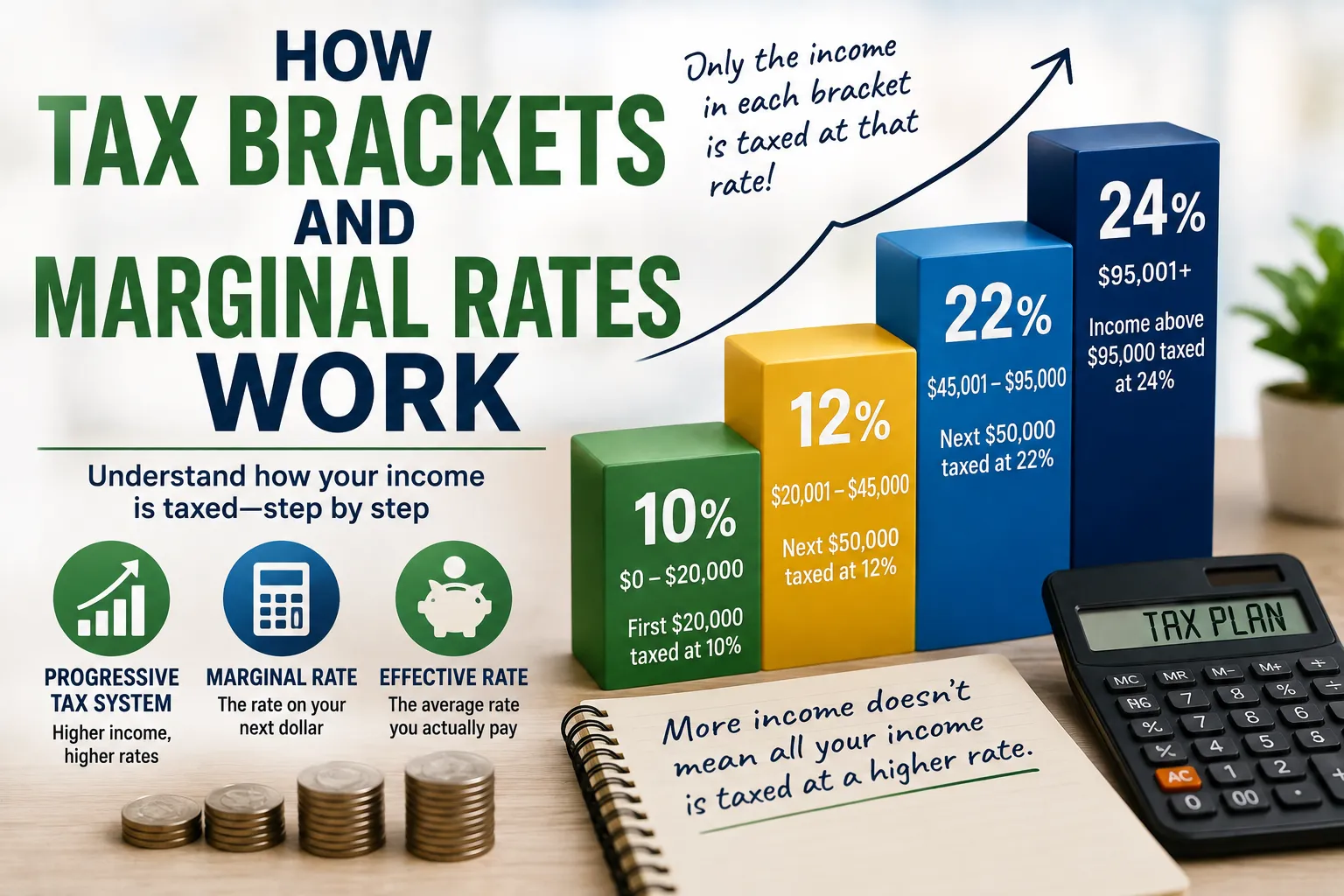
Understanding how tax brackets and marginal rates work can also help explain why a change in household income does not necessarily mean that every dollar will be taxed at the same rate.
Update Your Tax Withholding After Marriage
Marriage can change the amount of tax that should be withheld from wages.
If both spouses work, combining their incomes can produce a different tax result than either person’s previous circumstances suggested.
Reviewing payroll withholding after marriage can help prevent a large balance due or an unnecessarily large refund.
A tax refund is not necessarily a financial gain. It generally means too much money was withheld during the year and is being returned later.
Divorce Can Affect Taxes in Several Ways
Divorce or legal separation can create multiple tax considerations.
Filing status, dependents, property transfers, investment income and retirement accounts may all require attention.
The timing of a divorce can also affect which filing status applies for a particular tax year.
Alimony and child-related tax issues can be particularly complicated because federal tax treatment can depend on when a divorce or separation agreement was executed and other circumstances.
Anyone going through a significant separation should consider reviewing the tax implications before making major financial decisions.
Having a Child Can Change Your Tax Picture
The arrival of a child can affect household finances in many ways.
Depending on eligibility, parents may qualify for tax benefits related to children and childcare.
A new child can also affect:
- Filing information
- Dependent status
- Child-related credits
- Childcare expenses
- Health insurance arrangements
- Education savings plans
- Withholding
Parents should keep appropriate records and understand which benefits they may qualify for rather than assuming that every family receives the same tax treatment.
Childcare Expenses May Have Tax Implications
Returning to work after having a child can create substantial childcare expenses.
Certain taxpayers may qualify for tax benefits related to qualifying childcare expenses, subject to eligibility requirements and applicable limits.
Keep documentation showing payments made to childcare providers.
Information such as provider names, addresses and taxpayer identification information may be required for tax reporting.
A Child Leaving Home Can Also Matter
Tax considerations do not stop when children become older.
A child attending college, beginning full-time employment or becoming financially independent can change whether the child qualifies as a dependent under applicable tax rules.
Parents should review dependent status rather than assuming that a child remains eligible indefinitely.
Education expenses can also introduce additional tax considerations.
Buying a Home Can Change Your Tax Situation
Buying a home can create new tax-related issues.
Mortgage interest, property taxes and certain other homeownership expenses may receive tax treatment under specific circumstances, although the rules and limitations can be complex.
The tax benefits of homeownership should not be the primary reason for purchasing a property.
A home is a major financial commitment, and costs such as insurance, maintenance, repairs, interest and property taxes can substantially affect the overall expense.
Keep Records From the Day You Buy a Home
Homeownership can generate documents that become important years later.
Keep records relating to:
- Purchase price
- Closing costs
- Major improvements
- Property taxes
- Mortgage interest
- Selling expenses
- Relevant insurance information
Some of these records may be useful when calculating the tax consequences of eventually selling the property.
A simple digital folder can make it much easier to locate important documents later.
Selling a Home Can Have Tax Consequences
Selling a home can result in a gain or loss that may have tax implications.
For eligible taxpayers, U.S. tax rules can provide an exclusion for some gains from the sale of a primary residence if specific ownership and use requirements are met.
However, not every sale qualifies for the same treatment.
Factors such as how long the property was owned, how it was used and whether exclusions were previously claimed can matter.
Changing Jobs Can Affect Withholding
Starting a new job is another common event that can alter tax planning.
Your new employer may withhold taxes based on information provided on your payroll forms.
If you have multiple jobs or your household has more than one income source, the appropriate withholding amount may differ from what you experienced at your previous job.
A major salary change can also affect your year-end tax liability.
Reviewing withholding after a job change can help keep payments more closely aligned with your expected tax obligation.
Receiving a Raise Does Not Always Mean the Same Tax Result
A higher salary can increase taxable income, but the idea that an entire raise is automatically taxed at a higher rate is a common misunderstanding.
The U.S. federal income tax system uses marginal tax rates.
That means different portions of taxable income can be taxed at different rates.
As income rises, however, a household can also become ineligible for certain deductions, credits or other tax benefits.
So a major increase in income can affect the overall tax picture in more ways than simply increasing the amount of tax paid.
Losing a Job Can Change Your Tax Situation
Job loss can create both immediate financial pressure and tax-related consequences.
Severance payments, unemployment compensation and other forms of income may have different tax treatment.
If a person moves from employment to unemployment, their withholding situation may also change.
When income falls sharply, it can be useful to reassess the household’s expected annual income and tax payments rather than continuing to assume that the previous withholding level remains appropriate.
Starting a Business Changes the Equation
Moving from employee to self-employed worker can be one of the more significant tax-related life changes.
A business owner may need to track:
- Business income
- Business expenses
- Estimated tax payments
- Self-employment taxes
- Receipts
- Business-use assets
- Potential deductions
- Separate business and personal finances
Unlike a traditional employee, a self-employed person may not have an employer automatically withholding taxes from every payment.
That makes proactive planning particularly important.
Keep Business and Personal Finances Organized
A separate business bank account can make it easier to track business activity.
Keep receipts and records throughout the year rather than attempting to reconstruct expenses months later.
Good recordkeeping can help support legitimate deductions and make tax preparation substantially easier.
It can also provide a clearer picture of whether the business is actually profitable.
Taking on Freelance Work Can Create New Tax Obligations
A person does not necessarily need to become a full-time business owner to face self-employment tax considerations.
Freelance projects, consulting, online businesses and other independent income can create additional reporting responsibilities.
Someone who starts earning income outside their regular job should not automatically assume that the payer will handle all taxes.
Keeping track of income and expenses from the beginning can prevent a difficult tax bill later.
For households managing employment, freelance work, investments or other sources simultaneously, understanding how to manage taxes on different income sources can provide useful context.
Moving to Another State Can Matter
Relocating can affect state income taxes and other financial obligations.
Someone who moves during the year may need to determine which state considers them a resident and how income should be allocated.
The rules vary considerably between states.
Moving for a new job, retirement or lifestyle reasons should therefore include a review of state tax consequences before the move is finalized when possible.
Moving Abroad Can Create Additional Complexity
International moves can introduce significantly more complicated tax issues.
A U.S. citizen or resident may continue to have U.S. tax filing responsibilities even while living abroad.
Foreign income, foreign financial accounts, residency rules, tax treaties and reporting requirements can all become relevant.
Anyone planning a long-term international move should investigate the tax implications early rather than waiting until the next filing deadline.
Receiving an Inheritance Requires Careful Recordkeeping
Receiving an inheritance can be emotionally and financially significant.
The tax treatment depends on what was inherited and the applicable rules.
Inherited cash, investment accounts, real estate and retirement accounts can have different consequences.
In particular, inherited investments may require determining the appropriate tax basis before they are sold.
Keep documentation showing the assets received and their relevant values.
For a deeper look at how inherited assets, property and estate decisions can interact with taxes, see how estate planning can affect inheritance and taxes.
Inheriting Property Is Different From Selling It
Someone who inherits a house, land or investments should not assume that the tax basis is simply whatever the previous owner originally paid.
Inherited property can be subject to special basis rules.
Because basis can affect the taxable gain when an asset is eventually sold, obtaining accurate records at the time of inheritance can be extremely valuable.
Retirement Can Change Your Income Sources
Retirement often replaces one primary paycheck with several different income sources.
These may include:
- Social Security benefits
- Pension payments
- Retirement-account withdrawals
- Investment income
- Annuity payments
- Part-time employment
Each source can have different tax implications.
A retiree may therefore need a new strategy for managing withholding and withdrawals.
Retirement Account Withdrawals Can Affect Taxes
Withdrawals from traditional retirement accounts are generally treated differently from withdrawals from accounts that have already received after-tax treatment.
The tax consequences depend on the type of account, the individual’s circumstances and applicable rules.
Taking a large withdrawal in a single year can also increase taxable income significantly.
For that reason, retirement withdrawals should be considered as part of a broader income strategy rather than simply viewed as available cash.
Required Distributions Can Become Important
Certain retirement accounts are subject to required minimum distribution rules once the account holder reaches applicable ages.
Failing to account for these requirements can create unnecessary tax complications.
Retirees should review the rules that apply to their specific accounts and circumstances and plan distributions accordingly.
Health Changes Can Affect Financial Planning
Major health-related changes can produce substantial expenses and may affect employment, insurance and household income.
Certain medical expenses can receive tax treatment under specific circumstances, although eligibility and deduction rules apply.
Keep records of significant qualifying expenses and related documentation.
Because tax rules around medical expenses can be detailed, professional advice may be useful when costs are substantial.
Paying for Education Can Create Tax Questions
Starting college or other qualifying education can affect a family’s tax planning.
Depending on circumstances, certain education-related credits, deductions or savings arrangements may be available.
Parents and students should maintain records of qualifying tuition and other expenses and understand how education benefits interact with scholarships, financial aid and other funding sources.
Buying or Selling Investments Can Change Your Tax Bill
Major investment decisions can have tax consequences even when no money is withdrawn from a bank account.
Selling an investment for more than its tax basis can create a capital gain.
Selling at a loss can have different consequences and may potentially offset certain gains, subject to applicable rules.
Before selling a large investment position, consider both the financial objective and the potential tax consequences.
Investors dealing with these issues can also review how investment income and capital gains are taxed for a more detailed explanation of the tax treatment of investment returns.
Large Financial Gifts May Require Attention
Giving substantial amounts of money or property to another person can introduce gift-tax considerations.
The existence of a reporting requirement does not necessarily mean the giver immediately owes tax.
U.S. gift-tax rules include exclusions and lifetime provisions, and the details can be complicated.
Large gifts should therefore be planned carefully rather than treated like ordinary household spending.
Major Financial Windfalls Deserve a Tax Review
A sudden financial windfall can come from many sources:
- Selling a business
- Selling investments
- Receiving an inheritance
- Winning a significant prize
- Receiving a large bonus
- Selling property
The financial temptation may be to spend or invest immediately.
Before making major decisions, determine whether some portion of the money may ultimately be needed for taxes.
A tax bill arriving months after a windfall can be particularly difficult if the money has already been spent.
Marriage, Children and Retirement Can Change More Than Taxes
Major life events often affect several parts of a financial plan simultaneously.
Marriage can change insurance and retirement decisions in addition to taxes.
Having a child can affect childcare costs, education savings and household budgeting.
Retirement can change investment strategy, healthcare planning and income sources.
Taxes should therefore be considered as one component of a broader financial plan.
Keep Important Documents Organized
Good recordkeeping becomes especially valuable when life changes.
Create a system for storing documents related to:
- Employment
- Marriage or divorce
- Children
- Property
- Investments
- Retirement accounts
- Business income
- Education expenses
- Major purchases
- Charitable contributions
Digital copies can be useful, but important documents should be stored securely and retained according to applicable recordkeeping requirements.
Review Your Tax Plan After a Major Change
A useful rule is simple:
When your financial life changes significantly, review your tax situation at the same time.
You do not necessarily need to overhaul your entire financial plan.
Sometimes the adjustment may be as simple as changing payroll withholding.
In other cases, the change may justify speaking with a qualified tax professional or financial planner.
The earlier the review happens, the more options you may have.
For a broader year-round approach rather than waiting for a major event, see how to plan taxes throughout the year.
Don’t Wait Until Tax Season
Tax preparation looks backward.
Tax planning looks forward.
Once the tax year has ended, many opportunities to change withholding, adjust contributions or structure financial decisions may already have passed.
That is why major life events deserve attention when they happen.
A marriage certificate, new job offer, home purchase agreement or retirement decision may seem unrelated to taxes in the moment, but each can change the financial information that eventually appears on a tax return.
Build a Habit of Checking Your Tax Situation
You do not need to think about taxes every day.
A better approach is to create a simple review whenever a major financial event occurs.
Ask:
- Did my income change?
- Did my filing status change?
- Did I gain or lose a dependent?
- Did I buy or sell property?
- Did I start or stop a business?
- Did I receive a significant amount of money or property?
- Did my retirement or investment situation change?
- Does my current tax withholding still make sense?
These questions can reveal when a more detailed review is warranted.
Life Changes, and Your Tax Strategy Should Too
Taxes are not separate from everyday financial decisions. They are connected to income, family circumstances, employment, property, investments and long-term planning.
A major life event does not automatically mean you will owe more taxes. In some situations, it may create access to deductions or credits. In others, it may introduce new reporting responsibilities or change how much you should set aside.
The most useful approach is to treat major life changes as financial checkpoints.
When your family, income, employment, homeownership or retirement plans change, take a moment to reconsider the tax consequences alongside the rest of your finances. A few hours of planning when circumstances change can be far easier—and potentially far less costly—than discovering months later that your tax strategy no longer matched your life.