How Financial Apps Handle Data Breaches
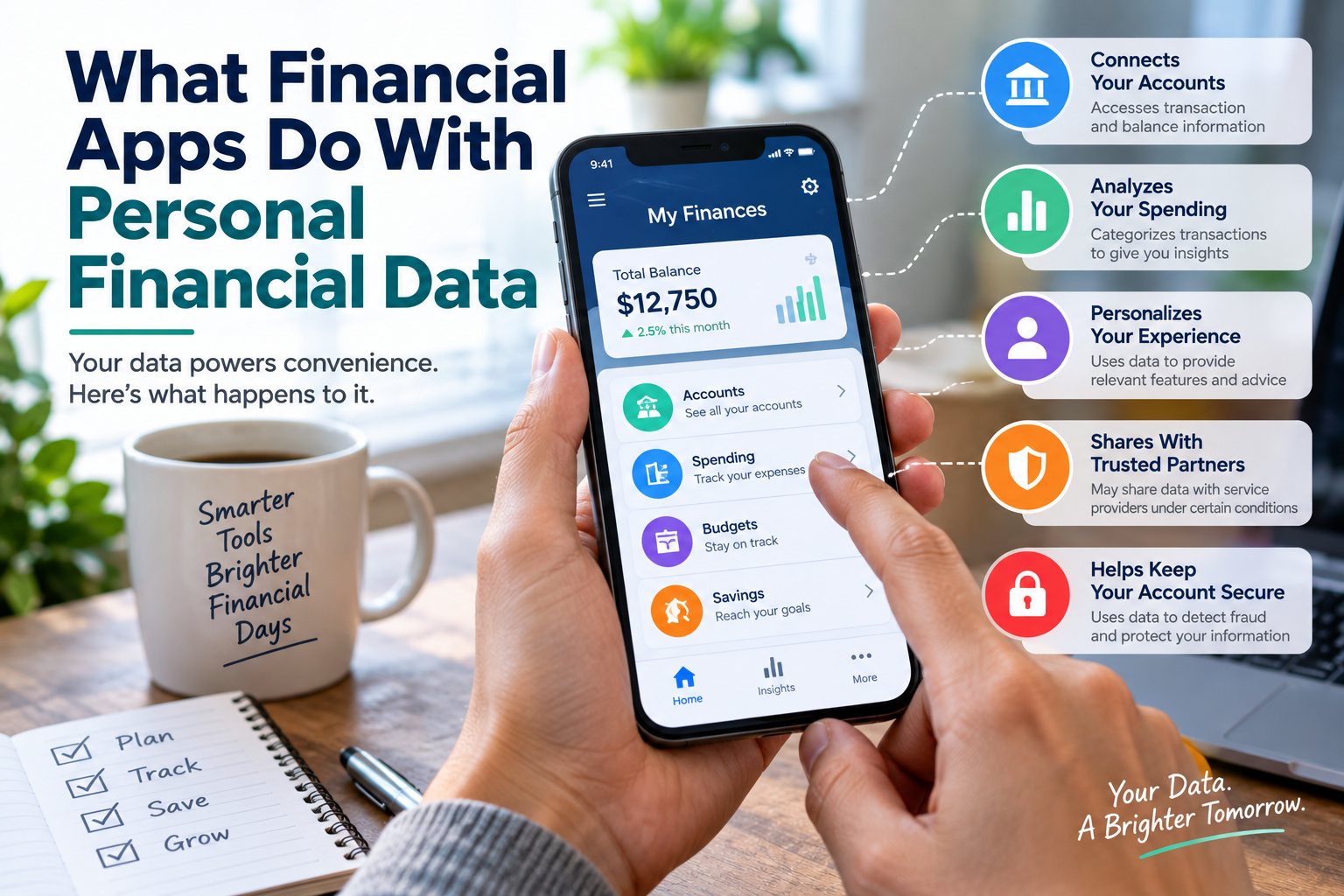
Financial apps can give people a convenient way to monitor spending, manage budgets, track investments, pay bills, and organize different parts of their financial lives. But because these services often handle sensitive information, a data breach can create serious concerns for both the company and its customers.
A data breach occurs when information is accessed, disclosed, altered, or obtained without authorization. For a financial app, the information involved could include account details, transaction histories, contact information, identification data, or other sensitive records.
Financial apps use security measures designed to prevent breaches, but no digital system can eliminate every risk. When an incident occurs, the company’s response can determine how quickly the problem is contained, what customers need to do, and how much information may ultimately be exposed.
Understanding how financial apps handle breaches can help users make more informed decisions about the services they use and the information they share.
What Is a Financial App Data Breach?
A data breach happens when protected information becomes accessible to an unauthorized person or system.
The term can describe different situations. For example, attackers might gain access to a company’s database, an employee account could be compromised, or a software vulnerability could expose information that should have remained restricted.
A breach does not necessarily mean that money has been stolen directly from customers’ accounts. The exposed information could instead be personal or financial data that creates a risk of fraud, identity theft, phishing, or other misuse.
The types of financial services and applications involved vary considerably. The Complete Guide to Financial Apps provides broader context on the different types of tools people use to manage financial information.
What Information Could Be Exposed?
The information involved in a breach depends on the particular application and the systems affected.
Potentially exposed information could include:
- Names
- Email addresses
- Phone numbers
- Account identifiers
- Transaction records
- Account balances
- Financial activity
- Login credentials
- Identification information
- Payment information
- Investment information
- Device or technical information
Not every breach involves all of these categories.
A company will generally need to investigate the affected systems to determine what information was actually accessible.
How Financial Apps Detect Breaches
Companies can discover security incidents in several ways.
Automated security systems may detect unusual login activity, suspicious network traffic, unexpected database access, or other technical indicators.
Security teams can also identify problems through monitoring, vulnerability assessments, employee reports, customers reporting suspicious activity, or notifications from outside researchers.
The earlier a breach is detected, the sooner the company can begin investigating and containing it.
However, some breaches can remain undetected for a period of time, particularly when attackers attempt to avoid triggering security controls.
What Happens After a Breach Is Discovered?
Once a financial company suspects that unauthorized access has occurred, it typically needs to determine what happened and limit further access.
The response can involve several activities:
- Identifying affected systems
- Containing the incident
- Securing compromised accounts or infrastructure
- Investigating the source of the breach
- Determining what information was affected
- Assessing potential customer impact
- Addressing vulnerabilities
- Notifying affected parties when required
- Restoring affected systems
- Monitoring for additional suspicious activity
The exact response depends on the nature and scale of the incident.
Companies May Temporarily Restrict Accounts
If a security incident involves customer accounts, a financial app may temporarily restrict certain activities.
For example, a company might require users to reset passwords, reauthenticate devices, or complete additional verification.
These measures can be inconvenient, but additional security checks can help prevent unauthorized individuals from continuing to use compromised credentials.
In some circumstances, services may temporarily disable particular features while an investigation takes place.
Password Resets Can Be Part of the Response
If login credentials may have been compromised, companies may require or recommend password changes.
Users should avoid reusing the same password across financial services. If the same password was used elsewhere, changing it on those other services may also be appropriate.
A strong password should be difficult to guess and unique to the account.
Where available, multi-factor authentication can provide another layer of protection because accessing an account requires more than simply knowing the password.
Multi-Factor Authentication Adds Protection
Multi-factor authentication, often called MFA, requires an additional verification step when a user signs in.
Depending on the service, this could involve:
- An authentication application
- A security key
- A one-time verification code
- Biometric verification
- Another trusted device
MFA cannot prevent every type of breach, but it can make stolen passwords less useful to attackers in situations where the additional authentication factor remains secure.
Financial app users should consider enabling available security features rather than relying exclusively on a password.
Breached Data Does Not Always Mean Direct Account Theft
One important distinction is between a data breach and unauthorized financial transactions.
A breach may expose personal information without giving an attacker direct control over a bank or investment account.
However, exposed information can still create risks.
For example, criminals may use stolen personal details to create convincing phishing messages or impersonate legitimate organizations.
A customer who receives a breach notification should therefore remain cautious even if there is no indication that money was directly accessed.
Phishing Can Become a Secondary Risk
After a high-profile breach, customers may receive fraudulent messages claiming to be from the affected company.
These messages may ask users to:
- Confirm account information
- Reset a password through a provided link
- Share a verification code
- Download an attachment
- Provide payment information
- Move money to a supposedly safe account
A real security incident can make these scams appear more convincing because criminals can use publicly known information about the breach to create a sense of urgency.
Customers should be particularly cautious about unexpected communications following a security incident.
Financial Apps May Notify Affected Customers
When a breach involves personal information, companies may have legal or regulatory obligations concerning notification.
The requirements differ depending on factors such as the location of the affected customer, the type of organization, and the nature of the information involved.
A notification may explain:
- What happened
- When the incident occurred or was discovered
- What information may have been affected
- What the company has done in response
- What customers should do
- Whether additional protective services are being offered
Customers should read these notices carefully rather than assuming every breach has the same consequences.
Not Every Security Incident Has the Same Severity
A breach involving a small amount of non-sensitive information is different from an incident involving highly sensitive financial credentials.
The potential consequences depend on factors such as:
- What information was exposed
- Whether the information was encrypted
- Whether unauthorized parties actually accessed it
- How long the information was accessible
- Whether credentials were involved
- Whether financial accounts could be accessed
- Whether the information can be used for fraud
This is why simply knowing that a company experienced a breach does not provide enough information to understand the actual risk.
Encryption Can Reduce Certain Risks
Financial companies may use encryption to protect information while it is stored or transmitted.
Encryption transforms readable information into a form that requires an appropriate key or mechanism to interpret.
If encrypted information is stolen, the encryption can provide an additional barrier against unauthorized use. However, the effectiveness of encryption depends on how it is implemented and managed.
Encryption also does not eliminate risks associated with compromised credentials, authorized users, poor access controls, or other security weaknesses.
It is one component of a broader security strategy.
Access Controls Help Limit Damage
Financial apps generally need systems that control which employees, applications, and services can access particular information.
Strong access controls can reduce the number of systems or individuals capable of accessing sensitive records.
Companies may use measures such as:
- Role-based permissions
- Authentication requirements
- Privileged-access controls
- Network segmentation
- Monitoring
- Security logging
- Automated alerts
Limiting access can help contain the potential impact of a compromised account or system.
Third-Party Services Can Be Part of the Risk
Financial apps may rely on outside companies for hosting, analytics, customer support, payment processing, identity verification, communications, or other services.
This means a financial company’s security environment may extend beyond systems it operates directly.
A security incident at a service provider can potentially affect the information of customers using another company’s application.
For this reason, organizations need processes for evaluating and managing third-party security risks.
What Customers Should Do After a Breach
Customers who receive a legitimate breach notification should carefully review the recommended steps.
Depending on the circumstances, useful actions may include:
- Changing the affected password
- Changing reused passwords elsewhere
- Enabling multi-factor authentication
- Reviewing recent account activity
- Checking financial statements
- Watching for suspicious communications
- Confirming that contact information is correct
- Following the company’s official instructions
- Considering available identity-protection measures where appropriate
Customers should use contact information obtained from the company’s official website or existing account rather than clicking unexpected links in emails or text messages.
Monitor Accounts for Suspicious Activity
After a breach, reviewing account activity can help identify transactions or changes that the customer does not recognize.
Look for:
- Unexpected withdrawals
- Unfamiliar purchases
- New account activity
- Changes to contact details
- Password-reset notifications that were not requested
- Unrecognized login alerts
If suspicious financial activity appears, customers should contact the relevant financial institution through an established, trusted channel.
Why App Reviews Should Include Security
When choosing a financial application, users often focus on convenience, features, ratings, and price.
Security and data-handling practices deserve attention as well.
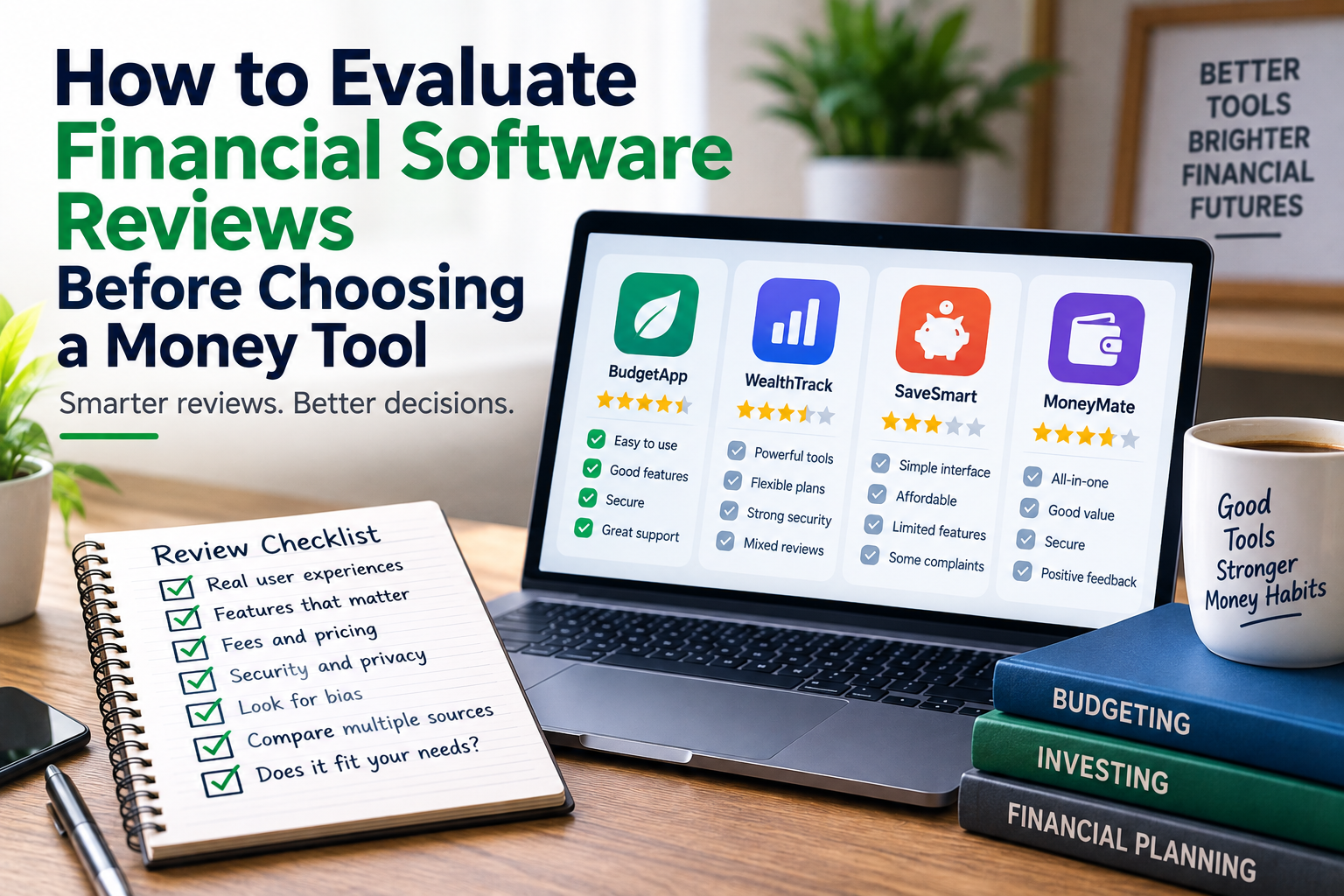
Reviews can provide useful information about usability and customer experiences, but they may not provide a complete picture of an application’s security practices.
The How to Evaluate Financial Software Reviews Before Choosing a Money Tool guide provides a broader framework for examining financial software reviews before making a decision.
Users can also examine the company’s privacy information, security documentation, authentication options, and policies concerning account access.
Questions to Ask Before Choosing a Financial App
Before connecting sensitive financial information to an app, consider asking:
- What financial information does the app collect?
- Why does it need that information?
- How is the information protected?
- Does the company use encryption?
- Is multi-factor authentication available?
- How does the company handle security incidents?
- Does it rely on third-party service providers?
- How can customers report suspicious activity?
- What happens if an account is compromised?
- How are customer records handled after an account is closed?
The answers can help users understand the security and privacy considerations associated with a particular service.
Financial Tools Are Not All the Same
Financial technology covers a wide range of products.
Some tools are designed primarily for budgeting and expense tracking. Others help with calculations, investing, financial planning, credit management, or other tasks.
The Complete Guide to Financial Tools and Calculators provides an overview of the different types of tools consumers may encounter.
The sensitivity of the information involved can vary substantially.
A simple calculator that does not collect personal information creates a different data-security situation from an application connected directly to multiple financial accounts.
Money Management Tools Can Involve Extensive Data
Money management platforms can provide a consolidated view of a person’s finances.
That convenience may require access to multiple accounts, transaction records, or other financial information.
The more accounts connected to a platform, the more important it can become to understand the application’s security practices and data policies.
The Complete Guide to Money Management Tools offers broader context on the different technologies people can use to organize and manage their finances.
What Companies Can Learn From Breaches
A data breach can reveal weaknesses that companies need to address.
After an incident, organizations may strengthen authentication, improve monitoring, update software, modify access controls, increase employee security training, or change how sensitive information is stored.
A serious incident can therefore lead to changes in security architecture and procedures.
The effectiveness of those improvements depends on how thoroughly the company identifies and addresses the underlying weaknesses.
Security Is an Ongoing Process
Financial app security cannot be treated as a one-time feature.
Software changes, new vulnerabilities emerge, criminals develop new techniques, and customers’ behavior changes over time.
Companies need ongoing monitoring, testing, patching, access management, incident-response planning, and security improvements.
Users also have an ongoing role by protecting credentials, enabling available security controls, keeping devices updated, and monitoring their accounts.
Convenience and Security Need to Be Considered Together
Financial apps can make money management significantly more convenient, but that convenience often depends on the exchange of information.
A budgeting app may need transaction data. A financial dashboard may need access to several accounts. An investment application may need information about holdings and transactions.
These capabilities can be useful, but users should understand what information they are providing and what protections the service has in place.
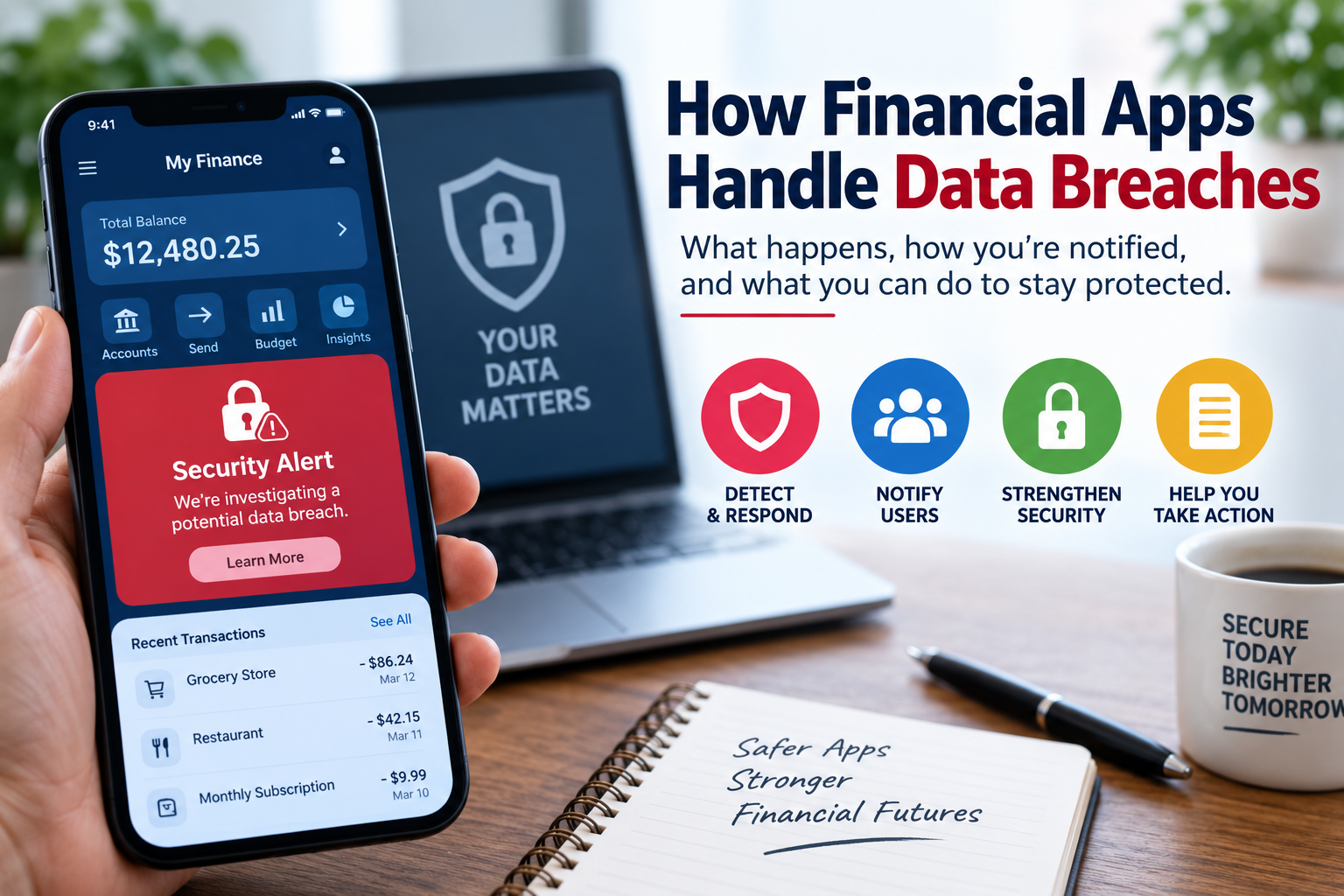
When a breach occurs, the company’s response can include investigation, containment, customer notification, credential protection, system improvements, and ongoing monitoring.
For users, the most important response is to pay attention to legitimate notifications, secure affected accounts, watch for suspicious activity, and remain cautious about phishing attempts.
Understanding how financial apps handle data breaches does not eliminate the risks of using digital financial tools. It does, however, make it easier to evaluate those risks and use financial technology with greater awareness.