How Financial Apps Differ From Banks
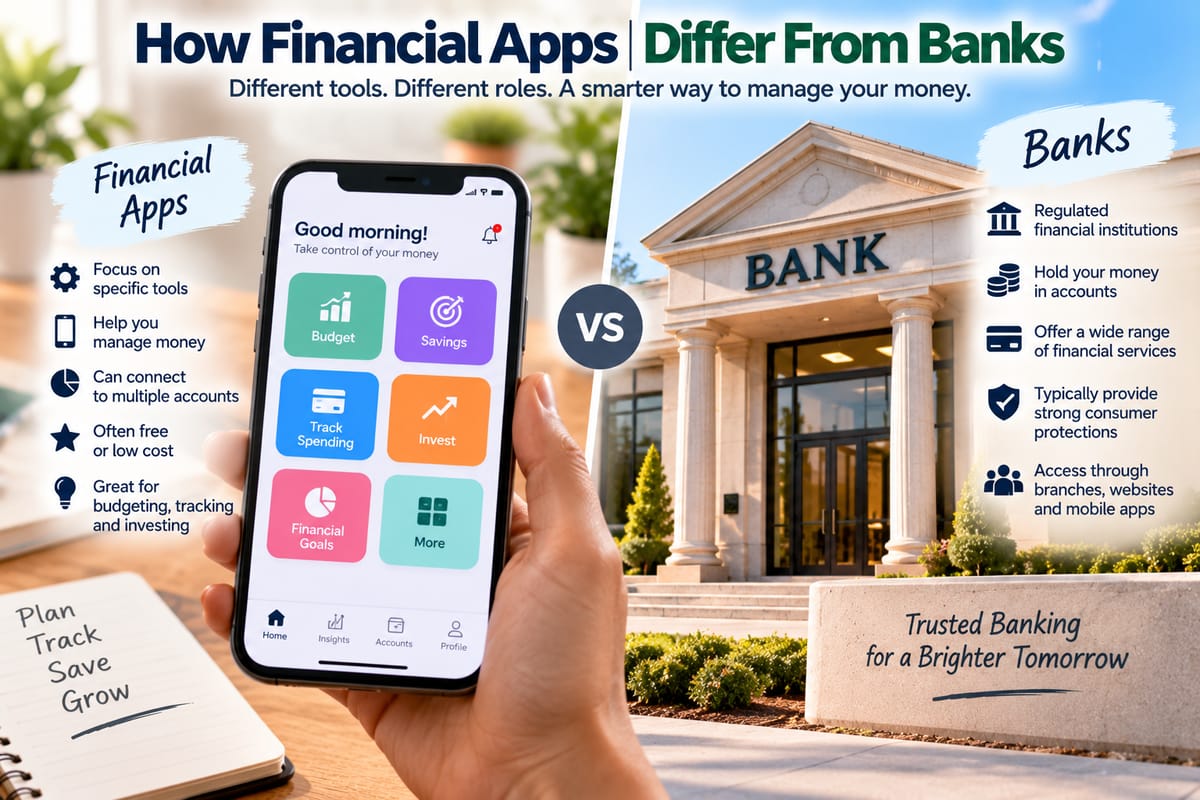
Financial apps and banks can both help people manage money, but they are not the same type of financial service. A banking app may allow customers to check balances, transfer money, deposit checks, or pay bills, while an independent financial app might focus on budgeting, investing, saving, credit monitoring, or tracking spending across multiple accounts.
The difference can sometimes be difficult to see because modern financial services increasingly operate through smartphones. A person may manage a bank account entirely from a mobile device while also using several separate financial apps to organize their finances.
Understanding how these services differ can help consumers choose the right tools for particular financial tasks and recognize which services actually hold their money.
What Is a Financial App?
A financial app is software designed to help users perform or manage specific money-related activities.
Some financial apps are developed by banks and are directly connected to bank accounts. Others are provided by separate financial technology companies and may connect to accounts held at multiple financial institutions.
Financial apps can serve many purposes, including:
- Tracking spending
- Creating and monitoring budgets
- Setting savings goals
- Managing investments
- Monitoring credit
- Sending or receiving payments
- Comparing financial products
- Tracking net worth
- Organizing bills
- Analyzing financial transactions
The Complete Guide to Financial Apps provides a broader look at the different categories of apps available and the financial tasks they can support.
What Is a Bank?
A bank is a financial institution that provides regulated financial services and can hold customer deposits in accounts.
Depending on the institution and jurisdiction, banks may offer checking or current accounts, savings accounts, certificates of deposit, loans, credit cards, mortgages, payment services, and other financial products.
A bank therefore performs functions that go beyond simply providing software.
A banking app is generally a digital interface for accessing services provided by the underlying financial institution. The app may be the primary way a customer interacts with the bank, but the bank remains the institution responsible for the associated accounts and services.
Financial Apps and Bank Accounts Are Not the Same Thing
One of the most important distinctions is that a financial app does not necessarily hold the user’s money.
For example, a budgeting app might connect to a checking account and categorize transactions. The money remains in the checking account at the bank. The app is primarily analyzing or displaying information.
By contrast, when someone opens a deposit account with a bank, the bank is the institution providing and maintaining that account.
Understanding the different types of accounts is easier with a Complete Guide to Bank Accounts and Account Types.
How Banks Use Financial Technology
Banks have become technology companies in many respects. Mobile banking, online account access, automated payments, electronic transfers, fraud monitoring, and digital customer service are now common parts of banking.
A customer may rarely visit a physical branch while still using a traditional bank.
This creates some overlap between banks and financial apps. A bank’s mobile application can provide many of the same features people associate with fintech products.
However, the underlying relationship remains different. A bank’s app is generally an access point to the bank’s financial services, while an independent financial app may primarily provide tools that work alongside accounts maintained elsewhere.
What Digital Banking Means
Digital banking refers to banking services delivered through digital channels rather than relying primarily on physical branches.
Customers can often perform routine tasks through websites and mobile applications, including:
- Checking account balances
- Reviewing transactions
- Transferring funds
- Paying bills
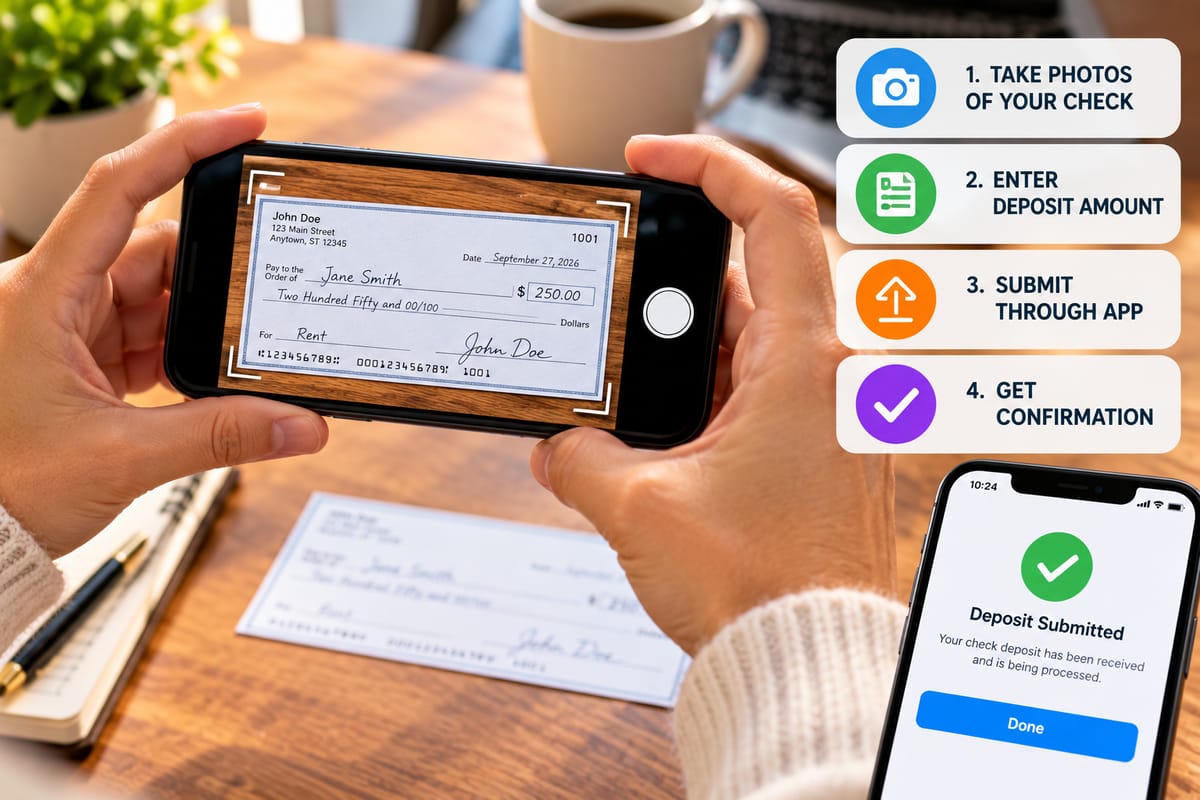
- Depositing checks where supported
- Managing cards
- Setting account alerts
- Applying for certain financial products
How Digital Banking and Online Banking Work explains the broader technology and processes behind these services.
Digital banking has made the distinction between a bank and a financial app less obvious from the customer’s perspective. The important difference is what institution is actually providing the financial service.
How Financial Apps Connect to Banks
Many financial apps can connect to bank accounts to retrieve financial information or facilitate certain transactions.
For example, a budgeting application might gather transaction information from several accounts and present it in one dashboard. This can allow users to see spending patterns without logging into every financial institution separately.
Depending on the service, connections may involve third-party data-access providers, account credentials, tokens, or other authentication methods.
The exact technology varies, and users should understand what information an app requests before connecting a financial account.
Financial Apps Often Focus on a Specific Problem
Banks typically provide a broad collection of financial services, while many financial apps are designed around a narrower purpose.
A budgeting app might concentrate on spending analysis. An investment platform may focus on portfolio management. A savings application might emphasize automated transfers or financial goals.
This specialization can make financial apps convenient for particular tasks.
A person might therefore use a bank for everyday deposits and payments while relying on separate apps for budgeting, investment analysis, or tracking financial goals.
Banks Can Offer More Than Apps
A major difference between banks and independent financial apps is the range of services available through a banking relationship.
Depending on the bank, customers may have access to:
- Deposit accounts
- Loans
- Credit products
- Mortgages
- Payment services
- Savings products
- Investment services
- Business banking
- Cash management services
An individual financial app may offer only one or a few of these functions.
This means comparing a bank with a financial app is not always an apples-to-apples comparison. They may be designed to solve different financial problems.
How Security Responsibilities Differ
Security is important for both banks and financial apps, but the risks and responsibilities can differ.
Banks typically have established security systems around account access, transaction monitoring, identity verification, fraud detection, and customer authentication.
Financial apps also need to protect user accounts and information, particularly when they connect to external financial accounts.
Consumers should pay attention to security features such as multifactor authentication, encryption, account alerts, device controls, and login notifications.
It is also important to use unique passwords and avoid sharing financial credentials unnecessarily.
What Happens to Personal Financial Data?
Data is another important area where financial apps and banks can differ.
A financial app may collect information needed to provide its services, such as transaction records, account details, contact information, device information, or usage data.
The type and amount of information collected depends on the application and its business model.
Before connecting an account, users should review the service’s privacy disclosures and understand what information is collected, why it is collected, and how it may be shared.
For a closer look at the issue, What Financial Apps Do With Personal Financial Data explores how financial applications can handle information supplied by users and connected accounts.
Fees Can Work Differently
Banks and financial apps may charge different types of fees.
A bank could charge monthly account fees, overdraft-related fees, ATM fees, wire transfer fees, or other service charges, depending on the account and institution.
Financial apps may use subscription fees, transaction fees, management fees, advertising-supported models, referral arrangements, or other revenue structures.
Some services are free for basic features but charge for advanced tools.
Consumers should therefore look beyond whether an app or bank account is advertised as “free.” The more useful question is what services are included and under what circumstances additional charges apply.
Customer Support Can Be Different
Banks generally provide established customer-service channels that can include phone support, secure messaging, online support, branches, and automated systems.
Financial apps may rely more heavily on digital support, including in-app messaging, email, help centers, and automated assistance.
The quality and availability of support varies considerably among providers.
This can become particularly important when a user has an account-access problem, a disputed transaction, or a security concern.
Financial Apps Can Combine Multiple Accounts
One advantage of some financial apps is the ability to bring information from different financial institutions into one place.
Someone with checking, savings, investment, and credit accounts at different providers may be able to use an app to view information across those accounts.
This can make it easier to identify spending patterns and monitor an overall financial picture.
However, consolidation also means users should understand which accounts are connected and what permissions the application has.
Banks Provide the Underlying Financial Infrastructure
For many consumers, banks remain the place where core financial relationships are established.
A bank may hold deposits, issue payment cards, provide loans, process transfers, and maintain account records.
Financial apps can sit on top of this infrastructure by helping users analyze, organize, or interact with financial information.
Some fintech companies also partner with banks or other regulated institutions to provide financial products. In these cases, the company that provides the user interface may not be the same institution responsible for the underlying financial account.
That distinction can matter when evaluating where funds are held and which entity provides a particular service.
Which One Do People Need?
The choice does not necessarily have to be between a financial app and a bank.
Many people can use both.
A bank can provide the underlying checking or savings account, while a financial app can help organize spending, monitor investments, or analyze financial habits.
For example, a household might use a bank for everyday transactions, a separate investment platform for investments, and a budgeting app to track spending across both.
The important question is what each service is designed to accomplish.
Questions to Ask Before Using a Financial App
Before connecting a financial account to an app, consumers can consider several questions:
- What problem does the app solve?
- Does it need access to a bank or investment account?
- What information will it collect?
- How is financial data protected?
- Does it charge subscription or transaction fees?
- How can the account be disconnected?
- What customer support is available?
- Which company actually provides the underlying financial service?
- Are there limits on transactions or account access?
- What happens if the service becomes unavailable?
These questions can help users understand the relationship between the software they interact with and the financial institution behind their money.
The Lines Between Banking and Financial Apps Are Blurring
The distinction between financial apps and banks is becoming less obvious as financial services become increasingly digital.
Banks now offer sophisticated mobile applications, while financial technology companies increasingly provide services that resemble traditional financial products.
Despite this overlap, the fundamental difference remains useful: a financial app is generally a technology-based tool or service, while a bank is a financial institution that can provide and maintain financial accounts and other regulated services.
Understanding that difference helps consumers evaluate what a particular app actually does, where their money is held, what information they are sharing, and which company is responsible for the financial service they are using.
As digital finance continues to expand, knowing the difference between the interface on a phone and the institution behind it can make financial decisions easier to understand.