**How Bank Fees and Interest Charges Affect the Cost of Everyday Banking
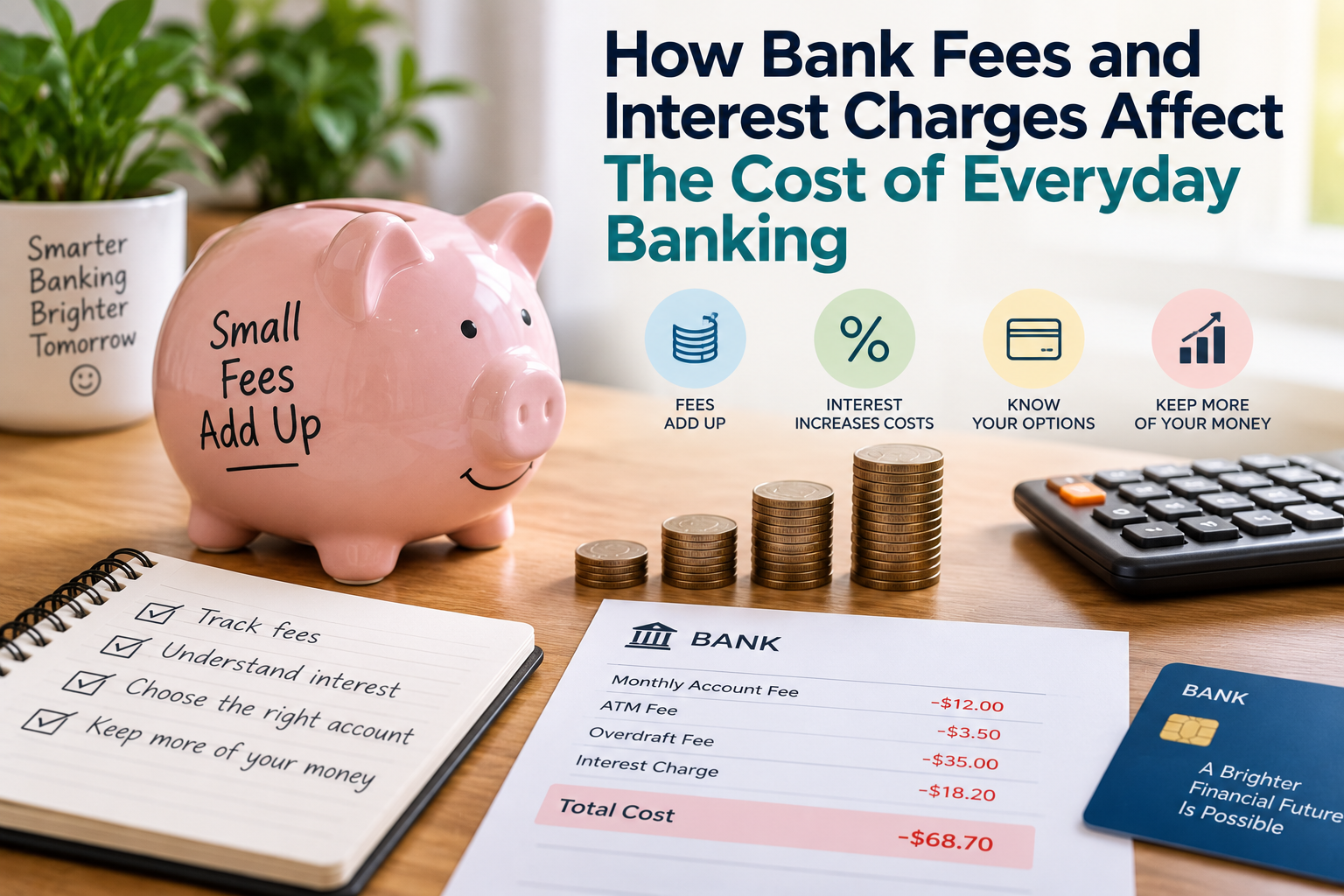
Banking can feel inexpensive when viewed one transaction at a time. A small monthly account fee, a modest ATM charge, or a few dollars of interest may not seem significant on its own.
Over months and years, however, these costs can add up.
Bank fees and interest charges are part of the way financial institutions generate revenue, but they also affect the real cost of managing money. The impact depends on the type of account, how often an account is used, the services a customer needs, and whether money is being borrowed or saved.
Understanding these charges can make it easier to compare accounts, recognize unnecessary expenses, and understand how everyday banking fits into a broader personal financial picture.
What Are Bank Fees?
Bank fees are charges a financial institution applies for particular services, transactions, account features, or situations.
Common examples include:
- Monthly maintenance fees
- ATM fees
- Overdraft fees
- Out-of-network ATM charges
- Wire transfer fees
- Foreign transaction fees
- Paper statement fees
- Stop-payment fees
- Returned-payment fees
- Account closure or transfer fees
Not every bank charges all of these fees, and some institutions waive certain charges when customers meet specific requirements.
For a broader explanation of different charges, Banking Fees Explained: Types and How to Avoid Them provides a useful overview of how these costs can arise.
Monthly Account Fees Can Become an Ongoing Expense
A monthly maintenance fee is one of the easiest banking costs to overlook.
Suppose an account charges $10 per month. That amounts to:
$10 × 12 months = $120 per year
Over several years, the cumulative cost can become substantial.
Some accounts waive monthly fees if customers maintain a minimum balance, receive qualifying direct deposits, or meet other conditions.
This means the advertised monthly fee does not necessarily represent what every customer will actually pay. The important question is whether the account’s requirements fit the customer’s normal financial habits.
ATM Fees Can Add Up Quickly
ATM charges are another common everyday banking expense.
A customer may encounter a fee from the bank that operates their account, the ATM operator, or both.
Using an ATM outside a bank’s network can therefore make a relatively simple cash withdrawal more expensive.
Someone who regularly withdraws cash from fee-charging ATMs may accumulate significant costs over the course of a year.
Planning withdrawals, using an institution’s network, and choosing accounts with favorable ATM policies can help reduce these expenses.
Overdraft Fees Can Be Particularly Costly
An overdraft can occur when a transaction exceeds the available balance or otherwise causes an account to go below its permitted balance.
Depending on the bank and account terms, an overdraft may result in a fee or other charges.
The problem can become larger when several transactions occur around the same time. A single balance shortfall may affect multiple payments or transactions.
Keeping track of account balances and transaction timing can reduce the likelihood of unexpected overdraft costs.
Interest Charges Are Different From Bank Fees
Interest charges generally arise when someone borrows money rather than simply using a banking service.
Loans, credit cards, lines of credit, and some other forms of borrowing can involve interest.
The borrower pays interest in exchange for access to money over a specified period.
For example, if a person carries a balance on a credit account, interest may be calculated on that balance according to the account’s terms.
This is different from a monthly account maintenance fee, which is typically charged for maintaining or accessing a particular banking service.
Interest Rates Determine Borrowing Costs
The interest rate has a major influence on how much borrowing costs.
A higher rate generally means more interest is charged on an outstanding balance, all else being equal.
A lower rate generally reduces the interest cost.
The actual amount paid also depends on factors such as:
- The amount borrowed
- The interest rate
- How interest is calculated
- How frequently payments are made
- The repayment period
- Whether the rate is fixed or variable
- How quickly the balance is reduced
A detailed explanation of these relationships can be found in Understanding Interest Rates and Their Effects.
Credit Card Interest Can Change the Cost of Purchases
Credit cards demonstrate why interest charges matter to everyday spending.
When a purchase is paid off according to the card’s terms and no interest is incurred, the purchase may cost the same as its listed price apart from applicable fees.
When a balance is carried and interest is charged, however, the total cost of the purchase can become higher.
For example, buying an item for $500 does not necessarily mean the final financial cost is $500 if the balance remains unpaid and interest accumulates.
The longer a balance remains outstanding, the more important the interest rate and repayment schedule become.
Loan Interest Can Affect Large Financial Decisions
Interest charges become particularly significant with large loans.
Mortgages, auto loans, student loans, and personal loans can involve substantial amounts of borrowed money and extended repayment periods.
Even a relatively small difference in interest rates can affect the total amount paid over the life of a loan.
This is why borrowers often compare both the interest rate and the broader terms of a loan rather than focusing only on the monthly payment.
A lower monthly payment can sometimes result from a longer repayment period, which may increase the total interest paid.
Banks Also Earn Money From Interest
Interest is important from the bank’s perspective as well.
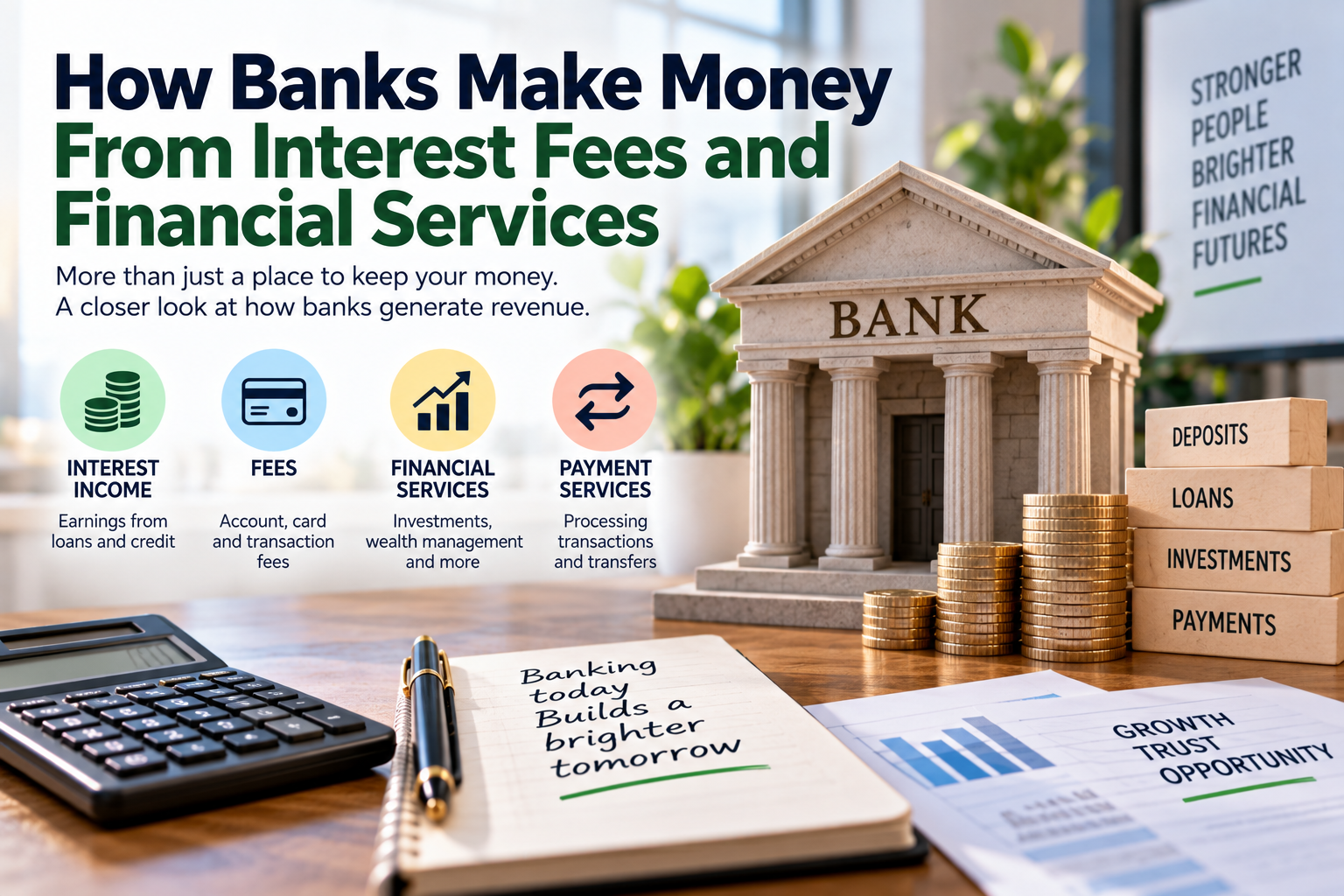
Banks generally generate revenue through a combination of interest income, fees, and other financial services.
They can receive interest from loans and other assets while paying interest to customers on certain deposits and other funding sources.
The difference between what a bank earns from assets and what it pays for funding is an important component of traditional banking economics.
The broader business model is explored in How Banks Make Money From Interest, Fees and Financial Services.
Deposit Accounts Can Also Involve Interest
Interest is not always a cost.
When people keep money in certain savings accounts, certificates of deposit, or other interest-bearing products, the financial institution may pay them interest.
This creates an important distinction:
Borrowing money → You may pay interest
Saving money in an interest-bearing account → You may earn interest
The rate offered and the account’s terms determine how much interest a customer receives.
This is one reason it is useful to consider both the costs and benefits associated with a financial account.
The Difference Between Interest Rates and Fees
Fees and interest can both increase the cost of banking, but they operate differently.
A fee is generally a specific charge for an account, transaction, or service.
Interest is typically calculated based on the amount of money borrowed or, in the case of interest-bearing deposits, the amount saved.
For example:
| Cost | Typical basis |
|---|---|
| Monthly account fee | Account or service |
| ATM fee | Cash withdrawal |
| Wire fee | Transfer |
| Overdraft fee | Account shortfall or transaction |
| Loan interest | Amount borrowed and rate |
| Credit card interest | Outstanding balance and rate |
Understanding the distinction makes it easier to identify where banking costs are coming from.
Account Type Can Influence Banking Costs
Not all bank accounts are designed for the same purpose.
Some accounts prioritize everyday transactions, while others are designed for saving, earning interest, or providing specialized services.
Account requirements can also differ.
For example, one account might charge a monthly fee unless a minimum balance is maintained, while another might have no monthly fee but offer fewer features.
A useful starting point for comparing these options is the Complete Guide to Bank Accounts and Account Types.
Choosing an account should involve considering both its features and its potential costs.
Free Banking May Still Have Conditions
An account advertised as “free” may not necessarily mean that every service is free.
There may be no monthly maintenance fee while charges still apply to certain transactions or services.
For example, an account could offer:
- No monthly fee
- Free in-network ATM withdrawals
- Fees for international withdrawals
- Fees for wire transfers
- Overdraft-related charges
Reading the account’s fee schedule can reveal the difference between a genuinely low-cost account and one that simply has no basic monthly charge.
Minimum Balances Can Affect the Real Cost
Some accounts waive fees when customers maintain a specified balance.
This can be useful for people who normally keep enough money in the account to meet the requirement.
But there is an opportunity cost to consider.
If someone keeps extra money in a low-interest checking account solely to avoid a monthly fee, they may be giving up the opportunity to place some of that money in an account that earns more interest.
The right choice depends on the size of the fee, the balance requirement, available alternatives, and the customer’s financial circumstances.
Banking Costs Can Be Small but Repetitive
One of the most important characteristics of everyday banking expenses is repetition.
A $3 charge may seem insignificant.
But if a person pays several similar fees every month, the annual total can become meaningful.
For example:
$3 × 4 charges per month × 12 months = $144 per year
This illustrates why reviewing transaction histories can be useful.
Small recurring costs can be easier to overlook than a single large expense.
How to Reduce Unnecessary Banking Fees
Many banking costs can be reduced by changing everyday habits.
Possible strategies include:
- Compare account fee schedules before opening an account.
- Use in-network ATMs when practical.
- Set up account alerts for low balances.
- Monitor recurring transactions.
- Understand overdraft policies.
- Maintain required minimum balances only when appropriate.
- Use electronic statements if paper statements carry a fee.
- Review international transaction charges before traveling.
- Ask whether certain fees can be waived.
- Compare competing account options periodically.
The objective is not necessarily to eliminate every possible charge. Some services may be worth paying for when they provide genuine value.
How Interest Charges Can Be Reduced
Borrowing costs can also be managed.
Depending on the type of credit involved, borrowers may be able to reduce interest expenses by:
- Paying balances more quickly
- Making payments on time
- Comparing interest rates
- Avoiding unnecessary borrowing
- Refinancing when appropriate
- Choosing shorter repayment periods when affordable
- Understanding promotional rates and when they expire
The best approach depends on the specific financial product.
A low interest rate can reduce borrowing costs, but fees and other terms should also be considered.
Why the Monthly Payment Does Not Tell the Whole Story
A monthly payment can make a financial product appear affordable without revealing the total cost.
Consider two loans with different repayment periods.
A longer loan may have a smaller monthly payment but require interest payments over more months.
A shorter loan may require larger monthly payments while reducing the period over which interest accumulates.
This is why consumers should look at the total repayment amount, interest rate, fees, and repayment period together.
Comparing Banking Products Requires Looking Beyond the Headline
Banks often promote specific features such as low rates, rewards, no monthly fees, or introductory offers.
These features can be useful, but the complete account terms matter.
When comparing products, consider:
- Monthly fees
- Interest rates
- Minimum balance requirements
- ATM access
- Transaction limits
- Overdraft policies
- Transfer fees
- International charges
- Account features
- Customer service
- Additional service costs
The cheapest account on one dimension may not be the cheapest overall for a particular pattern of use.
Everyday Banking Costs and Personal Financial Planning
Banking expenses form part of a larger household budget.
A person managing money effectively needs to consider not only major expenses such as housing, transportation, and food but also smaller recurring financial costs.
Account fees, interest charges, subscription payments, transfer charges, and other financial expenses can gradually reduce the amount of money available for saving or spending.
Tracking these costs can reveal opportunities to make changes without necessarily changing major aspects of daily life.
The Real Cost of Banking Depends on How You Use It
There is no single banking product that has the same cost for everyone.
Someone who rarely uses cash may care little about ATM fees. Someone who frequently withdraws cash may consider them a major factor.
A person who pays credit card balances in full may experience interest charges differently from someone who regularly carries a balance.
Likewise, a customer who maintains a large account balance may easily meet a minimum-balance requirement, while another customer may find that requirement inconvenient.
The practical cost of an account therefore depends heavily on individual behavior.
Looking at Banking Costs Over Time
Bank fees and interest charges are easy to underestimate when viewed individually.
A monthly fee, occasional ATM charge, or small amount of interest might appear manageable. But repeated charges can accumulate over months and years.
Understanding how these costs work makes it easier to evaluate financial products based on their complete terms rather than a single advertised feature.
Everyday banking is ultimately about more than simply depositing and withdrawing money. Account structures, fees, interest rates, and financial services all influence how much it costs to manage, borrow, and sometimes grow money.
By reviewing those costs regularly and matching account features to actual needs, consumers can gain a clearer picture of where their money is going and how their banking choices affect their finances over time.