Complete Guide to Tax Deductions and Credits
Tax deductions and credits can significantly reduce how much a taxpayer ultimately pays, but they do not work in the same way.
A deduction generally reduces the amount of income that is subject to tax. A credit, by contrast, is applied against the tax itself. In Kenya, taxpayers will also encounter the term tax relief, which can function more like a direct reduction of tax payable.
Understanding these differences is important for anyone preparing a tax return, whether they earn a salary, operate a business, invest, own property or have income from several sources.
The rules also vary substantially between countries.
A deduction available to a taxpayer in the United States may have no equivalent in Kenya, while Kenya’s personal and insurance relief system works differently from the U.S. federal tax-credit structure.
For the broader tax-planning framework that connects deductions and credits with income, investments, filing and financial decisions, see the Complete Guide to Personal Taxes and Tax Planning.
This guide explains the fundamentals for Kenyan taxpayers and U.S. federal taxpayers, while highlighting some of the most important deductions, credits and reliefs individuals may encounter.
Important: Tax rules, limits and eligibility requirements can change. This article is educational and should not replace individualized tax, legal or accounting advice.
What Is a Tax Deduction?
A tax deduction is an amount that reduces taxable income before the tax is calculated.
For example, if a taxpayer has $60,000 of income and qualifies for $10,000 of deductions, the taxable income may be reduced to $50,000, subject to the applicable tax rules.
The taxpayer does not necessarily save the entire $10,000.
The actual tax saving depends on the taxpayer’s applicable tax rate and the rules governing the deduction.
This is one of the most important concepts for beginners:
A $1,000 deduction does not normally mean $1,000 less tax.
Instead, it reduces the income on which tax is calculated.
The U.S. Internal Revenue Service describes deductions as amounts that reduce taxable income, while credits reduce the tax due.
What Is a Tax Credit?
A tax credit generally reduces the tax owed directly.
For example, if a taxpayer has a $4,000 federal tax liability and qualifies for a $1,000 nonrefundable tax credit, the tax could be reduced to $3,000, assuming all eligibility requirements are satisfied.
This is why a tax credit can often be more valuable, dollar for dollar, than a deduction.
There is an important distinction, however: not every credit is refundable.
Refundable vs. Nonrefundable Credits
Nonrefundable Credits
A nonrefundable credit can generally reduce tax liability to zero, but any unused amount does not necessarily become a cash refund.
Refundable Credits
A refundable credit can potentially result in a refund even when the taxpayer’s tax liability has already been reduced to zero.
The IRS specifically distinguishes refundable and nonrefundable credits and notes that refundable credits can provide money back when the credit exceeds the taxpayer’s tax liability.
This distinction is particularly important when evaluating U.S. federal tax credits.
What Is a Tax Relief in Kenya?
Kenya uses the term tax relief for certain incentives that directly reduce an individual’s tax burden.
The Kenya Revenue Authority identifies personal relief and insurance relief among the principal reliefs available to qualifying resident individuals.
This creates an important difference in terminology:
- Deduction: Reduces taxable income.
- Credit: Generally reduces tax owed directly.
- Relief: In Kenya, can directly reduce the tax payable.
Taxpayers should therefore avoid assuming that a Kenyan “relief” works exactly like a U.S. federal deduction or credit.
Tax Deductions and Credits in the United States
The U.S. federal tax system provides taxpayers with a combination of deductions and credits.
Some apply broadly, while others depend on income, filing status, family circumstances, education, housing, retirement savings or other qualifying activities.
The IRS maintains a dedicated list of individual credits and deductions covering areas such as dependents, education, healthcare, retirement contributions, charitable giving and home-related expenses.
The Standard Deduction
The standard deduction is one of the most important deductions available to many U.S. taxpayers.
Instead of listing individual deductible expenses, eligible taxpayers can generally claim a predetermined deduction based on filing status.
For tax year 2026, the IRS lists the standard deduction as:
- $16,100 for single taxpayers and married individuals filing separately
- $32,200 for married couples filing jointly
- $24,150 for heads of household
These are tax-year 2026 figures and are separate from the amounts that apply when filing a return for tax year 2025.
The standard deduction is particularly important because many taxpayers use it instead of itemizing.
Itemized Deductions
Some taxpayers may benefit from listing qualifying individual expenses rather than taking the standard deduction.
These are called itemized deductions.
Potential categories include:
- Certain state and local taxes
- Mortgage interest
- Charitable contributions
- Certain medical and dental expenses
- Certain casualty or disaster losses
- Certain other qualifying expenses
The rules can be complicated, and individual deductions can be subject to thresholds and limitations.
For taxpayers deciding between itemizing and the standard deduction, the relevant question is generally which method produces the greater allowable deduction under current law. The IRS notes that taxpayers may choose to itemize when qualifying itemized deductions exceed the standard deduction, subject to applicable rules.
The 2026 U.S. Deduction Changes
U.S. federal tax rules for 2026 include several deductions introduced or enhanced under recent legislation.
The IRS identifies deductions involving areas such as:
- Qualified tips
- Qualified overtime
- Certain passenger-vehicle loan interest
- An additional deduction for qualifying seniors
For tax year 2026, the IRS says eligible taxpayers may qualify for up to:
- $25,000 in qualified-tip deductions
- $12,500 in qualified-overtime deductions for individuals
- $25,000 in qualified-overtime deductions for joint filers
- $10,000 in qualified passenger-vehicle loan-interest deductions
- $6,000 in an additional deduction for qualifying taxpayers age 65 and older
These provisions have specific definitions, income phaseouts and eligibility requirements.
Taxpayers should therefore avoid assuming that receiving tips, working overtime or having a car loan automatically makes an expense deductible.
Retirement Contributions
Retirement planning and taxes are closely connected in the United States.
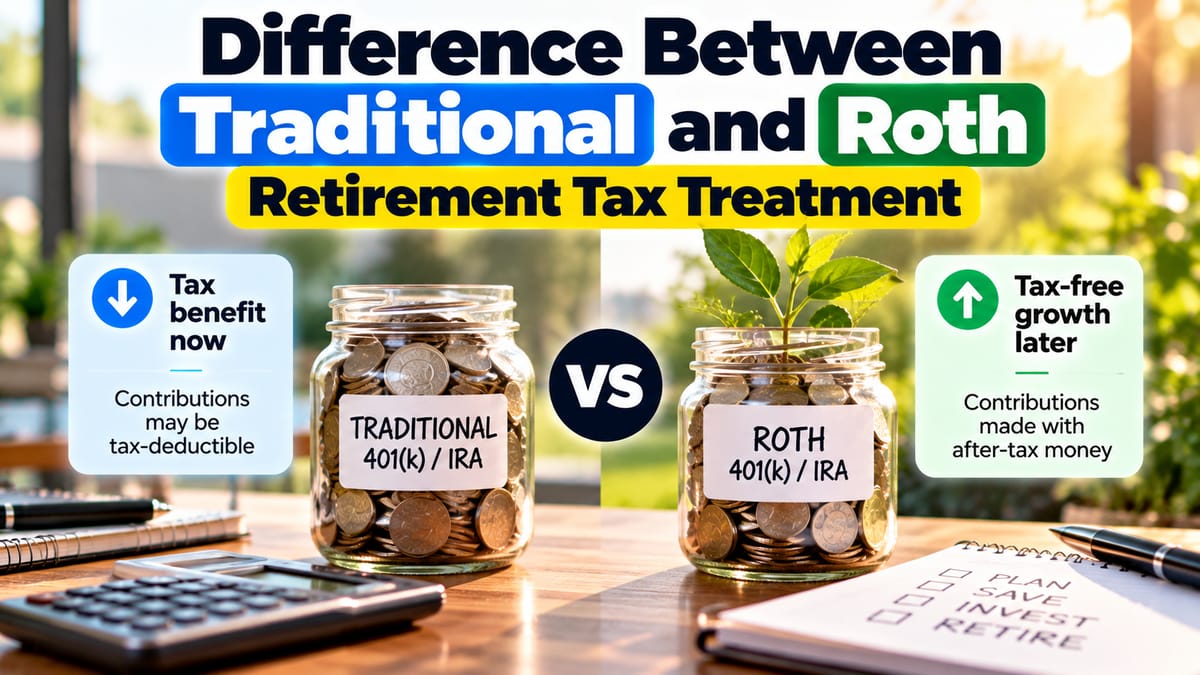
Depending on the account and taxpayer’s circumstances, contributions to qualifying retirement arrangements may provide tax benefits.
The IRS identifies traditional individual retirement accounts and employer-sponsored retirement plans among the areas taxpayers should consider when reviewing deductions and credits.
The exact deduction available can depend on factors including:
- Type of retirement account
- Income
- Filing status
- Whether the taxpayer or spouse participates in an employer retirement plan
- Contribution amount
- Applicable annual limits
Taxpayers should use the rules for the specific tax year rather than assuming last year’s limits still apply.
Mortgage Interest
Homeowners may be able to deduct qualifying mortgage interest when they itemize deductions.
However, this is not a blanket deduction for every homeowner.
Eligibility can depend on factors including:
- Type of debt
- Property
- How loan proceeds were used
- Amount of debt
- Filing status
- Applicable tax-law limitations
Mortgage principal payments are generally not treated the same way as deductible mortgage interest.
Charitable Contributions
Qualifying charitable donations can provide tax benefits for eligible U.S. taxpayers.
However, taxpayers generally need appropriate records.
Useful documentation can include:
- Donation receipts
- Organization information
- Records of cash contributions
- Records describing donated property
- Valuation information when required
The IRS lists charitable contributions among itemized deduction categories.
A taxpayer should not assume that every payment to a nonprofit or community organization qualifies.
The organization and nature of the contribution matter.
Medical and Dental Expenses
Certain qualifying medical and dental expenses can potentially be itemized.
However, the U.S. rules generally involve an income-based threshold rather than allowing every healthcare expense to be deducted without limitation.
This is an area where careful recordkeeping is especially important.
Keep documentation for qualifying expenses and check the current IRS rules before claiming them.
Major U.S. Federal Tax Credits
Tax credits can be particularly valuable because they generally reduce tax directly.
Child Tax Credit
The Child Tax Credit is designed to provide a tax benefit to qualifying taxpayers with eligible children.
For tax year 2025, the IRS states that the maximum Child Tax Credit is $2,200 per qualifying child. Eligibility depends on requirements involving the child, taxpayer, income and Social Security numbers.
The IRS also identifies a refundable component called the Additional Child Tax Credit.
For 2025, up to $1,700 per qualifying child may be refundable, subject to the applicable rules.
Because these amounts can change between tax years, taxpayers should verify the rules for the year being filed.
Earned Income Tax Credit
The Earned Income Tax Credit, commonly known as the EITC, is one of the most important federal credits for qualifying workers with low to moderate incomes.
Eligibility depends on factors including:
- Earned income
- Investment income
- Filing status
- Number of qualifying children
- Age
- U.S. residency requirements
- Other eligibility rules
The credit can be refundable, making it particularly valuable for eligible taxpayers.
Some self-employed workers can qualify.
The IRS also highlights groups such as grandparents raising grandchildren, veterans and certain workers without qualifying children among people who may overlook the credit.
Child and Dependent Care Credit
People who pay qualifying care expenses so that they can work, look for work or, in certain circumstances, attend school may qualify for the Child and Dependent Care Credit.
Qualifying care can involve a child or another eligible dependent.
The credit has detailed rules regarding:
- Eligible dependents
- Qualifying expenses
- Work-related requirements
- Income
- Care providers
Keep records of qualifying care expenses and provider information.
American Opportunity Tax Credit
The American Opportunity Tax Credit can help eligible taxpayers with qualifying higher-education expenses.
The IRS says the credit can be worth up to $2,500 per eligible student per year, with up to $1,000 potentially refundable, subject to income and other requirements.
It generally applies to qualified education expenses during the student’s first four years of higher education when other requirements are satisfied.
Premium Tax Credit
Some taxpayers who purchase qualifying health insurance through the Health Insurance Marketplace may qualify for the Premium Tax Credit.
The credit is generally based on factors including:
- Household income
- Household size
- Health insurance coverage
- Applicable Marketplace rules
The IRS identifies the Premium Tax Credit as a refundable credit for eligible taxpayers.
Adoption Credit
Eligible taxpayers may receive a federal tax credit for qualifying adoption expenses.
For tax year 2026, the IRS lists a maximum adoption credit of $17,670, with up to $5,120 potentially refundable under the applicable rules.
Because adoption-credit rules are detailed, taxpayers should maintain thorough records of eligible expenses.
Tax Deductions and Reliefs in Kenya
Kenya’s individual income-tax system operates differently from the U.S. federal system.
The Kenya Revenue Authority states that individual income tax applies to income derived from sources including employment, business, rent, dividends, interest and pensions, with different methods of collection including PAYE, withholding tax, installment tax and others.
For employees, PAYE is particularly important because employers generally deduct tax from employment income and remit it to KRA.
Kenya’s Individual Tax Bands
KRA currently lists individual income-tax bands ranging from 10% to 35%.
The annual bands include:
| Annual taxable income | Rate |
|---|---|
| First KSh 288,000 | 10% |
| Next KSh 100,000 | 25% |
| Next KSh 5,612,000 | 30% |
| Next KSh 3,600,000 | 32.5% |
| Income above KSh 9,600,000 | 35% |
KRA lists these rates as effective from July 1, 2023.
The tax system is progressive, meaning different portions of taxable income can be taxed at different rates.
Kenya’s Personal Relief
A qualifying resident individual in Kenya is entitled to personal relief of KSh 28,800 per year, or KSh 2,400 per month, according to KRA.
This is different from a deduction.
Personal relief directly reduces the tax payable rather than simply reducing taxable income.
For example, if a qualifying taxpayer has a calculated tax liability of KSh 30,000 and is entitled to KSh 2,400 of monthly personal relief, the relief can reduce the tax payable to KSh 27,600, subject to the applicable rules.
Kenya’s Insurance Relief
Kenyan resident individuals may qualify for insurance relief on qualifying premiums paid for themselves, a spouse or child.
KRA currently states that insurance relief is 15% of qualifying premiums, subject to a maximum of KSh 60,000 per year.
Qualifying policies identified by KRA include:
- Life insurance
- Certain education policies
- Health insurance
For an education policy, KRA specifies a maturity period of at least 10 years.
Example of Kenya Insurance Relief
Suppose a qualifying taxpayer pays KSh 200,000 in eligible insurance premiums during a year.
Fifteen percent would be:
KSh 200,000 × 15% = KSh 30,000
The taxpayer could therefore potentially receive KSh 30,000 of insurance relief, assuming all eligibility requirements are met.
If qualifying premiums were KSh 500,000:
KSh 500,000 × 15% = KSh 75,000
But because KRA currently lists a KSh 60,000 annual maximum, the relief would be capped at KSh 60,000.
Kenya Mortgage Interest Deduction
Kenyan taxpayers can potentially deduct qualifying mortgage interest from employment income.
KRA currently states that mortgage interest of up to KSh 360,000 per year, or KSh 30,000 per month, may be deductible where the applicable conditions are met.
The mortgage must meet specific requirements, including being obtained from one of the qualifying financial institutions specified under the relevant law.
The property must also be occupied by the taxpayer for residential purposes where the applicable rules require this.
The deduction applies to interest, not simply the entire mortgage repayment.
Kenya Pension Contributions
Contributions to qualifying registered pension or provident funds, and certain registered individual retirement arrangements, can reduce taxable employment income within the applicable limits.
KRA currently lists an allowable limit of:
KSh 30,000 per month
or:
KSh 360,000 per year.
This makes retirement contributions relevant not only for long-term financial planning but also for current tax calculations.
Post-Retirement Medical Fund Contributions
KRA identifies contributions to a post-retirement medical fund as an allowable deduction subject to a limit of KSh 15,000 per month.
Taxpayers should ensure that the relevant contribution meets the requirements before including it in a return.
Social Health Insurance Fund Contributions
KRA also identifies contributions to the Social Health Insurance Fund (SHIF) among amounts deductible in determining taxable employment income.
Because statutory social-protection systems can change over time, taxpayers should use the current KRA guidance when completing a return.
Affordable Housing Levy
The Affordable Housing Levy is another important component of Kenya’s current employment-tax landscape.
KRA states that the employee contribution is 1.5% of gross monthly salary, with an equivalent employer contribution under the applicable framework.
Tax treatment of the levy and related relief provisions should be checked against the rules applicable to the relevant tax period.
Do not confuse a statutory payroll contribution with a tax deduction or tax credit automatically.
The tax treatment depends on the current law.
Kenya vs. U.S. Federal Tax Benefits
Although both systems provide ways to reduce tax burdens, the terminology and mechanisms differ.
| Feature | Kenya | U.S. Federal |
|---|---|---|
| Main individual income tax authority | KRA | IRS |
| Direct tax reduction | Personal and insurance reliefs | Tax credits |
| Income reduction | Allowable deductions | Standard/itemized and other deductions |
| Employment tax | PAYE | Federal income-tax withholding |
| Mortgage benefit | Qualifying mortgage interest deduction | Qualifying mortgage-interest deduction |
| Retirement benefit | Qualifying pension contributions | Qualifying retirement contributions |
| Family credits | Different framework | Child Tax Credit and others |
| Refundable credits | Not structured identically to U.S. system | Important part of federal tax system |
| Filing systems | iTax | IRS filing systems and authorized providers |
This table is a broad comparison rather than a substitute for the detailed rules of either country.
Tax Deductions Are Not the Same as Tax Relief
This distinction is particularly important for Kenyan readers.
Suppose someone has KSh 100,000 of qualifying income and KSh 10,000 of allowable deductions.
The deduction reduces the income subject to tax.
A tax relief, by contrast, is generally applied to the tax calculated.
This is conceptually similar to the difference between a U.S. deduction and a U.S. tax credit.
Understanding where an item enters the tax calculation can prevent major mistakes.
Keep Records for Every Claim
Tax benefits are only useful when the taxpayer can establish eligibility.
Keep relevant records such as:
- Payslips
- Tax certificates
- Insurance statements
- Pension statements
- Mortgage-interest statements
- Donation receipts
- Education records
- Medical records
- Childcare receipts
- Business expense records
- Bank statements
- Investment records
The exact documentation required depends on the tax system and the specific claim.
Why Documentation Matters
A taxpayer may genuinely have paid a qualifying expense but still struggle to support the claim if records are missing.
Good documentation should make it possible to answer:
- What was paid?
- When was it paid?
- Who received the payment?
- What was it for?
- Who made the payment?
- Why does it qualify for the tax benefit?
Do not wait until filing season to start searching for receipts.
Common Tax Deduction Mistakes
Claiming Personal Expenses as Business Expenses
A personal purchase is not automatically deductible because you use it occasionally for work.
Business deductions generally need to satisfy the applicable tax rules.
Claiming the Same Expense Twice
An expense should not be used to generate multiple tax benefits unless the law specifically permits it.
Ignoring Income Limits
Many U.S. credits and deductions phase out at certain income levels.
Assuming Every Donation Qualifies
Not every payment to an organization automatically qualifies as a charitable contribution.
Using the Wrong Tax Year
A deduction or credit available for one tax year may change or disappear in another.
Forgetting Documentation
A legitimate claim can become difficult to defend without appropriate records.
Confusing a Refund With Free Money
A tax refund generally means that the taxpayer paid or had withheld more tax than was ultimately required, or qualified for refundable credits.
It is not necessarily a financial gain.
Tax Refunds and Tax Credits
People sometimes assume that a large tax refund means they paid less tax.
That is not necessarily true.
A refund can result because:
- Too much tax was withheld
- Estimated payments exceeded the final liability
- Refundable credits were available
- Other adjustments reduced the final tax bill
A taxpayer who consistently receives very large refunds may want to review their withholding or estimated-payment strategy.
The goal is generally to pay the appropriate amount rather than intentionally overpaying throughout the year.
Tax Deductions for Self-Employed People
Independent workers and freelancers often have a different set of tax considerations from employees.
Potentially deductible business expenses can include categories such as:
- Business software
- Professional services
- Advertising
- Business equipment
- Office expenses
- Certain travel
- Business insurance
- Other qualifying operating expenses
The rules are jurisdiction-specific.
U.S. taxpayers should distinguish legitimate business expenses from personal spending, while Kenyan taxpayers should apply the relevant Income Tax Act and KRA rules to their income source.
The fact that an expense helps you work does not automatically make the entire cost deductible.
Keep Business and Personal Finances Separate
Self-employed people can make tax administration easier by separating business and personal finances.
Consider using:
- A dedicated business account
- Separate expense records
- Numbered invoices
- Digital receipt storage
- Regular bookkeeping
This can make it much easier to calculate income and qualifying expenses at tax time.
Tax Benefits for Parents
Parents may have access to tax benefits depending on the country.
In the United States, qualifying families may benefit from programs such as:
- Child Tax Credit
- Additional Child Tax Credit
- Child and Dependent Care Credit
- Credit for Other Dependents
- Earned Income Tax Credit
Eligibility varies considerably.
The IRS emphasizes that dependents must meet specific requirements and that individual credits can have their own rules.
Kenya’s tax system does not simply replicate the U.S. child-credit structure.
Kenyan taxpayers should therefore avoid importing U.S. tax advice into a Kenyan return.
Tax Benefits for Students
Education-related tax benefits also differ significantly.
In the United States, eligible students and families may qualify for education credits such as:
- American Opportunity Tax Credit
- Lifetime Learning Credit
The IRS specifically identifies education credits as part of the individual tax-benefit system.
In Kenya, taxpayers should consult current KRA rules for any applicable education-related deductions, exemptions or other provisions rather than assuming U.S.-style education credits exist.
Tax Planning Is Different From Tax Avoidance
Tax planning means arranging your financial affairs lawfully to make use of deductions, credits, reliefs and other provisions for which you qualify.
Tax evasion is deliberately hiding income, falsifying expenses or otherwise violating tax law.
The difference is important.
Good tax planning might involve:
- Contributing to a qualifying retirement plan
- Keeping proper records
- Choosing the appropriate filing method
- Claiming legitimate deductions
- Using available credits
- Timing certain transactions where the law permits
It should never involve inventing expenses or concealing income.
How to Build a Tax-Planning Checklist
Before filing, create a checklist based on your circumstances.
Income
- Salary
- Freelance income
- Business income
- Rental income
- Interest
- Dividends
- Capital gains
- Pension income
- Other taxable income
Deductions
- Retirement contributions
- Mortgage interest
- Qualifying medical expenses
- Charitable contributions
- Business expenses
- Other applicable deductions
Credits or Reliefs
- Personal relief where applicable
- Insurance relief where applicable
- Child-related credits
- Earned Income Tax Credit
- Education credits
- Dependent-care credits
- Other applicable credits
Records
- Payslips
- Tax statements
- Receipts
- Bank statements
- Insurance documents
- Pension records
- Mortgage statements
- Business records
A Simple Example: Deduction vs. Credit
Imagine a hypothetical U.S. taxpayer has $50,000 of taxable income before a $5,000 deduction.
If the deduction applies, taxable income could fall to $45,000.
Now imagine instead that the taxpayer qualifies for a $5,000 tax credit.
The credit would generally be applied against the tax liability itself.
The financial effect can therefore be very different.
This is why taxpayers should not compare deductions and credits based only on their dollar amounts.
A Simple Kenyan Example: Relief vs. Deduction
Suppose a qualifying Kenyan resident has calculated tax of KSh 40,000 before personal relief.
If KSh 2,400 of monthly personal relief applies, the tax payable could be reduced to:
KSh 40,000 − KSh 2,400 = KSh 37,600
Now consider a qualifying KSh 30,000 pension contribution.
That contribution may reduce taxable employment income within the applicable rules rather than simply subtracting KSh 30,000 from the final tax bill.
This illustrates why the point at which a benefit enters the tax calculation matters.
Don’t Choose Expenses Just for the Tax Benefit
A tax deduction should not be the reason you spend money you otherwise would not spend.
For example, spending KSh 100,000 or $1,000 solely because an expense might produce a tax benefit does not mean you have saved that entire amount.
You have still spent the money.
The appropriate question is:
Would this expense make financial sense even without the tax benefit?
If the answer is yes and the expense legitimately qualifies, the tax treatment can become an additional benefit.
Review Your Tax Position After Major Life Changes
Tax planning should not happen only during filing season.
Review your situation after events such as:
- Marriage
- Divorce
- Having a child
- Buying a home
- Starting a business
- Changing jobs
- Moving countries
- Retiring
- Starting university
- Receiving an inheritance
- Selling investments
A major life change can affect deductions, credits, filing status and taxable income.
For a closer look at this connection, see how major life changes can affect your taxes.
When Professional Tax Advice Is Worth It
Simple employment income may be relatively straightforward.
More complicated situations can justify professional advice.
Consider consulting a qualified tax professional when you have:
- Multiple income sources
- Significant investments
- Rental properties
- International income
- Foreign assets
- A business
- Complex deductions
- Major capital gains
- An inheritance
- Cross-border tax obligations
This is particularly important for people who have tax obligations in both Kenya and the United States.
Kenya-U.S. Tax Situations Require Extra Care
A person who lives in one country while earning income from another can face rules involving:
- Tax residency
- Foreign income
- Foreign tax credits
- Reporting obligations
- Double-taxation issues
- Treaties where applicable
- Business structures
- Foreign financial accounts
Do not assume that paying tax in one country automatically eliminates obligations in another.
Cross-border tax situations should be reviewed by professionals familiar with both jurisdictions.
A Better Way to Think About Tax Deductions and Credits
Tax deductions and credits should be viewed as part of broader financial planning rather than isolated opportunities to reduce a bill.
For Kenyan taxpayers, understanding allowable deductions and available reliefs can make PAYE and annual income-tax filing easier.
For U.S. taxpayers, understanding the difference between the standard deduction, itemized deductions and refundable or nonrefundable credits can significantly affect the final federal tax calculation.
The most important habits are surprisingly simple:
Know your income.
Know your eligible expenses.
Know which benefits are deductions and which are direct tax reductions.
Keep documentation.
Check the rules for the correct tax year.
Do not claim benefits you cannot support.
Make Tax Planning Part of Your Financial Routine
The biggest tax mistakes often happen when people wait until the last minute.
Instead, treat tax planning as a year-round financial habit.
Keep receipts as you go.
Review payslips and tax statements.
Track qualifying contributions.
Store insurance and mortgage records.
Monitor business expenses.
Review major financial changes when they happen.
Then, when tax-filing season arrives, you are working from organized information rather than trying to reconstruct an entire year from memory.
Tax rules will continue to change as governments update tax policy.
That is why the smartest approach is not simply to memorize a list of deductions.
It is to understand how deductions, credits and reliefs work, keep good records throughout the year, and verify the rules that apply to your particular tax year and circumstances.
That combination can help taxpayers legally reduce unnecessary tax costs while avoiding the far more expensive mistake of claiming something that does not actually qualify.