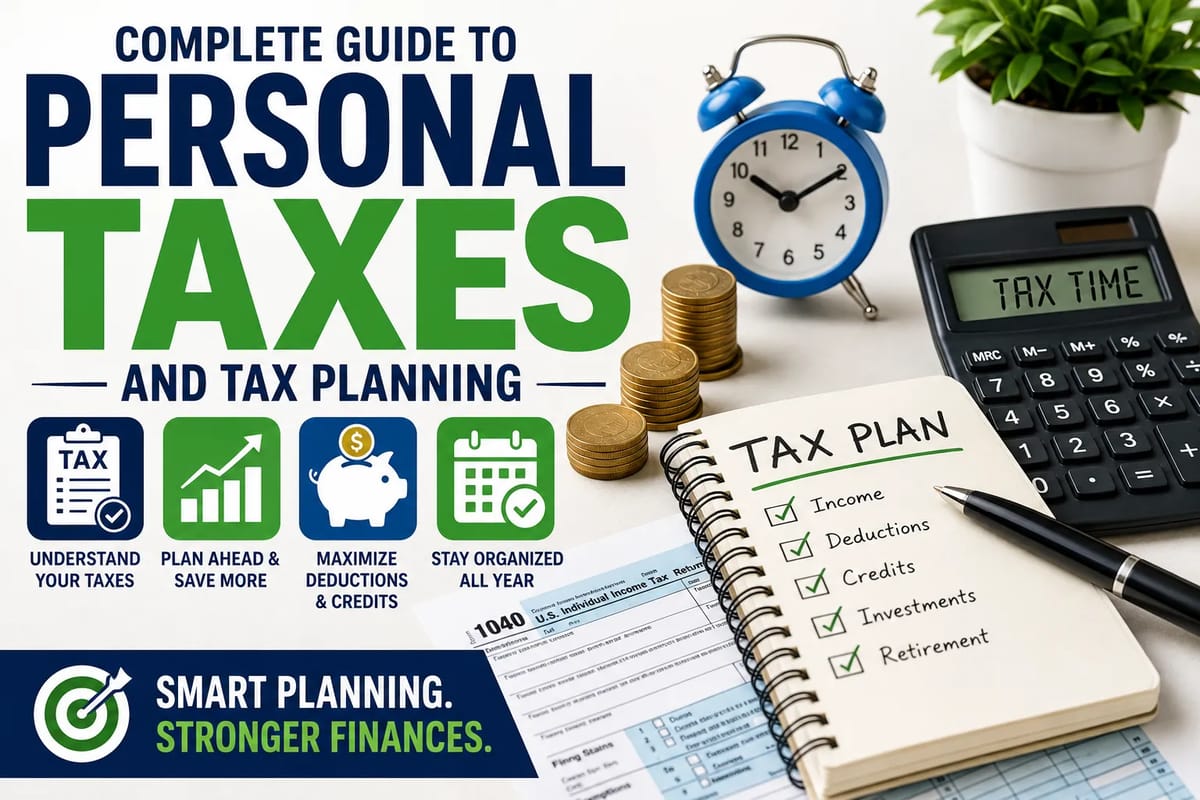
Complete Guide to Personal Taxes and Tax Planning
Taxes are one of the few financial obligations that affect almost everyone, yet many people only think about them when a filing deadline is approaching.
That can be an expensive habit.
Personal tax planning is not simply about finding ways to reduce a tax bill. It is about understanding how different types of income, deductions, credits, investments, business activities, and major life events can affect what you owe throughout the year.
A good tax strategy can also help you avoid unpleasant surprises, improve cash flow, organize financial records, and make better decisions about saving and investing.
Because tax laws vary significantly between countries and can change from year to year, the principles in this guide are intentionally broad. Specific rates, deductions, credits, filing deadlines, and eligibility requirements should always be checked with the tax authority in your jurisdiction or a qualified tax professional.
What Are Personal Taxes?
Personal taxes are taxes imposed on individuals based on factors such as income, spending, property ownership, investments, or other taxable activities.
The exact tax system depends on where you live.
Common types of personal taxes can include:
- Income tax
- Capital gains tax
- Property taxes
- Payroll or social insurance taxes
- Investment taxes
- Consumption taxes
- Estate or inheritance taxes
- Local or regional taxes
Not every country has all of these taxes, and some may apply only in specific circumstances.
For most people, income tax is one of the most important areas to understand. The complete guide to income taxes and taxable income provides a deeper look at how different forms of income can become subject to tax.
What Is Tax Planning?
Tax planning is the process of organizing your financial affairs so you understand and legally manage your tax obligations.
It can involve:
- Estimating your annual income
- Tracking deductible expenses
- Understanding available tax credits
- Reviewing investment decisions
- Planning retirement contributions
- Managing business income
- Adjusting withholding or estimated payments
- Keeping appropriate records
- Preparing for major life changes
The key word is planning.
Tax planning works best when it happens throughout the year rather than immediately before filing.
Tax Planning vs. Tax Avoidance vs. Tax Evasion
These concepts should not be confused.
Tax Planning
Tax planning involves using legitimate provisions of the tax system to manage your tax liability.
Examples can include claiming deductions you qualify for or using an available retirement-tax benefit.
Tax Avoidance
Tax avoidance generally refers to legally arranging financial affairs to reduce tax within the rules.
The distinction between legitimate planning and unacceptable arrangements can depend heavily on local law.
Tax Evasion
Tax evasion involves deliberately concealing income, falsifying information, or otherwise breaking tax laws to avoid paying taxes.
It is illegal.
A simple rule is useful:
Never hide income or fabricate deductions simply to reduce your tax bill.
How Income Tax Generally Works
Although tax systems differ, many income-tax systems follow a basic sequence:
Income → Adjustments → Taxable income → Tax calculation → Credits → Payments already made → Final balance or refund
Understanding this structure makes tax documents much easier to follow.
Step 1: Identify Your Income
Start by determining how much taxable income you received during the year.
This may include:
- Salary
- Wages
- Bonuses
- Freelance income
- Business profits
- Interest
- Dividends
- Rental income
- Investment gains
- Pension income
- Royalties
- Certain government payments
Not every payment you receive is necessarily taxable, and some income may receive special treatment.
The important point is to identify all potentially taxable income before calculating your liability.
Step 2: Determine Adjustments and Deductions
Certain expenses or contributions may reduce the amount of income subject to tax.
Depending on your jurisdiction, these may include things such as:
- Retirement contributions
- Qualifying education expenses
- Certain business expenses
- Charitable contributions
- Specific medical expenses
- Interest expenses
- Other legally recognized deductions
Rules vary considerably.
Do not assume that an expense is deductible simply because it relates to work or personal finances.
The complete guide to tax deductions and credits explains the distinction between deductions and credits and the types of benefits taxpayers may encounter.
Step 3: Calculate Your Tax
After determining taxable income, the applicable tax rates are used to calculate the tax liability.
Many income-tax systems use progressive rates.
Under a progressive system, different portions of income can be taxed at different rates.
This means moving into a higher tax bracket does not necessarily mean your entire income is taxed at the higher rate.
For a closer explanation, see how tax brackets and marginal rates work.
Step 4: Apply Tax Credits
Tax credits work differently from deductions.
A deduction generally reduces taxable income.
A tax credit reduces the calculated tax itself.
The IRS describes a tax credit as reducing income tax owed dollar-for-dollar, with some credits being refundable.
That distinction can be extremely important when planning.
Step 5: Subtract Taxes Already Paid
If taxes have already been withheld from your salary or paid through estimated payments, those amounts are generally credited toward your final liability under systems that use such payments.
The result may be:
- A balance you still owe
- A refund
- Little or no additional payment
A refund is not necessarily a tax “bonus.”
It can simply mean you paid more tax during the year than was ultimately required.
Taxable Income Is Not Always the Same as Total Income
One of the most important concepts in tax planning is that the amount you earn is not necessarily the amount on which you are ultimately taxed.
Suppose someone receives:
- Salary
- Investment income
- Business income
Certain adjustments and deductions may reduce the amount that becomes taxable.
This is why tax planning should focus on the entire tax calculation rather than simply looking at gross income.
Deductions vs. Tax Credits
This distinction is worth understanding clearly.
Tax Deduction
A deduction reduces taxable income.
Tax Credit
A credit reduces the calculated tax.
For example, if someone has $50,000 of income and qualifies for a $5,000 deduction, the deduction generally reduces the income subject to tax.
A $5,000 tax credit, by contrast, can directly reduce the calculated tax by $5,000, subject to the rules governing that credit.
The actual value of a deduction therefore depends on the taxpayer’s applicable tax rate, while a qualifying dollar-for-dollar credit can have a more direct effect.
Refundable vs. Nonrefundable Credits
Some tax credits can be refundable.
A refundable credit may provide a refund even when the credit exceeds the taxpayer’s remaining tax liability, subject to the rules of the particular credit.
A nonrefundable credit generally cannot reduce tax below the applicable limit.
Always check the specific credit’s rules.
Understand Your Filing Status
In countries where filing status affects tax treatment, your status can influence:
- Tax rates
- Deductions
- Credits
- Allowances
- Reporting requirements
Changes in marital or family circumstances can therefore have tax consequences.
Do not automatically assume that the filing status you used last year remains correct this year.
The complete guide to tax filing and returns covers the broader process of preparing and submitting a tax return.
Keep Track of All Sources of Income
One of the most common tax mistakes is focusing only on salary.
Additional income can come from:
- Freelancing
- Consulting
- Online businesses
- Rental property
- Investments
- Side jobs
- Digital products
- Royalties
- Interest
- Dividends
The more income streams you have, the more important organized recordkeeping becomes.
Self-Employment Requires Extra Planning
Employees may have taxes withheld automatically from their pay.
Self-employed individuals often have to take greater responsibility for calculating and paying taxes themselves.
For example, the U.S. tax system generally requires people with income not subject to sufficient withholding to make estimated tax payments during the year.
The precise rules differ by country.
If you are self-employed, do not wait until filing season to discover that you owe a large amount.
Set aside money throughout the year.
Tax Withholding
Withholding is the amount of tax taken from certain payments before you receive the money.
For employees, an employer may withhold taxes from wages and send the amounts to the relevant tax authority.
The objective is to pay taxes gradually rather than receiving a large bill at the end of the year.
Review Your Withholding After Major Changes
It can be useful to review withholding after events such as:
- Starting a new job
- Receiving a large raise
- Getting married
- Having a child
- Starting a business
- Taking a second job
- Receiving significant investment income
- Buying or selling property
- Retiring
In the U.S., the IRS specifically recommends reviewing withholding when life circumstances or tax laws change.
Other countries have their own systems and procedures.
Estimated Tax Payments
People with income that does not have enough tax withheld may need to make estimated payments.
This can apply to income such as:
- Freelance earnings
- Business profits
- Rental income
- Interest
- Dividends
- Capital gains
The exact requirements vary.
In the U.S., for example, estimated tax can cover both income tax and certain other taxes, and insufficient payments can sometimes result in penalties.
If you receive substantial income outside traditional employment, investigate your estimated-payment requirements early.
Keep Good Tax Records
Tax planning becomes much easier when your records are organized.
Keep records of:
- Income
- Invoices
- Receipts
- Bank statements
- Investment transactions
- Donations
- Business expenses
- Property expenses
- Retirement contributions
- Tax forms
- Previous tax returns
The exact retention period depends on local law.
Separate Business and Personal Expenses
If you operate a business or freelance regularly, separating business finances from personal finances can make tax reporting significantly easier.
Consider maintaining:
- A dedicated business account
- Separate expense records
- Organized invoices
- Digital copies of receipts
- A bookkeeping system
This also makes it easier to understand whether the business is actually profitable.
Common Tax Deductions
The deductions available to individuals vary by country.
Potential categories in some tax systems include:
- Certain employment expenses
- Business expenses
- Retirement contributions
- Charitable donations
- Qualifying education costs
- Certain medical expenses
- Mortgage-related expenses
- Investment-related costs
Never assume that a category is deductible simply because another taxpayer claimed it.
Eligibility requirements can include income limits, documentation requirements, spending thresholds, and restrictions on personal use.
Don’t Confuse a Personal Expense With a Business Expense
This is particularly important for freelancers and business owners.
Buying something because you use it while working does not automatically make the entire cost deductible.
A tax authority may distinguish between:
- Personal use
- Business use
- Mixed use
When an expense has both business and personal purposes, special allocation rules may apply.
Keep evidence supporting the business portion.
Home Office Expenses
Working from home does not automatically make every household expense deductible.
Where home-office deductions exist, they can have detailed requirements.
Depending on the jurisdiction, factors may include:
- Whether the space is used regularly
- Whether it is used exclusively for business
- The nature of the work
- Business-use percentage
- Documentation
- Local deduction rules
Check the applicable rules before claiming home-office costs.
Charitable Contributions
Charitable giving may qualify for tax benefits in some jurisdictions.
However, eligibility can depend on:
- The recipient organization
- Type of donation
- Amount donated
- Documentation
- Filing method
- Local rules
Keep receipts and official acknowledgments where required.
Do not assume that giving money to any organization automatically creates a tax deduction.
For a deeper look at the relationship between donations and tax strategy, see how charitable giving can affect tax planning.
Medical and Education Expenses
Some tax systems provide deductions or credits related to qualifying medical or education costs.
These benefits can have strict requirements.
Before assuming an expense qualifies, check:
- Who paid it
- Who received the service
- Whether the expense is eligible
- Income thresholds
- Required documentation
- Annual limits
Retirement Contributions and Tax Planning
Retirement planning and tax planning often overlap.
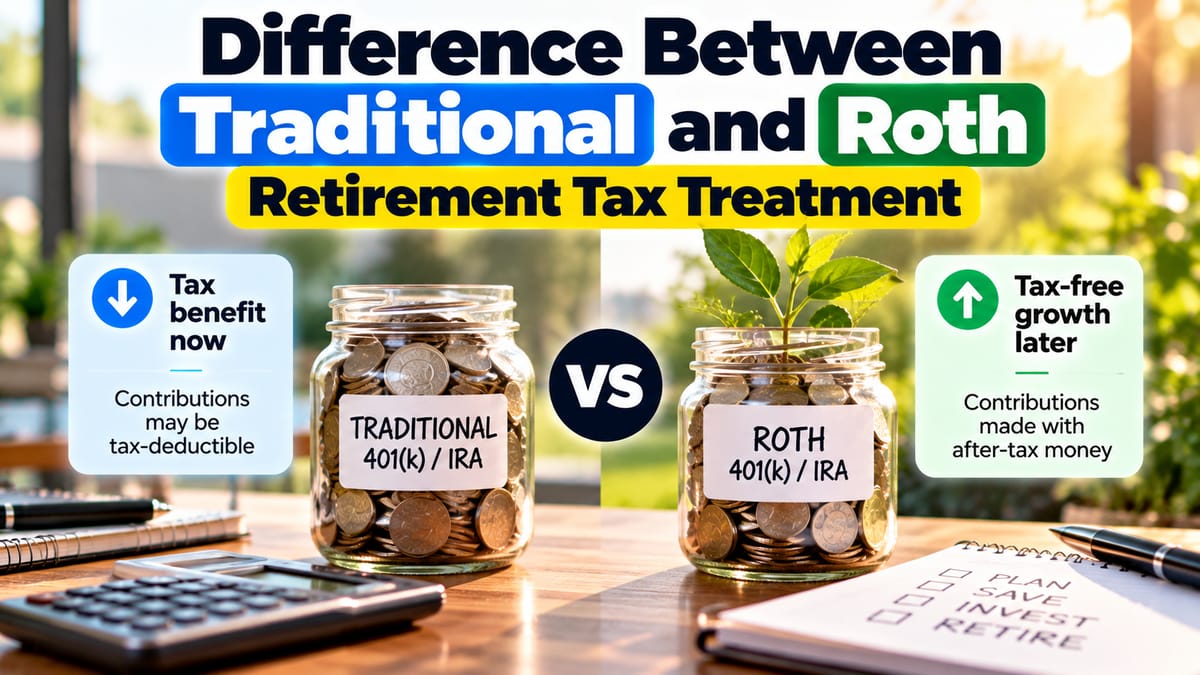
Depending on the country and retirement system, contributions may:
- Reduce taxable income
- Receive tax credits
- Grow tax-deferred
- Receive other tax advantages
- Be taxed when withdrawn
The best option depends on your age, income, retirement goals, tax bracket, and local rules.
Don’t Choose a Retirement Account Based Only on the Tax Benefit
Consider the entire structure.
Look at:
- Contribution limits
- Tax treatment of contributions
- Investment options
- Withdrawal rules
- Employer contributions
- Fees
- Penalties
- Tax treatment in retirement
A tax benefit today may be valuable, but long-term costs and restrictions matter too.
Investment Taxes
Investments can create several types of taxable income.
These may include:
- Interest
- Dividends
- Capital gains
- Rental income
- Royalties
- Other distributions
The tax treatment can differ depending on the type of investment and how long you hold it.
For more detail, see how investment income and capital gains are taxed.
Capital Gains
A capital gain generally occurs when you sell an asset for more than your adjusted cost or tax basis, subject to the rules of the relevant tax system.
Assets that may generate capital gains include:
- Shares
- Investment property
- Businesses
- Certain digital assets
- Other investments
Capital losses may sometimes offset capital gains, subject to local rules.
Keep Investment Records
For every investment transaction, keep records of:
- Purchase date
- Purchase price
- Fees
- Sale date
- Sale proceeds
- Relevant adjustments
Without accurate records, calculating taxable gains can become difficult.
Tax-Loss Harvesting
In some jurisdictions, investors can strategically realize investment losses to offset certain gains.
This practice is often called tax-loss harvesting.
It can be useful in specific circumstances, but it is not simply about selling anything that has fallen in value.
Consider:
- Investment objectives
- Transaction costs
- Future gains
- Local tax rules
- Restrictions on repurchasing the same or substantially identical assets
Tax considerations should not override a sound investment strategy.
Property and Real Estate Taxes
Owning property can introduce additional tax considerations.
Depending on where you live, these may include:
- Property taxes
- Rental income taxes
- Capital gains
- Transfer taxes
- Stamp duties
- Deductible property expenses
Property taxation can become especially complicated when an asset is both personally used and rented out.
Buying a Home Can Affect Your Taxes
Homeownership can create tax consequences beyond the purchase price.
Potential issues include:
- Mortgage interest
- Property taxes
- Rental income
- Capital gains when selling
- Depreciation for certain rental properties
- Local transaction taxes
Do not assume that homeownership automatically creates a tax advantage.
The actual benefit depends on the rules in your jurisdiction and your personal circumstances.
Selling a Home
Selling property can trigger tax consequences.
The calculation may depend on:
- Purchase price
- Improvements
- Selling costs
- Length of ownership
- Primary vs. investment use
- Applicable exemptions
- Capital gains rules
Keep records of major improvements and transaction expenses.
They may be relevant to calculating the taxable gain under applicable rules.
Tax Planning for Families
Family circumstances can significantly affect tax planning.
Consider:
- Marriage
- Divorce
- Children
- Dependents
- Education
- Childcare
- Family businesses
- Inheritance
- Gifts
Tax benefits relating to children or dependents often have eligibility requirements.
The IRS, for example, lists child-related and dependent-care credits among the tax benefits available to qualifying individuals.
Other countries have entirely different systems.
For additional context, see how major life changes can affect your taxes.
Tax Planning for New Parents
Having a child can affect finances in many ways.
Depending on the jurisdiction, potential tax considerations may include:
- Child-related credits
- Dependent allowances
- Childcare benefits
- Education savings
- Family benefits
The most important step is to understand which programs actually apply to your circumstances.
Marriage and Taxes
Marriage can change tax treatment in jurisdictions that offer different filing statuses or household tax rules.
Before or after marriage, review:
- Filing status
- Combined income
- Withholding
- Deductions
- Credits
- Investment ownership
- Property ownership
A change in household structure can affect more than just the tax return.
Tax Planning After a Divorce
Divorce can introduce complicated tax issues involving:
- Property transfers
- Child-related benefits
- Support payments
- Investment assets
- Retirement accounts
- Filing status
- Shared businesses
These situations can become highly jurisdiction-specific.
Professional advice may be worthwhile when substantial assets or complicated financial arrangements are involved.
Tax Planning for Freelancers and Gig Workers
The growth of freelance and platform-based work has made tax planning increasingly relevant to people who do not receive a traditional salary.
If you earn money from:
- Freelancing
- Rideshare work
- Delivery services
- Consulting
- Online sales
- Content creation
- Digital services
keep records from the beginning.
Track:
Income + business expenses + taxes paid = financial picture
Do not wait until the end of the year to reconstruct everything from memory.
Create a Tax Savings Account
One practical strategy for people with variable or self-employment income is to maintain a separate account for tax money.
Every time you receive income, transfer an appropriate portion into the account.
The exact percentage depends on your country, income level, deductions, and circumstances.
The objective is simple:
Money reserved for taxes should not look like money available for spending.
Tax Planning for Business Owners
Business owners often face more complex tax decisions than employees.
Issues can include:
- Business structure
- Payroll
- Expenses
- Depreciation
- Inventory
- Estimated taxes
- Employee benefits
- Retirement plans
- Tax credits
- Recordkeeping
The right business structure can have legal, tax, and administrative consequences.
Get professional advice before restructuring a business solely for tax reasons.
Understand Depreciation
Businesses and some property owners may be able to deduct the cost of qualifying assets over time rather than all at once.
This is generally referred to as depreciation or a similar capital-cost allowance depending on the tax system.
The rules can be complicated.
They may depend on:
- Asset type
- Business use
- Purchase date
- Useful life
- Local tax rules
Keep detailed records of business assets.
Tax Planning for Investors With Multiple Income Streams
Multiple income streams can increase tax complexity.
Imagine someone earning money from:
- Employment
- Freelancing
- Dividends
- Rental property
- Online sales
Each category may have different reporting requirements.
The solution is not to avoid additional income.
It is to build a system for tracking it.
Use separate categories in your financial records so you can identify:
- Gross income
- Expenses
- Taxable income
- Taxes already paid
- Estimated future liability
Tax Planning When Your Income Changes
A major income change should trigger a tax review.
Examples include:
- Promotion
- Job change
- Bonus
- Business growth
- Large investment gain
- Property sale
- Retirement
- New side business
A strategy that worked when your income was lower may no longer be appropriate.
Avoid Lifestyle Inflation After a Raise
A higher income can increase your tax liability, but it can also provide an opportunity to improve your financial position.
When income increases, consider dividing the additional money among:
- Taxes
- Savings
- Retirement
- Debt repayment
- Investments
- Lifestyle spending
Do not automatically increase spending by the entire amount of your raise.
Tax Planning Before the End of the Year
The final months of the tax year can be an important planning period.
Review:
- Year-to-date income
- Taxes already paid
- Retirement contributions
- Charitable giving
- Investment gains and losses
- Business expenses
- Major purchases
- Potential deductions
- Expected credits
The earlier you identify a potential tax liability, the more options you may have.
Don’t Wait Until Filing Season
By the time you file your return, many tax-planning opportunities for the previous year may already be unavailable.
Some decisions must be made before the end of the tax year.
Others may have different deadlines.
A calendar can help.
For practical organization, how to plan taxes throughout the year provides a framework for making tax planning a recurring process rather than a once-a-year task.
Tax Planning During the Year
A simple quarterly routine can make taxes much easier.
January–March
Review the previous year’s tax return.
Identify major changes in income and expenses.
April–June
Update your income estimate.
Review withholding or estimated payments.
July–September
Check investment gains and losses.
Review business income and expenses.
October–December
Complete year-end planning.
Gather documentation.
Check upcoming tax deadlines.
The exact timing depends on your country’s tax year and filing system.
How to Reduce Your Tax Bill Legally
Tax reduction should begin with benefits you are genuinely entitled to claim.
Potential strategies can include:
- Claiming eligible deductions
- Using qualifying tax credits
- Making tax-advantaged retirement contributions
- Managing investment gains and losses appropriately
- Keeping accurate business expense records
- Reviewing withholding
- Timing certain transactions when legally appropriate
The key is eligibility.
Never create an expense simply because you want a deduction.
Don’t Let Taxes Drive Every Financial Decision
A tax deduction does not make an expense free.
If you spend $1,000 simply to obtain a $200 tax benefit, you are still $800 poorer before considering any other benefit.
The same principle applies to investments.
Do not sell an asset simply because you want to realize a tax loss if doing so damages a sound long-term investment strategy.
Taxes matter, but they are only one part of financial decision-making.
Tax Diversification
For long-term financial planning, it can sometimes be useful to have assets with different tax treatments.
Depending on the jurisdiction and available accounts, these might include:
- Taxable investments
- Tax-deferred retirement accounts
- Tax-free or tax-advantaged accounts
- Cash savings
- Property
- Business assets
Different tax treatments can provide flexibility later in life.
However, account rules differ substantially between countries.
Keep an Eye on Tax Law Changes
Tax rules can change.
New legislation can introduce:
- New deductions
- New credits
- Higher or lower thresholds
- Changes to retirement rules
- New reporting requirements
- Changes to business taxation
For example, U.S. federal tax rules for 2026 include several new or enhanced individual deductions, including provisions related to qualifying tips, overtime, certain vehicle-loan interest, and an additional deduction for some older taxpayers.
These provisions are specific to U.S. federal taxation and should not be generalized to other countries.
The broader lesson applies everywhere:
Do not assume this year’s tax rules are identical to last year’s.
Use Official Tax Resources
When researching taxes online, prioritize the official tax authority in your jurisdiction.
Official sources can provide:
- Current tax rates
- Filing deadlines
- Forms
- Deductions
- Credits
- Payment instructions
- Eligibility rules
- Recordkeeping requirements
For U.S. taxpayers, the IRS provides current publications, forms, calculators, and withholding resources.
For other countries, use the equivalent government tax authority.
Be Careful With Social Media Tax Advice
Tax advice spreads quickly online.
A short video or post might say:
“Everyone can deduct this.”
or:
“This trick means you pay no taxes.”
Those claims should be treated cautiously.
Tax rules frequently depend on details that short-form content leaves out.
Before acting on tax advice, verify:
- The country
- Tax year
- Income level
- Eligibility
- Filing status
- Documentation requirements
- Applicable exceptions
When Should You Hire a Tax Professional?
Not everyone needs professional tax preparation or planning every year.
A relatively straightforward employee with one source of income may be able to handle a basic return using appropriate software or government resources.
Professional advice becomes more valuable when you have:
- Multiple businesses
- Significant investments
- Rental properties
- International income
- Complex stock compensation
- Large capital gains
- Trusts or estates
- Major business transactions
- Inheritance
- Complex family circumstances
The cost of professional advice should be weighed against the complexity and potential consequences of getting something wrong.
Questions to Ask a Tax Professional
If you hire an adviser, ask:
- What qualifications do you have?
- Are you familiar with my type of income?
- What records should I keep?
- What deductions or credits might apply?
- What deadlines matter?
- Are there tax-planning opportunities before year-end?
- What assumptions are you making?
- What are the risks of the strategy you recommend?
A good adviser should be able to explain the reasoning behind recommendations rather than simply giving you a number to pay.
A Personal Tax Planning Checklist
Use this checklist throughout the year.
Income
- Record every income source.
- Track salary and bonuses.
- Track freelance and business income.
- Record investment income.
- Record rental income.
- Keep relevant tax documents.
Deductions
- Track potentially deductible expenses.
- Keep receipts.
- Separate personal and business spending.
- Review retirement contributions.
- Check charitable contributions.
- Verify eligibility before claiming deductions.
Credits
- Review available tax credits.
- Check income limits.
- Keep eligibility documentation.
- Review family-related credits.
- Check education or retirement-related benefits where applicable.
Investments
- Track purchase prices.
- Record investment fees.
- Record sales.
- Calculate potential gains and losses.
- Review the tax consequences before major transactions.
Payments
- Review withholding.
- Make estimated payments if required.
- Track payments already made.
- Avoid unexpected year-end liabilities.
Records
- Store digital copies.
- Keep previous returns.
- Maintain organized receipts.
- Keep business records separate where appropriate.
Common Personal Tax Mistakes
Ignoring Side Income
Online income is still income that may have tax consequences.
Waiting Until the Deadline
Last-minute preparation increases the chance of missing deductions, documents, or deadlines.
Claiming Every Expense as a Deduction
An expense must actually qualify under the applicable rules.
Forgetting Investment Transactions
Brokerage accounts can contain many transactions that need to be reported or documented.
Spending a Refund Immediately
A refund can be useful for savings, debt repayment, or investing rather than automatically becoming discretionary spending.
Failing to Update Withholding
A major income or family change can alter your tax liability.
Not Keeping Records
Even a legitimate deduction can become difficult to defend without appropriate documentation.
What to Do With a Large Tax Refund
Receiving a refund can feel like a financial windfall.
But remember that the money generally represents taxes you previously overpaid.
Consider using a substantial refund to:
- Build an emergency fund
- Pay down high-interest debt
- Increase retirement savings
- Invest
- Fund a necessary purchase
- Cover upcoming expenses
If you consistently receive very large refunds, review whether your withholding can be adjusted appropriately under your local tax system.
In the U.S., the IRS provides a withholding estimator specifically to help taxpayers determine whether they are having an appropriate amount withheld.
What to Do If You Owe More Than Expected
Do not ignore a tax bill.
First, confirm that the return is accurate.
Then determine:
- Why the balance is higher than expected
- Whether estimated payments were insufficient
- Whether income changed
- Whether deductions or credits were missed
- What payment options are available
If you cannot pay the full amount, contact the relevant tax authority rather than simply failing to respond.
Payment arrangements may be available in some jurisdictions.
Tax Planning Is Really Cash-Flow Planning
One of the most useful ways to think about taxes is as part of your broader cash-flow system.
Your financial life has money coming in and money going out.
Taxes are one of those outflows.
When you understand your expected tax liability, you can avoid treating money reserved for taxes as disposable income.
This is particularly important for freelancers, business owners, landlords, and investors with irregular income.
Build a Personal Tax Calendar
Create a calendar containing:
- Tax filing deadlines
- Estimated payment dates
- Investment reporting deadlines
- Business filing deadlines
- Retirement contribution deadlines
- Important document dates
Set reminders well before each deadline.
A tax deadline should never be a surprise.
Review Your Tax Strategy Every Year
A tax strategy should evolve as your financial life changes.
At least once a year, review:
- Income
- Employment
- Business activities
- Investments
- Property
- Family circumstances
- Retirement savings
- Tax payments
- Deductions
- Credits
- Upcoming financial decisions
A strategy that was appropriate when you were an employee with one income source may be completely inadequate after starting a business and buying rental property.
A Simple Tax-Planning Framework
You can organize the entire process around five questions:
1. What Did I Earn?
Identify every potentially taxable income source.
2. What Can I Legally Reduce?
Review eligible deductions and adjustments.
3. What Credits Apply?
Look for qualifying tax credits.
4. What Have I Already Paid?
Review withholding and estimated payments.
5. What Changes Are Coming?
Plan for upcoming income, investment, family, business, or property changes.
This framework turns tax planning from a once-a-year scramble into an ongoing financial habit.
The Best Tax Strategy Starts Before Tax Season
Personal tax planning does not have to be complicated.
The foundation is surprisingly straightforward: understand your income, know the rules that apply to you, keep accurate records, monitor your tax payments, and plan ahead when your financial circumstances change.
Deductions and credits can reduce tax when you genuinely qualify for them, but they should be treated as part of a broader financial strategy rather than as reasons to spend money unnecessarily. Official tax guidance distinguishes deductions, which generally reduce taxable income, from credits, which reduce the tax itself.
The biggest improvement many people can make is simply moving tax planning earlier in the year.
Don’t wait for the tax return to tell you what happened. Use the year to understand what is likely to happen, keep the right records, make informed decisions, and prepare for the bill before it arrives.
Tax laws will continue to change, and personal circumstances will change with them. The people who stay organized and verify the rules applicable to their situation are usually in a much stronger position to manage their tax obligations without unnecessary stress or surprises.