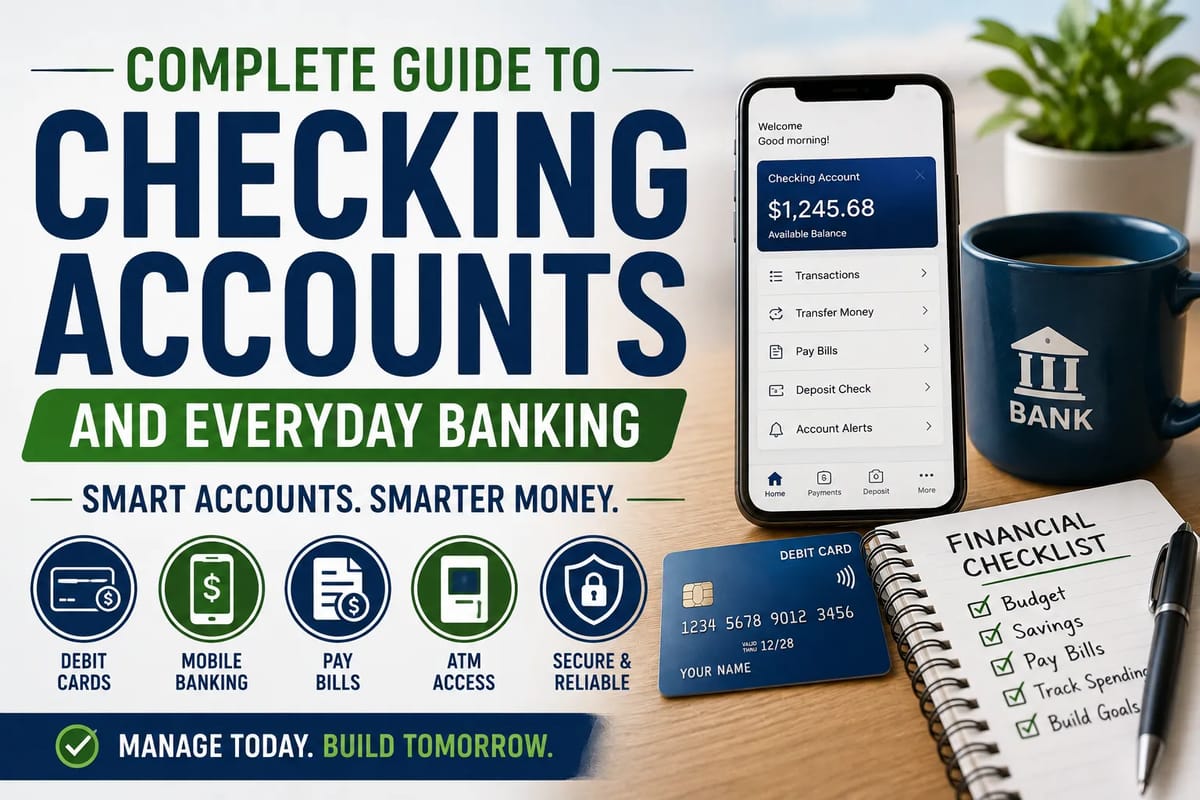
Complete Guide to Checking Accounts and Everyday Banking
For most people, a checking account is the foundation of everyday money management.
It is where income can be deposited, bills can be paid, purchases can be made and money can be transferred between accounts. Yet choosing the right checking account involves more than simply picking a bank and opening an account.
Fees, minimum balances, overdraft policies, ATM access, digital banking features and customer service can all affect how useful an account becomes over time.
Understanding how checking accounts work can help consumers avoid unnecessary costs and build a banking setup that fits the way they actually manage money.
What Is a Checking Account?
A checking account is a bank or credit-union deposit account designed primarily for frequent transactions.
Unlike a savings account, which is generally intended for setting money aside, a checking account is built for everyday financial activity.
Common uses include:
- Receiving salaries or other income
- Paying bills
- Making purchases
- Withdrawing cash
- Sending money
- Receiving transfers
- Paying subscriptions
- Managing household expenses
Money in a checking account is generally available on demand, subject to the institution’s policies and applicable regulations.
How Does a Checking Account Work?
When you open a checking account, the financial institution provides you with an account number and other information needed to receive and move money.
You can then deposit funds into the account.
Once money is available, you can generally use it through methods such as:
- Debit cards
- Electronic transfers
- Online bill payments
- Mobile banking
- ATM withdrawals
- Checks, where supported
- Person-to-person payment services
Every transaction changes your available balance.
The basic principle is simple:
Money coming in increases your balance, while money going out decreases it.
The challenge is keeping track of both so that you do not spend more than you actually have available.
Checking Accounts vs. Savings Accounts
Checking and savings accounts serve different purposes.
| Feature | Checking Account | Savings Account |
|---|---|---|
| Primary purpose | Everyday spending | Saving money |
| Frequent transactions | Yes | Usually less frequent |
| Debit card | Common | Less common |
| Bill payments | Common | Not usually the primary purpose |
| Interest | Often low or none | Often higher |
| Emergency savings | Possible, but not ideal for everyone | Common use |
| Cash access | Usually convenient | Depends on institution |
Many people benefit from having both.
A checking account can handle everyday expenses while a separate savings account holds money for emergencies, planned purchases and longer-term goals.
For a broader look at the different account types available and how they fit different financial purposes, see the complete guide to bank accounts and account types.
How to Choose a Checking Account
The best checking account is not necessarily the one offered by the biggest bank.
Instead, look at how the account fits your actual financial habits.
Consider:
- Monthly fees
- Minimum balance requirements
- ATM availability
- Overdraft policies
- Direct deposit options
- Mobile banking
- Transfer capabilities
- Cash deposit options
- Customer service
- Interest, if offered
- Account-opening requirements
Someone who regularly visits branches may value physical locations.
Someone who does nearly everything through a phone may prefer a digital-first bank.
When comparing different accounts, it can help to evaluate the complete package of fees, features, security and value rather than focusing on a single advertised benefit.
Monthly Maintenance Fees
Some checking accounts charge a monthly maintenance fee.
Depending on the account, the fee may be waived when certain conditions are met.
For example, a bank might waive the fee if you:
- Receive qualifying direct deposits
- Maintain a minimum balance
- Meet a specified transaction requirement
- Maintain another qualifying account
Before opening an account, determine the standard monthly fee and exactly how it can be avoided.
A small monthly charge can become a significant annual expense.
For example, a $10 monthly fee costs $120 over a year.
If the account provides no meaningful benefit compared with a fee-free alternative, the cost may not be worthwhile.
Free Checking Accounts
A free checking account generally means the account does not charge a recurring monthly maintenance fee under its standard terms.
However, “free” does not necessarily mean that every service is free.
There may still be charges for:
- Out-of-network ATM withdrawals
- Wire transfers
- Cashier’s checks
- Stop-payment orders
- Overdraft services
- International transactions
- Paper statements
Read the fee schedule rather than relying only on the word “free.”
Minimum Balance Requirements
Some checking accounts require customers to maintain a certain balance.
If you fall below the required amount, you may face a monthly fee or lose certain benefits.
Minimum-balance accounts can work well for people who consistently maintain sufficient cash.
They may be less convenient for people whose account balance fluctuates significantly throughout the month.
What Is a Debit Card?
A debit card is linked directly to your bank account.
When you make a purchase using the card, money is generally deducted from the account according to the transaction-processing rules of the bank and card network.
Debit cards can be used for:
- Retail purchases
- Online shopping
- Restaurants
- Transportation
- Subscriptions
- ATM withdrawals
Because the money comes from your bank account rather than a credit line, spending with a debit card does not normally create traditional credit-card debt.
However, overdrawing an account can still create problems depending on the bank’s policies.
Debit Cards vs. Credit Cards
The two can look similar at the checkout counter, but they work differently.
With a debit card, purchases generally draw from money already held in your checking account.
With a credit card, purchases are made against a line of credit and are repaid later.
Credit cards may offer rewards and can help establish credit history when used responsibly.
Debit cards can provide a simpler way to spend directly from available funds.
Neither should automatically be considered better.
The right choice depends on spending habits, financial goals and the ability to manage credit responsibly.
Understanding Your Available Balance
One of the most important banking habits is knowing the difference between your account balance and the amount you can safely spend.
A transaction may be pending even though it has not fully posted.
Some deposits may also take time to become available.
Your bank may therefore display different figures for:
- Current balance
- Available balance
- Pending transactions
- Available credit, if applicable
Always pay attention to the amount actually available for spending.
Why Pending Transactions Matter
A debit-card purchase can sometimes appear as pending before it is fully processed.
This is particularly common with:
- Hotels
- Car rentals
- Restaurants
- Gas stations
- Online merchants
Some businesses may place temporary authorization holds on funds.
If you ignore these holds, you could accidentally spend money that is temporarily unavailable.
Checking your account regularly can help prevent surprises.
Direct Deposit
Direct deposit allows an employer or another organization to send money electronically into your bank account.
It is commonly used for:
- Salaries
- Government payments
- Pension payments
- Certain benefits
- Other recurring income
Direct deposit can make money available without requiring you to deposit a physical check.
Some checking accounts also offer benefits or fee waivers when customers receive qualifying direct deposits.
Setting Up Direct Deposit
The information required varies by financial institution and employer, but commonly includes:
- Bank name
- Account number
- Routing or bank-identification information
- Account type
Use the information provided directly by your financial institution or employer.
If you change banks, allow enough time for the new account information to be processed before closing the old account.
Online Banking
Online banking has transformed checking accounts from physical places into services that can be accessed almost anywhere.
Through an online banking platform, customers may be able to:
- Check balances
- Review transactions
- Transfer money
- Pay bills
- Deposit checks
- Download statements
- Manage cards
- Lock or unlock cards
- Set alerts
Digital access can make it easier to monitor your money frequently.
For a broader explanation of digital banking services, features and security considerations, see how digital banking and online banking work.
Mobile Banking Apps
Mobile banking apps can provide many of the same services as online banking through a smartphone.
Useful features may include:
- Mobile check deposits
- Transaction notifications
- Card controls
- Account alerts
- Money transfers
- Budgeting tools
- Biometric authentication
However, consumers should install banking apps only from trusted sources and keep their devices updated.
Bank Alerts Can Prevent Problems
Account alerts are one of the simplest ways to improve everyday banking.
Depending on the institution, you may be able to receive notifications when:
- Your balance falls below a certain amount
- A large purchase occurs
- A deposit arrives
- A payment is made
- A card transaction occurs
- An unusual login is detected
These alerts can help identify unauthorized activity quickly.
They can also help you avoid accidentally spending more than intended.
ATM Access
ATM availability can be an important factor when choosing a checking account.
Check:
- Number of in-network ATMs
- Out-of-network ATM fees
- ATM withdrawal limits
- Cash deposit availability
- International ATM fees
- ATM accessibility in locations you regularly visit
A bank with a high-quality mobile app may still be inconvenient if you regularly need physical cash and cannot easily access fee-free ATMs.
Understanding ATM Fees
An ATM transaction can potentially involve more than one fee.
You may encounter:
- A fee from the ATM operator
- A fee from your bank
- Foreign transaction or currency-conversion charges when applicable
Before withdrawing cash, check whether the ATM is within your bank’s network.
Repeated small ATM fees can add up over time.
Cash Deposits
Not every checking account makes cash deposits equally convenient.
Traditional banks may offer branch-based cash deposits, while some online banks rely on partner networks.
If you regularly receive or handle cash, investigate the deposit process before opening an account.
A bank that is excellent for digital transactions may not be suitable for someone who frequently needs to deposit physical cash.
Mobile Check Deposits
Some banks allow customers to deposit checks by taking photographs with a smartphone.
The general process involves:
- Endorsing the check according to the bank’s instructions.
- Opening the bank’s mobile app.
- Entering the deposit amount.
- Photographing both sides of the check.
- Submitting the deposit.
- Keeping the check until the bank confirms that it is no longer needed.
Deposit availability can vary.
Do not assume that money is immediately available simply because the deposit appears in your account.
Understanding Bank Holds
Banks may place holds on certain deposits before funds become available for withdrawal.
The timing depends on factors such as:
- Deposit type
- Amount
- Account history
- Deposit method
- Bank policies
- Applicable regulations
When planning a major payment, confirm when deposited funds will actually be available.
What Is an Overdraft?
An overdraft can occur when transactions cause an account balance to fall below zero or when a transaction is otherwise paid despite insufficient available funds, depending on the bank’s system and policies.
Potential consequences can include:
- Fees
- Declined transactions
- Returned payments
- Negative balances
- Additional account restrictions
The exact rules differ between financial institutions and account types.
How to Avoid Overdraft Problems
Several habits can reduce the risk.
Monitor Your Balance
Check your account regularly.
Enable Low-Balance Alerts
Set a notification before your balance becomes dangerously low.
Keep a Buffer
If possible, maintain a small amount of money that you do not treat as spendable.
Track Automatic Payments
Subscriptions and recurring bills can cause unexpected withdrawals.
Understand Pending Transactions
Remember that pending purchases may reduce the amount of money available to spend.
Automatic Payments
Automatic payments can make everyday banking much easier.
They can be used for:
- Rent or mortgage payments
- Utilities
- Insurance
- Streaming services
- Internet
- Phone bills
- Loan payments
But automation also creates a risk: forgotten subscriptions can continue withdrawing money for months or years.
Review automatic payments regularly.
Cancel services you no longer use.
Managing Recurring Bills
A useful approach is to create a list of all recurring payments.
Include:
- Amount
- Due date
- Payment method
- Frequency
- Account used
Then compare the list with your bank statements.
This can reveal subscriptions or services you forgot about.
Bank Statements Still Matter
Digital banking makes it easy to check a balance without reviewing transactions.
That is a mistake.
A bank statement provides a broader picture of what happened during a particular period.
Review statements for:
- Unknown transactions
- Duplicate charges
- Unexpected fees
- Recurring payments
- Incorrect deposits
- Unusual withdrawals
Even if you use banking alerts, a periodic statement review is valuable.
How to Spot Unauthorized Transactions
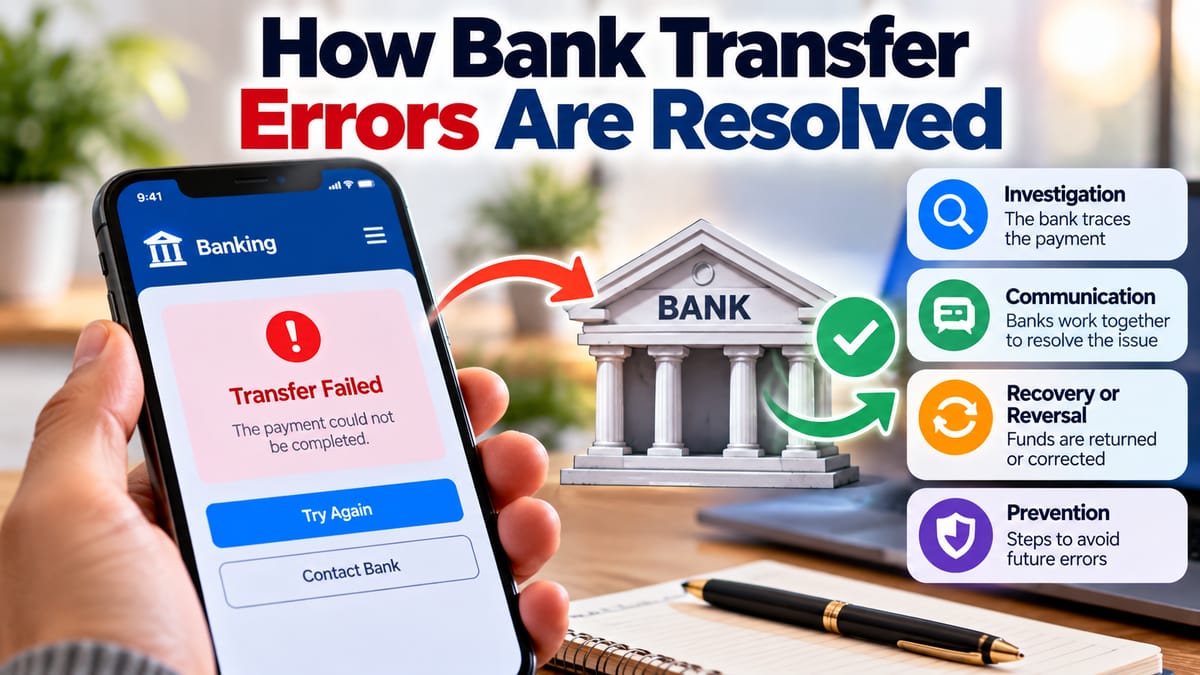
Contact your bank promptly if you see a transaction you do not recognize.
Potential warning signs include:
- Small unfamiliar purchases
- Multiple transactions at a merchant you do not recognize
- Unexpected ATM withdrawals
- Online purchases you did not make
- New recurring payments
- Changes to account information
Fraudsters sometimes begin with a small transaction to test whether a card or account is active.
Do not ignore unfamiliar activity simply because the amount is small.
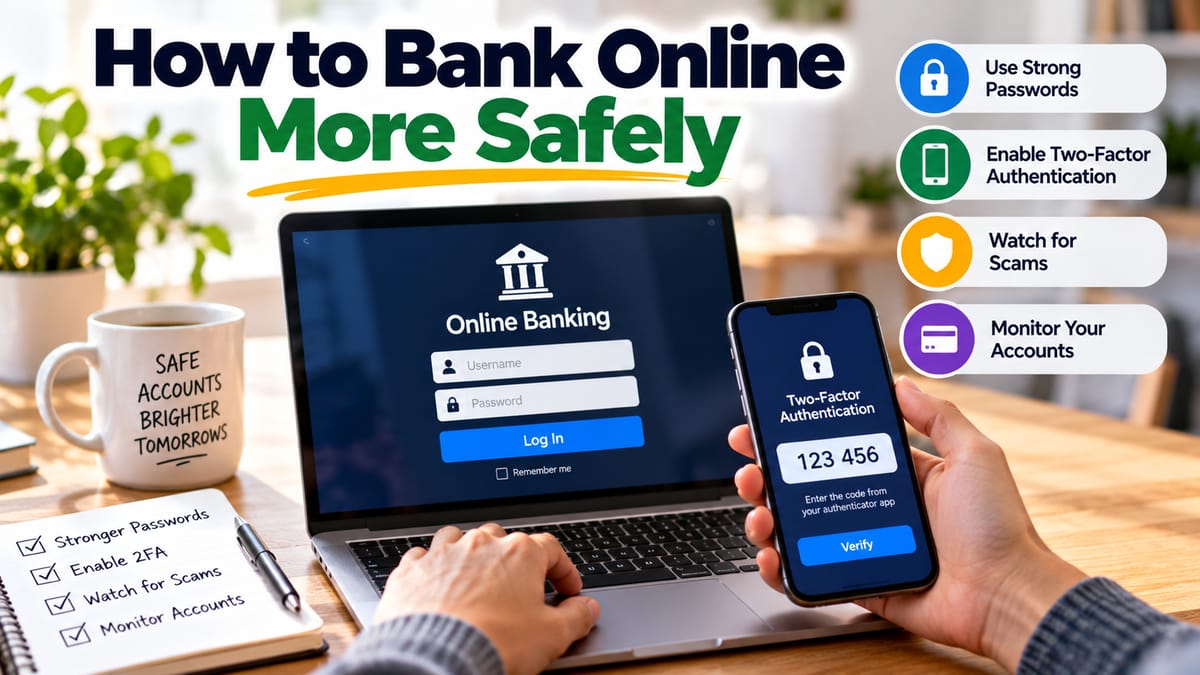
Protecting Your Banking Information
Everyday banking requires careful digital security.
Good practices include:
- Use a strong, unique password
- Enable multifactor authentication
- Avoid sharing banking credentials
- Keep your phone and computer updated
- Avoid logging into sensitive accounts through suspicious links
- Use official banking apps and websites
- Monitor account alerts
- Never disclose one-time security codes to strangers
Banks will generally have specific procedures for verifying customers, but legitimate institutions should not require you to hand over passwords or security codes to an unknown caller.
Beware of Banking Scams
Scammers may impersonate:
- Banks
- Government agencies
- Police
- Delivery companies
- Employers
- Financial institutions
They may claim that your account has been compromised and pressure you to move money or reveal a security code.
Urgency is a common warning sign.
If someone contacts you unexpectedly about your account, stop and verify the request using an official phone number or banking app.
Do not use contact information supplied in a suspicious message.
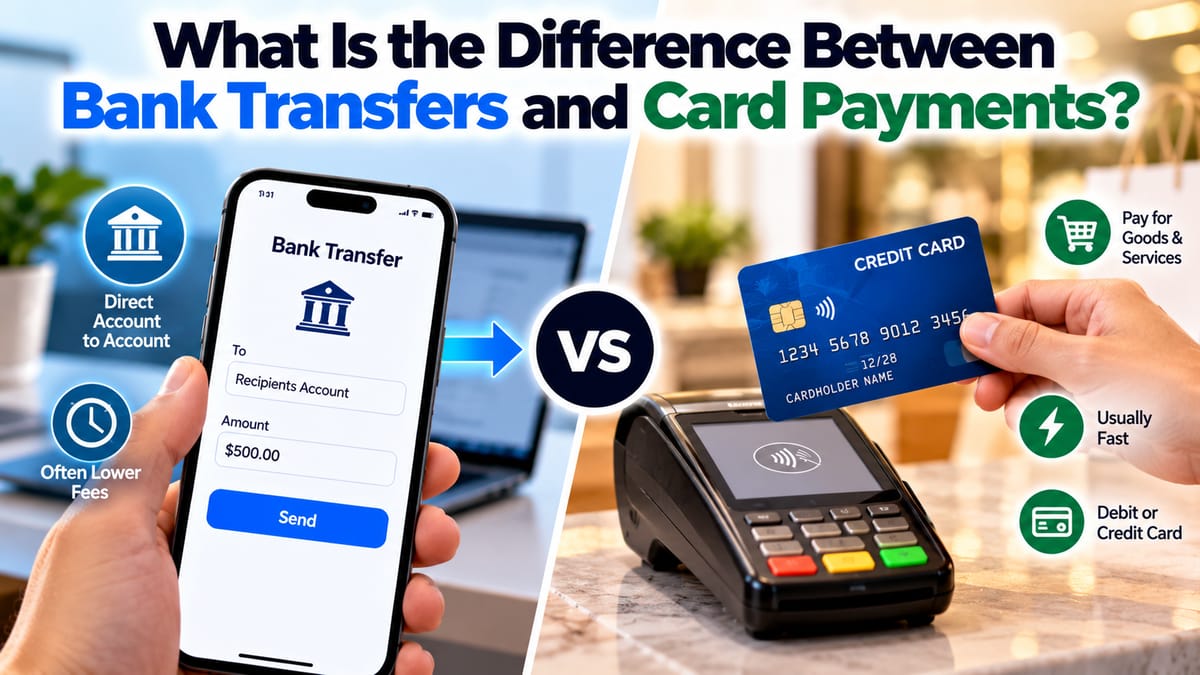
What Is a Bank Transfer?
A bank transfer moves money electronically from one account to another.
Transfers can occur:
- Between your own accounts
- Between different banks
- Between individuals
- Between businesses and customers
The exact transfer methods, speed and fees vary by country and financial institution.
Before sending a large amount, confirm the recipient’s details carefully.
Why Bank Account Details Need Protection
Your account number and other banking information can be sensitive.
While an account number alone does not necessarily allow someone to immediately access your money, criminals can combine financial information with other personal details to attempt fraud.
Avoid posting account information publicly.
Only provide banking details to trusted recipients and legitimate institutions when necessary.
Choosing Between a Traditional Bank and an Online Bank
Traditional banks typically provide:
- Branches
- ATMs
- Face-to-face service
- Broad product ranges
Online banks may provide:
- Competitive fees
- Strong mobile apps
- Digital account opening
- Potentially higher rates on certain products
- Fewer physical locations
Neither model is universally better.
Choose based on the services you actually use.
What About Credit Unions?
Credit unions are member-owned financial institutions that can offer checking accounts alongside other financial products.
Depending on the institution and location, they may provide:
- Checking accounts
- Savings accounts
- Loans
- Debit cards
- Online banking
- ATM access
Eligibility requirements can vary.
When comparing a credit union with a bank, look at fees, accessibility, technology, service and applicable deposit insurance rather than assuming one category is always better.
How Many Checking Accounts Should You Have?
There is no universal number.
One checking account may be enough for someone who prefers simplicity.
Others may use separate accounts for:
- Household expenses
- Personal spending
- Business activity
- Bills
- Short-term goals
Multiple accounts can make budgeting easier, but they also create more accounts to monitor.
If you use several accounts, establish a clear purpose for each one.
A Two-Account Banking System
A simple setup for many households is:
Checking account: Used for income, bills and everyday spending.
Savings account: Used for emergency funds and financial goals.
This separation can reduce the temptation to spend money intended for savings.
A Three-Account System
Some people prefer a slightly more structured approach:
Account 1 — Income and bills
Salary or other income arrives here, and recurring bills are paid from it.
Account 2 — Everyday spending
A predetermined amount is transferred for groceries, entertainment and other discretionary purchases.
Account 3 — Savings
Money intended for emergencies and future goals remains separate.
This structure is not necessary for everyone, but it can make budgeting easier.
Banking and Budgeting Work Together
A checking account does not create a budget by itself.
Instead, it provides the infrastructure through which your budget operates.
For example, if your monthly income is $3,000 and your essential expenses total $2,100, the remaining amount can be allocated toward:
- Savings
- Debt repayment
- Investments
- Discretionary spending
The exact percentages depend on your circumstances.
The important thing is that your checking account reflects a plan rather than simply becoming a place where money arrives and disappears.
Keep a Buffer for Timing Differences
Even when you have enough money for your monthly expenses, timing can create problems.
Your salary may arrive on one date while:
- Rent is due earlier
- Utilities are withdrawn later
- A card payment posts unexpectedly
- An annual insurance payment occurs
Maintaining a reasonable checking-account buffer can help manage these timing differences.
The size of the buffer depends on your income and expenses.
Reconcile Your Account Regularly
Reconciling means comparing your own records with the transactions shown by the bank.
You do not necessarily need a traditional paper checkbook.
You can use:
- A spreadsheet
- Budgeting software
- A banking app
- A notebook
- A personal finance application
The objective is to know whether the balance shown by the bank matches what you expect to have available.
What to Do When Your Income Changes
A change in income is a good reason to review your banking system.
If your income increases, consider directing some of the difference toward savings or debt reduction instead of immediately increasing spending.
If income falls, review:
- Recurring subscriptions
- Discretionary spending
- Automatic transfers
- Savings contributions
- Debt payments
A flexible banking system can make financial changes easier to manage.
Banking for Students
Students often have different priorities from established households.
Look for accounts with:
- Low or no monthly fees
- Convenient ATM access
- Mobile banking
- Low minimum balances
- Easy transfers
- Clear terms
Students should also be particularly cautious about overdraft fees and automatic subscriptions.
Banking for Families
Families may need features such as:
- Multiple account holders
- Joint accounts
- Bill payment
- Savings accounts
- Automated transfers
- Budgeting tools
A joint account can simplify shared expenses, but couples should also understand who has access to the money and how transactions are handled.
Joint Checking Accounts
A joint checking account generally gives multiple people access to the same account.
Couples or family members may use joint accounts for:
- Rent or mortgage
- Utilities
- Groceries
- Child-related expenses
- Shared subscriptions
Before opening one, discuss:
- Spending limits
- Savings goals
- Who pays which bills
- How large purchases are handled
- What happens if the relationship changes
Financial transparency is often more important than the account structure itself.
Banking for Small Businesses
Personal and business finances should generally be kept separate when operating a business.
A dedicated business checking account can help with:
- Tracking revenue
- Paying suppliers
- Managing business expenses
- Preparing financial records
- Simplifying tax documentation
Mixing personal and business transactions can make accounting and financial reporting more complicated.
Business owners should choose an account appropriate to their local legal and tax requirements.
How to Close an Old Checking Account
If you decide to switch banks, do not close your old account immediately.
First:
- Open the new account.
- Move recurring deposits.
- Update automatic payments.
- Transfer necessary funds.
- Wait for outstanding transactions to clear.
- Confirm that important payments have successfully moved.
- Download or save important statements.
- Close the old account according to the bank’s process.
This reduces the risk of a forgotten payment being rejected.
Keep Important Banking Records
Keep records of:
- Account-opening documents
- Statements
- Tax-related documents
- Loan information
- Major transfers
- Important correspondence
Digital records can be useful, but protect them with appropriate security.
You do not necessarily need to retain every piece of banking correspondence forever.
The appropriate retention period depends on the type of document and your financial or legal circumstances.
How Banking Fees Quietly Add Up
A single fee may seem insignificant.
But several recurring charges can become expensive.
Consider:
- Monthly maintenance
- ATM fees
- Overdraft charges
- Wire fees
- Foreign transaction fees
- Paper statement charges
Review your annual banking costs.
If you discover that you are paying significant fees for services you rarely use, compare alternatives.
Common Checking Account Mistakes
Choosing an Account Based Only on a Welcome Bonus
A promotional bonus can be attractive, but ongoing fees matter more over time.
Ignoring the Fee Schedule
Know what the bank charges before you open the account.
Spending Based on the Current Balance
Pending transactions may reduce your actual available funds.
Forgetting Automatic Payments
Subscriptions can continue long after you stop using them.
Keeping All Money in Checking
Large amounts of idle cash may be better suited to savings or other appropriate financial goals.
Ignoring Fraud Alerts
Unfamiliar transactions should be investigated quickly.
Closing an Old Account Too Quickly
Outstanding payments can create unnecessary complications.
A Simple Everyday Banking Routine
A few minutes of regular maintenance can prevent many problems.
Daily or Several Times a Week
Check important notifications and unusual transactions.
Weekly
Review your available balance and upcoming payments.
Monthly
Review your statement, recurring charges and spending.
Every Few Months
Review banking fees, account features and savings rates.
Annually
Evaluate whether your current banking setup still fits your financial needs.
This routine does not need to take long.
Consistency is more valuable than complexity.
A Checking Account Should Make Life Easier
The purpose of everyday banking is not to create another financial chore.
A good checking account should make it relatively easy to:
- Receive money
- Pay bills
- Spend responsibly
- Monitor transactions
- Transfer funds
- Access cash
- Detect problems
- Keep financial records
The best account depends on the individual.
Someone who values branches and personal service may choose a traditional bank.
Someone who prioritizes low fees and digital convenience may prefer an online institution.
Someone who wants a more community-oriented financial relationship may consider a credit union.
There is no universal winner.
How to Build a Better Everyday Banking System
Start by understanding how your money moves through your accounts.
Know when income arrives.
Know when major bills are withdrawn.
Know how much you normally spend.
Know what fees you are paying.
Know how quickly you can access emergency cash.
Then build your accounts around those realities.
For many people, a simple structure works well: one checking account for everyday money, one savings account for money that should remain untouched, and automated transfers between them.
From there, add complexity only when it solves a real problem.
The strongest everyday banking system is not necessarily the one with the most accounts or features. It is the one you understand, monitor regularly and can use without unnecessary fees or friction.
When your checking account, savings habits, automatic payments and budgeting system all work together, banking becomes less about reacting to your balance and more about deliberately managing where your money goes.