How to Build a Tax-Aware Financial Plan
Taxes can influence nearly every part of a financial plan, from how much you save and invest to when you sell assets, withdraw retirement money, or make major purchases. Yet tax planning is often treated as something that happens once a year when a tax return is prepared.
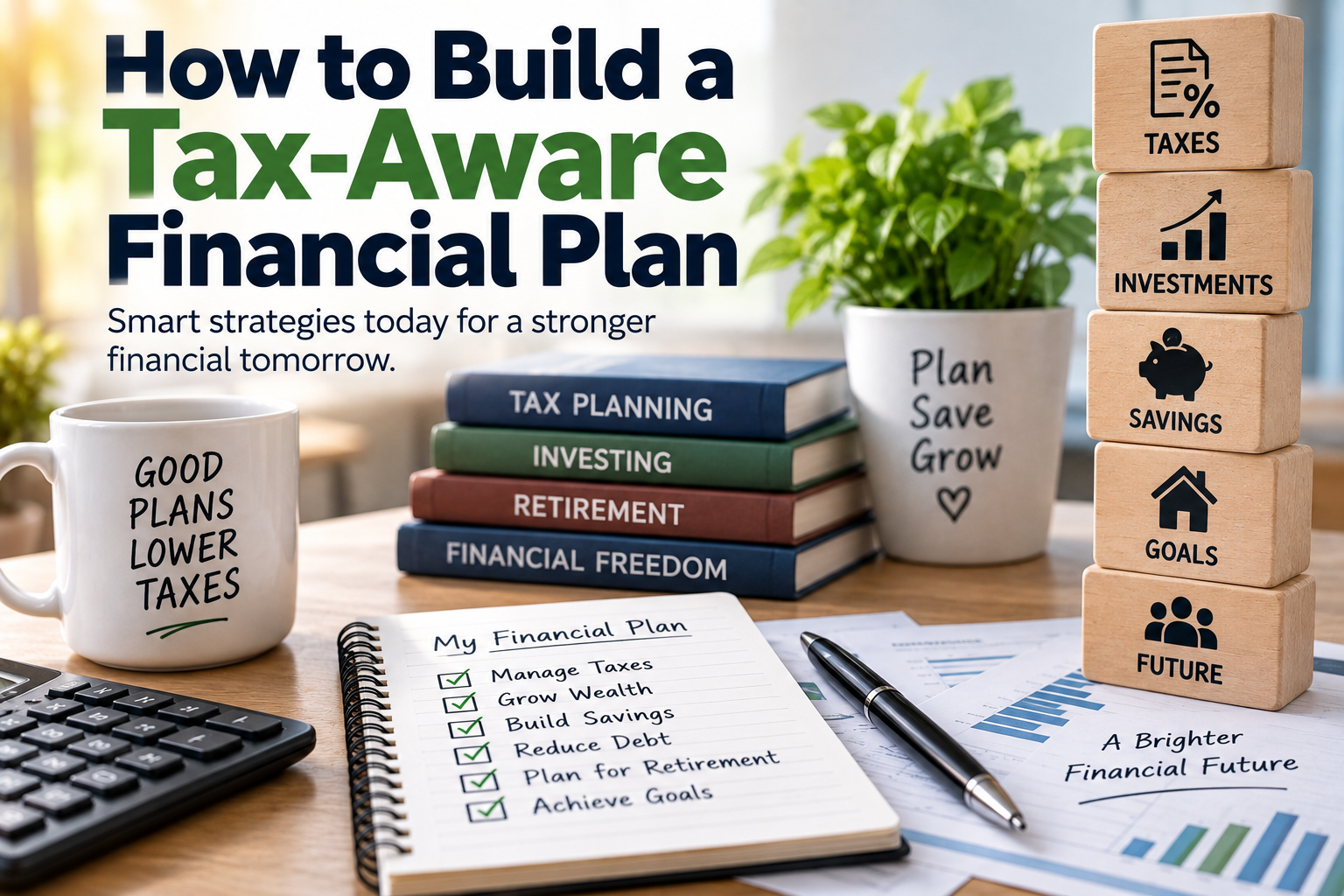
A tax-aware financial plan takes a different approach. It considers the tax consequences of financial decisions throughout the year and incorporates them into broader goals such as building wealth, preparing for retirement, managing cash flow, and protecting assets.
The exact tax rules, rates, deductions, and investment treatments vary by country and individual circumstances. The underlying planning principles, however, can help people make more informed financial decisions.
What Is a Tax-Aware Financial Plan?
A tax-aware financial plan is a financial strategy that considers taxes when making decisions about income, savings, investments, spending, retirement, and other financial goals.
The objective is not simply to pay as little tax as possible.
Instead, tax-aware planning focuses on understanding how taxes affect financial outcomes while remaining compliant with applicable tax laws.
A plan might consider questions such as:
- How much of your income will be taxable?
- Which deductions or credits may apply?
- How are your investments taxed?
- When should you realize gains or losses?
- How much should you reserve for taxes?
- Which accounts provide tax advantages?
- How might retirement withdrawals affect taxable income?
- What happens to your tax position when your income changes?
These questions can become more important as financial circumstances become more complex.
Start With Your Financial Goals
Tax planning should support your broader financial objectives rather than determine them by itself.
Start by identifying major goals such as:
- Building an emergency fund
- Paying down debt
- Buying a home
- Saving for education
- Investing for long-term growth
- Preparing for retirement
- Starting a business
- Leaving assets to family
- Creating a source of future income
Once these goals are clear, taxes can be incorporated into the decisions needed to achieve them.
For a broader foundation, the Complete Guide to Personal Taxes and Tax Planning explores the role of tax planning in personal financial management.
Understand Your Sources of Income
The first step in building a tax-aware plan is understanding where your money comes from.
Income may include:
- Employment wages
- Self-employment income
- Business profits
- Interest
- Dividends
- Capital gains
- Rental income
- Pension income
- Retirement distributions
- Royalties
- Other sources
Different types of income can receive different tax treatment.
Keeping a clear record of income sources makes it easier to estimate your overall tax position and identify areas that may require additional planning.
Distinguish Gross Income From Taxable Income
The amount of money you receive is not necessarily the same as the amount subject to tax.
Depending on the applicable tax system, certain deductions, exclusions, allowances, or other adjustments may reduce taxable income.
For example, someone could receive a certain amount of total income but have a lower taxable amount after qualifying adjustments.
Understanding this distinction is essential because financial decisions based on gross income alone can produce misleading estimates of how much money will actually be available after taxes.
Create a Tax Calendar
Tax planning becomes easier when important dates are visible throughout the year.
A tax calendar can include:
- Filing deadlines
- Estimated payment deadlines
- Investment-related dates
- Retirement contribution deadlines
- Business tax deadlines
- Property-related tax dates
- Record-keeping reminders
Rather than waiting until tax season, review your expected tax position periodically.
How to Plan Taxes Throughout the Year provides additional guidance on turning tax planning into an ongoing process.
Estimate Your Tax Liability
An annual tax estimate can help you determine whether enough money is being set aside.
Your estimate can start with expected income and then account for applicable deductions, credits, investment income, business income, and other relevant factors.
The estimate does not have to be perfect.
Its purpose is to provide a reasonable picture of your potential tax obligation so you can identify significant differences before the end of the year.
If your income changes substantially, update the estimate rather than continuing to rely on an outdated projection.
Keep Money Set Aside for Taxes
Unexpected tax bills can create cash-flow problems.
This can be especially relevant for self-employed people, investors, landlords, and others whose taxes may not be fully withheld from their income.
One practical approach is to set aside part of relevant income in a separate savings account.
The amount to reserve depends on your circumstances and applicable tax rules.
The important principle is to avoid treating money that may eventually be needed for taxes as fully available spending money.
Understand Your Tax Bracket
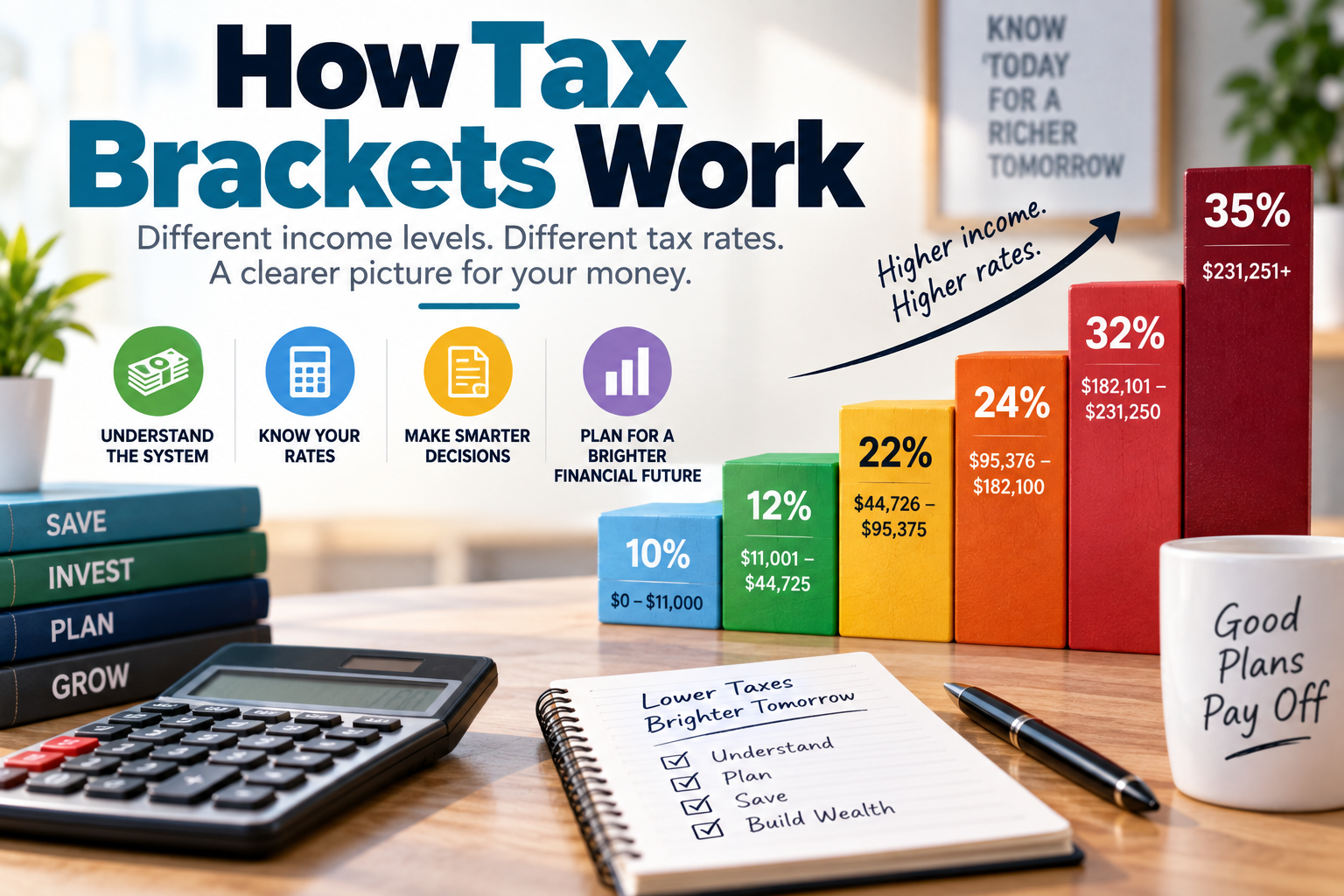
Many income tax systems use rates that vary according to taxable income.
When progressive tax rates apply, earning additional income does not necessarily mean that all income is suddenly taxed at the highest applicable rate.
Understanding how tax brackets work can make financial planning more precise.
It can also prevent common misunderstandings when evaluating raises, bonuses, investment gains, business income, or other increases in earnings.
Include Deductions and Credits in the Plan
Deductions and tax credits can affect the amount of tax ultimately owed, but they work differently.
A deduction generally reduces the amount of income subject to tax, while a credit generally reduces the tax calculated under the applicable rules.
Eligibility requirements vary.
The Complete Guide to Tax Deductions and Credits provides a broader explanation of these two important tax-planning concepts.
Keep documentation for any deduction or credit you intend to claim rather than relying on memory at filing time.
Think About Taxes When Investing
Investment decisions can have tax consequences.
Depending on the jurisdiction and investment, taxable events may include:
- Selling an investment for a gain
- Receiving dividends
- Receiving interest
- Selling certain assets
- Withdrawing money from particular accounts
The timing of an investment transaction can therefore affect the tax year in which income or gains are recognized.
How Investment Income and Capital Gains Are Taxed explains these concepts in greater detail.
Consider the Difference Between Taxable and Tax-Advantaged Accounts
Some financial accounts receive special tax treatment.
Depending on the country and account type, tax advantages might involve:
- Contributions receiving deductions
- Investment growth receiving preferential treatment
- Tax-deferred growth
- Certain withdrawals receiving favorable treatment
The rules can be complex, and an account’s tax benefit should not be considered in isolation.
Fees, investment options, withdrawal restrictions, contribution limits, and personal financial goals can all matter.
Avoid Making Investments Solely for Tax Reasons
Tax benefits can be useful, but they should not automatically justify a financial decision.
For example, purchasing an asset simply because it offers a potential deduction can still leave you with less money overall if the underlying purchase does not serve a genuine financial purpose.
A tax-aware plan considers the after-tax result rather than focusing exclusively on tax savings.
The question should be whether the overall financial decision makes sense after considering taxes, costs, risks, and expected benefits.
Consider the Timing of Capital Gains
Investors may sometimes have flexibility over when to sell an asset.
Selling can trigger a taxable gain or loss, depending on the circumstances.
Before making a sale, consider:
- Purchase price
- Current value
- Holding period
- Potential taxable gain or loss
- Other investment transactions
- Current and expected future income
- Overall investment objectives
Tax considerations can be part of the decision, but they should not override the underlying investment strategy.
Understand Tax-Loss Opportunities
Investment losses can sometimes have tax implications that differ from investment gains.
In jurisdictions where applicable rules permit certain losses to offset gains or other income, investors may consider whether realizing a loss fits their overall strategy.
However, tax-loss strategies can involve specific rules concerning which losses qualify and how quickly substantially similar investments can be repurchased.
Investors should understand the applicable rules before acting.
Think About Retirement Early
Retirement planning and tax planning are closely connected.
The tax treatment of retirement contributions and future withdrawals can affect how much money you ultimately have available.
A retirement plan should therefore consider:
- Current tax position
- Expected future income
- Contribution opportunities
- Account types
- Investment growth
- Withdrawal rules
- Required distributions where applicable
- Other retirement income
The objective is to build a retirement strategy that considers both the amount saved and the taxes that may apply when the money is eventually accessed.
Consider Future Tax Rates Without Assuming Them
No one can know with certainty what tax rates will be years or decades into the future.
However, financial plans can consider different scenarios.
For example, you might examine what happens if your future taxable income is:
- Lower than today
- Similar to today
- Higher than today
Scenario planning can help identify how different savings and investment choices might perform under varying tax conditions.
It is better to treat these as planning assumptions rather than predictions.
Account for Major Life Changes
Tax circumstances can change significantly when personal or financial circumstances change.
Examples include:
- Changing jobs
- Starting a business
- Getting married
- Having children
- Buying or selling property
- Receiving an inheritance
- Retiring
- Moving to another jurisdiction
- Selling a major investment
A financial plan should be reviewed when major events occur because the tax consequences can affect several parts of the strategy at once.
Plan for Self-Employment or Business Income
Business owners may have additional tax responsibilities that employees do not face.
These can include estimated payments, business deductions, payroll obligations, sales or consumption taxes, and specialized reporting requirements, depending on the jurisdiction and business structure.
A business owner should distinguish business finances from personal finances and maintain accurate records throughout the year.
Tax planning can also be integrated into business cash-flow projections so that upcoming obligations do not come as a surprise.
Keep Good Financial Records
A tax-aware financial plan depends on reliable information.
Maintain records related to:
- Income
- Investments
- Business expenses
- Charitable contributions
- Property transactions
- Retirement contributions
- Tax payments
- Major purchases
- Potential deductions
- Relevant financial statements
Digital organization can make this process easier, but important records should still be preserved according to applicable legal requirements.
Review Your Withholding
Employees who have taxes withheld from their paychecks can periodically review whether their withholding remains appropriate.
Changes in income, employment, deductions, family circumstances, or other financial factors can affect the amount that should be withheld.
If too little is withheld, you may face a larger tax bill when filing. If too much is withheld, you may receive a refund but have had less access to that money during the year.
The appropriate withholding level depends on individual circumstances and local tax rules.
Consider Charitable Giving as Part of the Plan
Charitable contributions may have tax implications in some jurisdictions.
However, giving should generally begin with the charitable objective rather than the potential tax benefit.
If a contribution qualifies for a tax benefit, that treatment can then be incorporated into the financial plan.
Keep appropriate documentation for qualifying contributions and verify the applicable requirements.
Think About Property Transactions
Buying or selling property can produce significant tax consequences.
Depending on the jurisdiction and property type, relevant considerations may include:
- Purchase costs
- Selling costs
- Capital gains
- Rental income
- Depreciation or similar deductions
- Property taxes
- Primary residence rules
- Investment property rules
Because property transactions can involve substantial amounts of money, understanding the tax implications before completing a transaction can be particularly important.
Build an Emergency Fund Before Optimizing Taxes
Tax optimization should not come at the expense of financial resilience.
An emergency fund can provide liquidity for unexpected expenses, job changes, repairs, or other financial disruptions.
A person with insufficient cash reserves may be forced to sell investments or take on expensive debt at an inconvenient time.
A tax-aware financial plan should therefore consider liquidity alongside tax efficiency.
Consider Debt and Taxes Together
Debt decisions can also have tax implications in certain circumstances.
Some forms of borrowing may receive specific tax treatment, while others do not.
However, the possibility of a tax benefit does not automatically make borrowing financially attractive.
Consider:
- Interest rate
- Loan term
- Total interest cost
- Tax treatment
- Cash-flow impact
- Risk
- Alternative uses for the money
The after-tax cost of borrowing can be useful information, but it should be considered alongside the broader financial consequences.
Review the Plan at Least Periodically
A tax-aware financial plan should evolve as your circumstances change.
A periodic review can examine:
- Income
- Expenses
- Investments
- Retirement savings
- Tax payments
- Deductions
- Credits
- Major financial goals
- Changes in tax rules
An annual review can be useful, but significant financial changes may justify reviewing the plan sooner.
Avoid Chasing Every Tax Strategy
Tax planning can become unnecessarily complicated when people try to use every available strategy.
A good financial plan should be understandable and manageable.
A strategy that saves a relatively small amount of tax but requires significant administrative work, creates additional risk, or interferes with a major financial goal may not be worthwhile.
Focus on strategies that are relevant to your circumstances and consistent with your broader objectives.
Know When to Seek Professional Advice
Some tax situations are relatively straightforward. Others can involve complicated rules and significant financial consequences.
Professional advice may be particularly useful when dealing with:
- Business ownership
- Large investment portfolios
- Significant capital gains
- International income
- Real estate transactions
- Inheritances
- Complex retirement arrangements
- Major changes in income
- Estate planning
A qualified tax professional or financial adviser can help evaluate circumstances that are difficult to address using general information alone.
A Simple Framework for Tax-Aware Planning
A practical framework can make tax planning easier to incorporate into everyday financial decisions.
1. Identify Income
List all major sources of current and expected income.
2. Estimate Taxable Income
Determine which portions may be taxable after applicable adjustments.
3. Review Deductions and Credits
Identify relevant opportunities and maintain supporting documentation.
4. Examine Investments
Consider how investment income, gains, losses, and account types affect the overall tax position.
5. Plan Cash Flow
Reserve money for expected tax payments and maintain sufficient liquidity.
6. Consider Major Transactions
Review potential tax consequences before selling investments, buying property, starting a business, or making other significant financial moves.
7. Update the Plan
Revisit assumptions when income, investments, family circumstances, or tax rules change.
Common Tax-Planning Mistakes
Several mistakes can undermine an otherwise sound financial plan.
Waiting Until Tax Season
Waiting until filing time can leave little opportunity to respond to financial changes.
Focusing Only on Tax Savings
A tax saving is not necessarily a financial gain if it requires an inefficient or unnecessary transaction.
Ignoring Investment Taxes
Investment returns should be considered on an after-tax basis when appropriate.
Failing to Keep Records
Missing documentation can make tax preparation more difficult and may prevent you from substantiating qualifying items.
Forgetting About Cash Flow
A tax liability can become a financial problem if the money needed to pay it has already been spent.
Using Outdated Assumptions
Tax rules and personal circumstances can change, making old calculations unreliable.
Building a Tax-Aware Financial Routine
Tax planning becomes easier when it is incorporated into regular financial management.
Each month or quarter, review income, expenses, investments, tax savings, and upcoming obligations. Before major transactions, consider their potential tax effects. At the end of the year, compare actual results with your earlier estimates and use what you learned to improve the following year’s plan.
This approach turns tax planning from a once-a-year administrative task into part of the broader financial decision-making process.
Making Taxes Part of the Bigger Financial Picture
A tax-aware financial plan does not attempt to eliminate taxes. Instead, it helps you understand how taxation interacts with the decisions you are already making.
Income, investments, retirement savings, property, business activities, deductions, and major financial transactions can all have tax consequences. Considering those consequences before making decisions can provide a clearer picture of their potential after-tax impact.
The most useful tax plan is one that remains connected to your broader financial goals, is based on accurate information, follows applicable tax rules, and is reviewed as your circumstances change.