How Families Can Plan Financially for Major Purchases
Major purchases can change a household’s finances for years. Buying a car, replacing major appliances, paying for education, renovating a home or purchasing expensive technology can all require more planning than an ordinary monthly expense.
The challenge is not simply finding enough money to make the purchase. Families also need to consider whether they can afford the ongoing costs, how the purchase will affect other financial goals and whether borrowing is necessary.
A thoughtful approach can make large purchases less stressful and reduce the risk of taking on unnecessary debt.
What Counts as a Major Purchase?
A major purchase is generally an expense large enough to require planning rather than being paid from ordinary day-to-day spending.
Examples include:
- Buying a vehicle
- Purchasing major appliances
- Paying school or university expenses
- Home improvements
- Furniture
- Electronics
- Medical or dental expenses
- Family vacations
- Wedding expenses
- Starting a business
- Moving to a new home
The definition varies from household to household.
A purchase that represents a small percentage of one family’s income could require months of saving for another.
The important question is not simply, “Is this expensive?”
It is:
“Will paying for this significantly affect our household finances?”
Start by Defining the Purchase
Before saving, borrowing or shopping, define exactly what the family intends to buy.
Write down:
- What the purchase is
- Why it is needed
- When it is needed
- The expected price
- Additional costs
- Whether the purchase is essential or optional
This prevents a vague goal from turning into uncontrolled spending.
For example, “We need a car” is less useful as a financial goal than:
“We want a reliable used vehicle within a specific price range within the next 12 months.”
A specific goal makes it easier to calculate how much needs to be saved.
Separate Needs From Wants
One of the most important steps is determining whether the purchase is necessary now.
Some purchases are genuine necessities.
A family may need to replace a refrigerator that has stopped working or purchase a vehicle required for commuting to work.
Other purchases may be desirable but flexible.
A larger television, upgraded smartphone or expensive furniture may be postponed if the household’s finances are under pressure.
This distinction does not mean families should never spend money on things they enjoy.
It simply helps determine which purchases should receive priority.
Calculate the True Cost
The advertised price is rarely the complete cost of ownership.
Before committing to a major purchase, identify all related expenses.
For a vehicle, for example, the total cost can include:
- Purchase price
- Taxes and registration
- Insurance
- Fuel
- Maintenance
- Repairs
- Parking
- Financing costs
For a home improvement project, costs might include:
- Materials
- Labor
- Permits
- Delivery
- Tools
- Waste removal
- Repairs discovered during the project
The real financial target should include these additional costs where applicable.
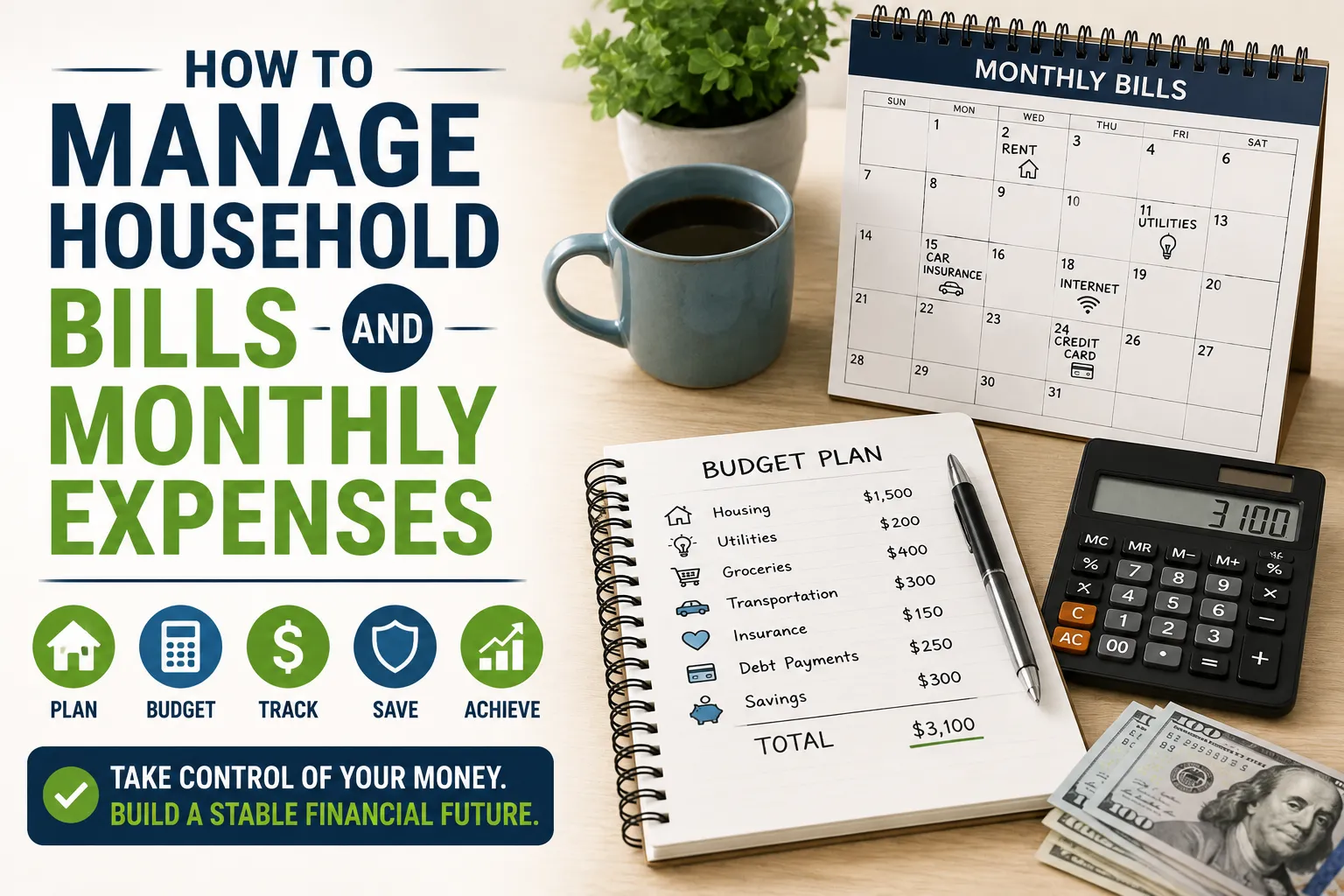
Review the Household Budget First
A major purchase should fit into the household’s broader financial picture.
Review:
- Monthly income
- Essential expenses
- Debt payments
- Savings contributions
- Insurance
- School expenses
- Utilities
- Food
- Transportation
- Existing financial commitments
The objective is to determine how much money is genuinely available for the purchase.
A family may have enough income to make a large payment while still being unable to comfortably afford the purchase once other obligations are considered.
Before making a large commitment, it can help to review how to build a family budget and see where the purchase fits within the household’s wider priorities.
Protect Emergency Savings
One of the biggest mistakes families can make is using all available savings for a major purchase.
An emergency fund exists for unexpected expenses such as:
- Job loss
- Urgent repairs
- Major household problems
- Unexpected travel
- Necessary medical expenses
- Other financial emergencies
Using the entire emergency reserve to buy something leaves the household more vulnerable afterward.
Before making a large purchase, consider whether enough emergency savings will remain.
Create a Separate Purchase Fund
A dedicated savings account or savings category can make a large financial goal easier to manage.
Instead of allowing money for the purchase to mix with everyday spending, create a clearly defined fund.
For example:
Major Purchase Fund: $6,000
If the family wants to reach the goal in 12 months:
$6,000 ÷ 12 = $500 per month
That gives the household a concrete monthly target.
The same calculation can be adjusted for different time frames.
Automate Savings Where Possible
Automatic transfers can make saving more consistent.
A family could arrange for a specific amount to move into the purchase fund whenever income is received.
This reduces the temptation to spend the money first and save whatever remains.
Even relatively small contributions can accumulate over time.
For example, saving $250 per month produces:
- $750 after three months
- $1,500 after six months
- $3,000 after 12 months
- $6,000 after 24 months
The exact results will depend on the amount saved and any interest earned.
Give Yourself a Deadline
A target date creates accountability.
Instead of saying:
“We should start saving for a new car.”
Set a clearer goal:
“We want to have the money available by June next year.”
Then calculate the required monthly or weekly contribution.
If the required amount is unrealistic, the family has several options:
- Extend the timeline
- Reduce the purchase budget
- Increase savings
- Increase household income
- Consider a less expensive alternative
The earlier the problem is identified, the more choices the family has.
Compare Prices Before Saving for a Target
Families sometimes choose a purchase price too quickly.
Researching the market can reveal that a similar product or service costs considerably less.
Compare:
- Different brands
- Different models
- New versus used
- Different retailers
- Different financing options
- Warranty terms
- Maintenance requirements
- Long-term operating costs
The goal is not necessarily to buy the cheapest option.
It is to understand what represents good value for the household.
Avoid Shopping Based Only on Monthly Payments
Monthly payment advertisements can make expensive purchases appear affordable.
A product might be advertised as costing a seemingly manageable amount each month.
But the family should also ask:
How much will we pay altogether?
Consider:
- Down payment
- Interest
- Fees
- Loan term
- Monthly payment
- Total repayment
A lower monthly payment can sometimes mean a much longer repayment period and a higher overall cost.
Decide Whether to Pay Cash or Borrow
There is no universal answer to whether a major purchase should be paid for with cash.
The decision depends on:
- Available savings
- Interest rates
- Household income
- Emergency reserves
- Expected investment returns
- Purchase urgency
- Loan terms
Paying cash avoids borrowing costs, but using all available savings can leave a family financially exposed.
Borrowing preserves cash but creates a future obligation.
The best choice balances both considerations.
Understand the Cost of Financing
When borrowing is necessary, focus on the total cost rather than simply the interest rate advertised.
Compare:
- Annual percentage rate or equivalent borrowing cost
- Loan fees
- Loan duration
- Monthly payment
- Total amount repaid
- Early repayment terms
- Penalties or additional charges
A loan with a slightly lower interest rate is not necessarily cheaper if it includes substantial fees.
Make a Larger Down Payment When Appropriate
A larger down payment can reduce the amount that needs to be borrowed.
This can potentially reduce:
- Monthly payments
- Total interest
- Loan duration
However, the family should not use money that is needed for emergencies simply to increase the down payment.
The right balance depends on the household’s financial circumstances.
Consider Opportunity Cost
Money used for a major purchase cannot be used for something else.
That is known as opportunity cost.
Suppose a family has enough savings to either:
- Make a large purchase immediately, or
- Keep the money available for another financial goal.
The decision should consider what the money could otherwise accomplish.
Potential alternatives might include:
- Building an emergency fund
- Paying down expensive debt
- Saving for education
- Investing
- Making a necessary home repair
This does not mean delaying every purchase.
It means understanding what is being sacrificed to make it.
Consider the Purchase’s Useful Life
A major purchase should ideally provide value for an appropriate period.
For example, a durable appliance that lasts many years may represent better value than a cheaper model that requires frequent replacement.
Ask:
- How long should it last?
- How often will it be used?
- What maintenance will it require?
- Can replacement parts be obtained?
- Is it repairable?
- Will it become obsolete quickly?
Price alone does not determine value.
Calculate Cost Per Use
Cost per use can be a useful way to evaluate some purchases.
Imagine a $1,000 item that is used 500 times.
Its simple cost per use is:
$1,000 ÷ 500 = $2 per use
A less expensive item that rarely gets used may ultimately provide less value.
This approach can be particularly useful when comparing equipment, appliances, tools and recreational purchases.
Don’t Forget Maintenance Costs
Ownership costs continue after the purchase.
Examples include:
Cars
Fuel, insurance, maintenance, repairs and registration.
Appliances
Electricity, water, filters, repairs and replacement parts.
Homes
Maintenance, utilities, insurance, property taxes and repairs.
Technology
Accessories, software subscriptions, repairs and upgrades.
A purchase that fits the budget today may become expensive if its ongoing costs are ignored.
Families should also account for costs that occur periodically rather than monthly. Budgeting for irregular household expenses can help prevent predictable maintenance, replacement and annual costs from being mistaken for financial emergencies.
Account for Inflation
Prices can change while a family is saving.
If a purchase is several years away, the original estimated cost may no longer be accurate.
This is especially relevant for:
- Vehicles
- Construction
- Education
- Housing
- Travel
- Large equipment
Review the target periodically and adjust the savings plan when necessary.
Build a Buffer Into the Budget
It is often wise to save slightly more than the expected purchase price.
Unexpected costs can appear during major purchases.
A family planning a $5,000 purchase might choose to save $5,500 or another appropriate amount rather than stopping exactly at $5,000.
The size of the buffer depends on the purchase.
Large projects with uncertain costs may require a bigger reserve than a clearly priced retail purchase.
Avoid Taking on High-Cost Debt
Using expensive short-term debt for a discretionary purchase can create financial problems long after the purchase has been forgotten.
Before using credit, understand exactly how much the borrowing will cost.
High-interest debt can grow quickly and compete with other household priorities.
If a purchase cannot reasonably be afforded without expensive borrowing, consider whether it should be delayed, reduced or replaced with a less expensive option.
Be Careful With Buy Now, Pay Later
Short-term installment services can make purchases appear easier to afford.
However, several small payment plans can accumulate into a significant monthly obligation.
Before using one, consider the total number of active payment plans and whether the household could still afford them if income fell temporarily.
Convenient financing should not be confused with affordability.
Plan Major Purchases Together
Family financial decisions work better when the people affected by the purchase understand the plan.
Discuss:
- Why the purchase is needed
- How much it will cost
- How it will be funded
- What sacrifices may be necessary
- When it should happen
- What happens if the price changes
This can prevent disagreements and make everyone more aware of the financial trade-offs.
Give Children Age-Appropriate Financial Involvement
Children do not need to manage household finances, but major purchases can provide useful opportunities to teach financial concepts.
Parents can explain ideas such as:
- Saving
- Delayed gratification
- Needs versus wants
- Comparing prices
- Budgeting
- Borrowing
- Interest
- Long-term planning
For example, if a family is saving for a vacation, children can participate in setting a goal and tracking progress.
The lesson is that large purchases usually require planning rather than impulse decisions.
For broader financial education at home, families can also explore how to teach children about money.
Consider Used or Refurbished Options
Buying used does not automatically mean buying inferior products.
For some categories, used or refurbished items can provide substantial savings.
Potential candidates include:
- Cars
- Furniture
- Electronics
- Tools
- Musical instruments
- Exercise equipment
However, research is essential.
Check condition, warranties, return policies, repair history and replacement costs before purchasing.
Delay Can Be a Financial Strategy
Waiting is sometimes the most powerful tool available.
A purchase can become easier to afford when a family:
- Saves longer
- Pays down debt
- Increases income
- Finds a lower price
- Waits for a more suitable model
- Improves its emergency savings
Delaying a purchase is not necessarily missing out.
Sometimes it is simply choosing to buy when the financial conditions are stronger.
Create a Major Purchase Checklist
Before making a significant purchase, ask:
Need
- Do we actually need it?
- What problem does it solve?
- Can something we already own serve the same purpose?
Cost
- What is the total purchase price?
- Are there additional costs?
- What will ownership cost over time?
Funding
- Can we pay cash?
- How much can we comfortably save?
- If borrowing, what is the total repayment?
Timing
- Do we need it now?
- Could waiting improve our financial position?
Alternatives
- Is there a less expensive option?
- Could we buy used or refurbished?
- Can we rent or borrow instead?
Financial Impact
- Will the purchase reduce emergency savings?
- Will it delay other important goals?
- Will monthly payments create pressure?
A Simple Example of Major Purchase Planning
Suppose a household wants to buy a vehicle costing $15,000.
The family has $4,000 available but wants to retain $3,000 as part of its emergency savings.
That means only $1,000 of current savings is comfortably available for the purchase.
The remaining $14,000 could potentially come from additional savings, a trade-in, another funding source or financing.
If the family decides to save $500 per month, reaching the $14,000 target would take:
$14,000 ÷ $500 = 28 months
The family could then decide whether nearly 2½ years is acceptable.
If not, it might:
- Increase monthly savings
- Choose a cheaper vehicle
- Extend the purchase timeline
- Combine savings with appropriate financing
The calculation turns an emotional decision into a practical financial choice.
Track Progress Without Obsessing Over It
A simple progress tracker can help families stay motivated.
For example:
| Month | Target Savings | Actual Savings | Difference |
|---|---|---|---|
| 1 | $500 | $500 | $0 |
| 2 | $1,000 | $950 | -$50 |
| 3 | $1,500 | $1,600 | +$100 |
| 4 | $2,000 | $2,050 | +$50 |
The exact numbers are less important than knowing whether the household is moving toward the goal.
If circumstances change, adjust the plan instead of abandoning it.
What If an Emergency Happens During the Savings Period?
Life does not always follow the budget.
A family may experience:
- Job loss
- Vehicle repairs
- Medical expenses
- Home repairs
- Reduced income
- Unexpected family obligations
In such situations, the major-purchase fund may need to take a lower priority.
That is one reason emergency savings should remain separate when possible.
A financial plan should be flexible enough to change when circumstances change.
Avoid Comparing Your Household With Others
Major purchases can become emotional when families compare themselves with friends, relatives or people on social media.
Someone else’s:
- Car
- Home
- Vacation
- Furniture
- Electronics
- Lifestyle
does not reveal their complete financial situation.
They may have a different income, different expenses, different savings or substantial debt.
A financially sensible purchase is one that fits your household’s circumstances, not someone else’s appearance of success.
Use Windfalls Carefully
Occasional income such as bonuses, gifts, refunds or other unexpected money can accelerate a major purchase.
However, allocating every windfall toward consumption can undermine other financial goals.
Before spending a large unexpected amount, consider whether part of it should go toward:
- Emergency savings
- High-cost debt
- Long-term investments
- Education
- The planned purchase
A windfall can be an opportunity to improve the household’s overall financial position rather than simply increase spending.
Review the Plan Before Making the Purchase
When the money has finally been saved, do one last financial review.
Ask:
- Is this still the right purchase?
- Has the price changed?
- Can we still afford the ongoing costs?
- Will buying it leave enough emergency savings?
- Are there better alternatives now?
- Are the financing terms still attractive?
- Does this purchase still support our priorities?
There is no rule saying that reaching a savings goal means the money must immediately be spent.
If circumstances have changed, the plan can change too.
Major Purchases Should Fit the Bigger Financial Picture
The strongest household financial plans do not treat major purchases as isolated events.
A new vehicle, appliance, renovation or family trip should be considered alongside emergency savings, debt management, retirement planning, education and everyday expenses.
That broader perspective can help families avoid a common problem: being able to afford the purchase itself but struggling with everything that comes afterward.
A major purchase is financially successful when the household gets the value it wanted without sacrificing its ability to handle ordinary expenses, unexpected problems and longer-term goals.
The most effective strategy is usually straightforward: define the goal, calculate the true cost, save deliberately, compare alternatives, understand financing and protect financial reserves. With those steps in place, large purchases become less about impulse and more about making a decision the household can comfortably live with long after the receipt has been put away.