What Does the Latest GDP Report Actually Mean for Your Paycheck, Spending and Savings?
The latest U.S. GDP report offers a mixed message for households.
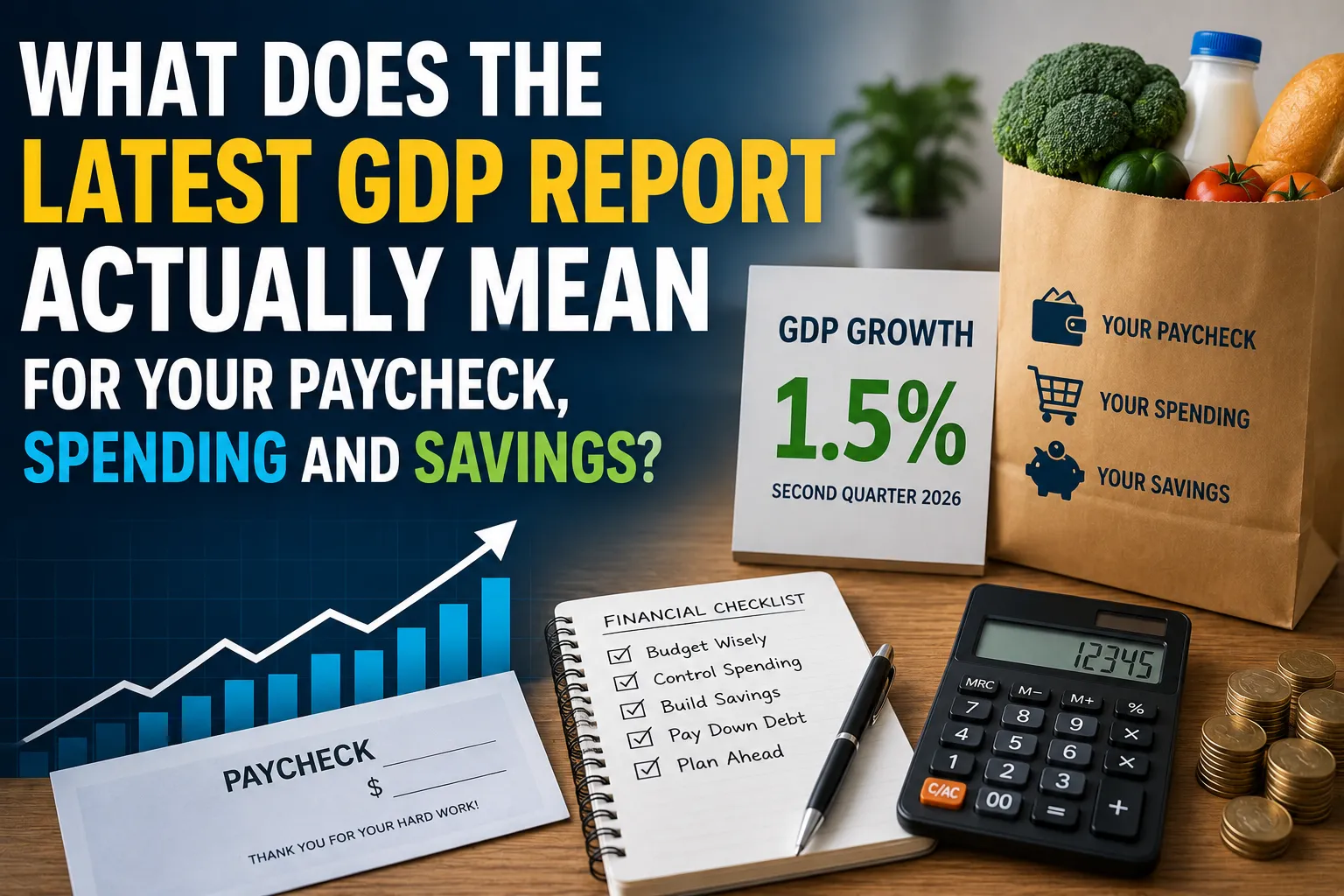
The economy continued to grow in the second quarter of 2026, but growth slowed from the previous quarter. Real gross domestic product increased at a 1.5% annual rate in the second quarter, down from 2.1% in the first quarter, according to the Bureau of Economic Analysis’ latest available estimate.
At first glance, a GDP number may seem like something that belongs to economists, investors and policymakers rather than ordinary households. But economic growth can eventually influence the things that matter in everyday life: jobs, wages, prices, borrowing costs, spending opportunities and the ability to build savings.
The important point is that GDP does not tell you what will happen to your paycheck next month. Instead, it provides a broad picture of the economy that can help explain the environment in which your household finances are operating.
The Economy Is Still Growing, Just More Slowly
The 1.5% GDP growth rate does not mean the U.S. economy is shrinking.
It means economic activity expanded during the April-through-June quarter, but at a slower annualized pace than in the first quarter.
The latest report showed that consumer spending, investment and exports contributed to growth, while government spending declined and imports increased.
There is also an important detail beneath the headline number.
Real final sales to private domestic purchasers — a measure combining consumer spending and private fixed investment — increased 3.9% in the second quarter, compared with 1.7% in the first quarter.
That suggests domestic private demand was considerably stronger than the headline GDP figure alone might imply.
For households, this distinction matters because consumer spending and private investment are more closely connected to everyday economic activity than the headline GDP figure by itself.
For additional context on how GDP fits together with inflation, employment, consumer spending and other measures, see the Complete Guide to Economic Indicators.
GDP Growth Does Not Automatically Mean a Bigger Paycheck
One of the easiest mistakes to make when reading a GDP report is assuming that stronger economic growth translates directly into higher wages.
It doesn’t work that way.
GDP measures the value of goods and services produced in the economy. Your paycheck depends on factors such as:
- Your occupation
- Your employer
- Demand for your skills
- Productivity
- Hours worked
- Bonuses and commissions
- Local labor-market conditions
- Wage negotiations
- Inflation
An economy can grow while some workers see little or no increase in their earnings.
Likewise, individual workers can receive substantial raises even when overall economic growth is relatively weak.
That is why GDP should be viewed as background information about the economic environment, rather than a forecast of your personal income.
The Labor Market Is More Important for Your Paycheck
If you’re trying to understand what the GDP report means for your income, employment data may be more useful.
When businesses are expanding and demand is strong, companies may have greater incentive to hire workers, increase hours or compete for employees.
When growth weakens substantially, employers may become more cautious.
That can affect hiring, overtime, bonuses and eventually wage growth.
The current picture is not one of an economy in outright contraction. But consumer confidence has weakened. The Conference Board reported that its consumer confidence index fell to 89.4 in August from 90.2 in July, with the expectations index declining as consumers became more pessimistic about future income, business and labor-market conditions.
That doesn’t mean widespread job losses are inevitable. It does mean households are becoming more cautious about what comes next.
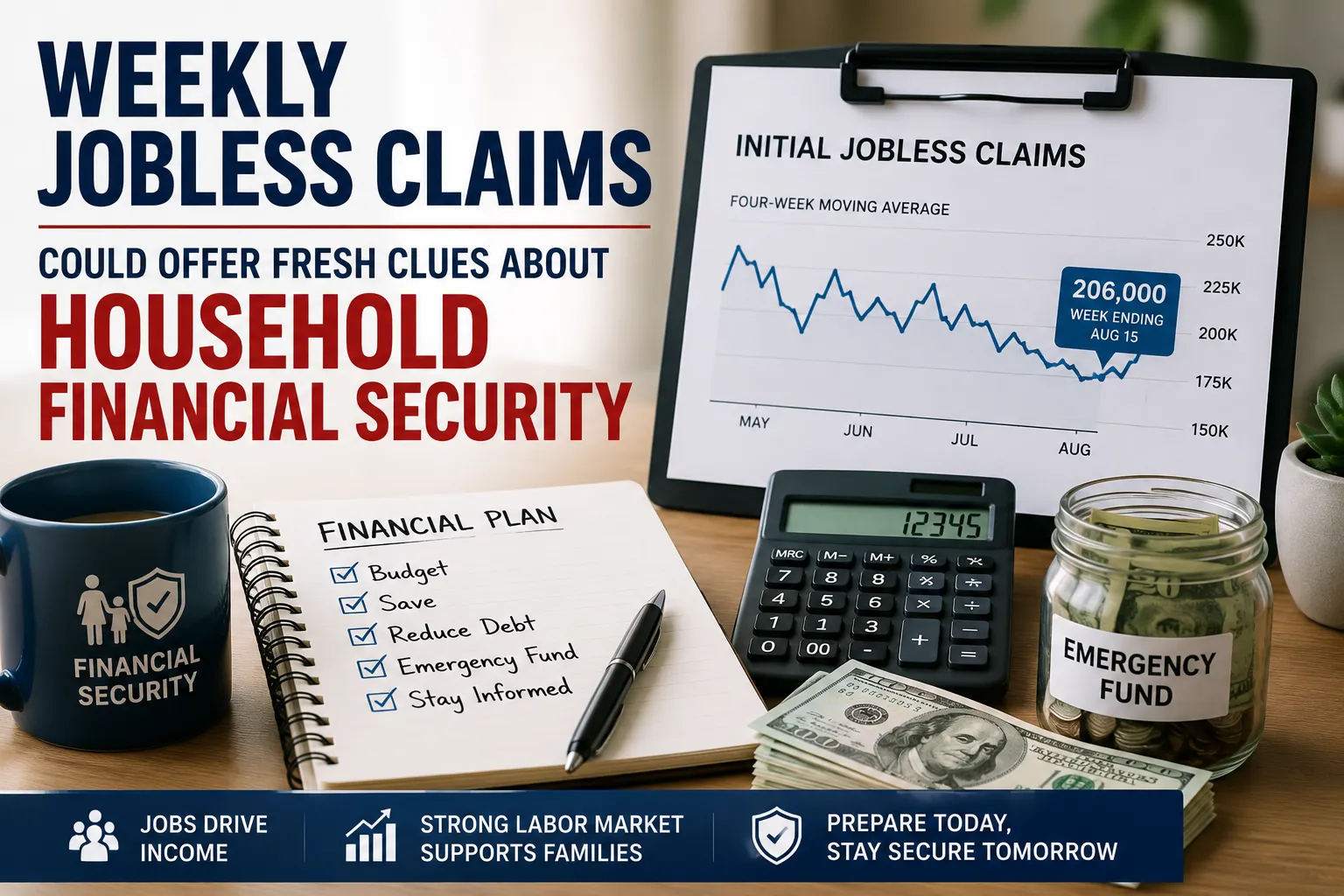
For a closer look at the connection between employment conditions and economic activity, see Weekly Jobless Claims Could Offer Fresh Clues About Household Financial Security.
Your Paycheck Is About More Than Your Salary
Even if your gross salary stays the same, your financial position can change.
What matters for household budgeting is disposable income — the money available after taxes and other deductions.
The latest BEA personal income data showed personal income increased 0.2% in June, while disposable personal income also increased 0.2%. Personal consumption expenditures increased 0.3%.
This provides a useful reminder: economic conditions affect households through several channels at once.
You might receive a small pay increase, for example, but see little improvement in your financial situation if housing, food, transportation, insurance or other expenses rise faster.
Inflation Can Change What Your Paycheck Is Worth
This is one of the most important pieces of the GDP story.
A paycheck is measured in dollars, but what matters to your household is what those dollars can actually buy.
The latest GDP report showed the PCE price index increasing at a 5.1% annualized rate in the second quarter, while the PCE price index excluding food and energy increased 3.4%.
These are quarterly annualized measures, not a statement that prices rose exactly 5.1% over the entire year.
Still, they illustrate why economic growth and household purchasing power can tell different stories.
If your income rises but everyday expenses rise faster, your effective purchasing power can decline.
For a household-focused look at the effect of changing prices, see How Inflation Affects Everyday Finances.
Why Consumer Spending Matters to Your Household
Consumer spending is a major component of the U.S. economy.
It includes purchases of goods and services ranging from vehicles and furniture to restaurants, accommodation, financial services and other household needs.
In the second quarter, consumer spending accelerated and contributed to GDP growth. BEA said increases occurred in both goods and services.
That tells us American households were still spending.
But strong consumer spending doesn’t necessarily mean everyone feels financially comfortable.
People can maintain spending by:
- Using savings
- Taking on debt
- Cutting spending elsewhere
- Delaying other purchases
- Increasing income
- Using credit cards
- Drawing on accumulated wealth
That’s why spending figures need to be considered alongside income and saving data.
The Savings Rate Deserves Attention
One of the most relevant numbers for household finances is the personal saving rate.
The latest BEA data showed the personal saving rate at 2.7% in June, with personal saving of $646.1 billion.
A 2.7% saving rate means households, in aggregate, were saving a relatively small portion of disposable personal income.
For an individual household, the lesson is straightforward: an economy can continue growing even while many families have limited room to build financial reserves.
That makes personal savings particularly important if the economic outlook becomes less certain.
What the GDP Report Means for Your Emergency Fund
A slower-growth environment is a good reminder of why emergency savings matter.
GDP does not tell you whether your particular job is safe.
Your employer could be thriving even when national growth slows. Conversely, your employer could face difficulties while the broader economy continues expanding.
An emergency fund provides protection against that uncertainty.
A reasonable savings target depends on your income stability, household expenses, debt obligations and access to other resources.
For someone with unpredictable income, a larger cash reserve may be particularly valuable.
Don’t Change Your Budget Because of One GDP Number
A single GDP report should not cause you to completely overhaul your household budget.
Economic data are revised, and GDP is only one measurement of a very large economy.
Instead, use the report as a reason to review the fundamentals of your finances.
Ask:
- Has my income changed?
- Are my essential expenses rising?
- How much am I saving each month?
- Do I have enough emergency cash?
- Has my debt become more expensive?
- Am I relying more heavily on credit?
- Are my discretionary expenses still affordable?
Those questions tell you considerably more about your financial health than a national GDP figure.
Slower Growth Could Affect Interest Rates
GDP also matters because monetary policymakers watch economic growth when making decisions about interest rates.
The Federal Reserve does not respond to GDP alone. It also considers inflation, employment and many other economic indicators.
But weaker growth can eventually influence expectations about monetary policy.
If economic growth slows significantly while inflation also eases, markets may begin expecting lower interest rates.
That could eventually affect:
- Mortgage rates
- Auto loans
- Credit cards
- Personal loans
- Savings-account yields
- Business borrowing
The relationship is not immediate or guaranteed.
Savers Should Watch Both Rates and Inflation
People with money in savings accounts, certificates of deposit or other interest-bearing accounts should pay attention to the broader interest-rate environment.
Higher interest rates can provide better returns on cash savings.
But inflation reduces the purchasing power of those returns.
For example, earning 4% on a savings account sounds attractive until you compare it with the rate at which the cost of living is increasing.
The important number for a saver is not just the interest rate being advertised, but the relationship between the return and inflation.
Borrowers Face a Different Set of Risks
Households carrying variable-rate debt have different concerns.
If interest rates remain elevated, borrowing costs can continue putting pressure on monthly budgets.
Credit-card balances are particularly important because interest charges can quickly overwhelm efforts to save.
A household facing economic uncertainty may therefore benefit from prioritizing high-interest debt alongside emergency savings.
Paying down expensive debt can effectively provide a guaranteed financial benefit in the form of avoided interest.
What Slower GDP Growth Could Mean for Big Purchases
A slowing economy can also affect decisions about major purchases.
If you are considering a car, home, renovation or other large expense, the GDP number itself should not determine whether you buy.
Instead, consider your personal financial position.
For example:
Buying may make sense if:
- Your income is stable
- You have adequate emergency savings
- The purchase fits comfortably within your budget
- You are not relying heavily on expensive debt
Waiting may make sense if:
- Your emergency fund is inadequate
- Your job situation is uncertain
- You are carrying high-interest debt
- The purchase would consume most of your available cash
- You would struggle with higher monthly payments
The condition of the national economy is useful context, but affordability is personal.
Why a Strong Consumer Sector Is Encouraging
There is also a positive side to the GDP report.
Consumer spending accelerated in the second quarter, and real final sales to private domestic purchasers rose 3.9%.
That suggests the domestic private economy was not simply grinding to a halt.
Business investment also contributed to growth, including spending on equipment and intellectual property such as software and research and development.
For workers, continued business investment can be important because companies that invest in technology, equipment and expansion may create opportunities for productivity gains and employment.
But again, those benefits are not distributed evenly across every industry or household.
The Bigger Concern Is What Happens Next
Economic reports are backward-looking.
The second-quarter GDP report covers April through June. It does not tell us exactly what happened to households in August.
That is why consumers should also pay attention to more current indicators.
The recent decline in consumer confidence is one signal worth watching. The Conference Board said consumers became more pessimistic about future business and labor-market conditions in August.
Other indicators, including employment, inflation, retail sales, personal income and consumer spending, will help reveal whether the economy is merely slowing or heading toward a more significant downturn.
The relationship between these indicators is also important when assessing the broader economy and financial markets, which is why How Economic and Financial Market Cycles Work provides useful additional context.
What Households Can Do Right Now
There is no need to panic because GDP growth slowed to 1.5%.
There is, however, a good reason to make sure your finances can handle uncertainty.
A practical checklist includes:
1. Protect Your Cash Flow
Know exactly how much money comes into your household each month and where it goes.
2. Build or Rebuild Emergency Savings
Even a small automatic contribution can gradually create a useful financial buffer.
3. Pay Attention to High-Interest Debt
Credit-card interest can become particularly costly when household budgets are already under pressure.
4. Separate Needs From Wants
If expenses rise, knowing which purchases can be reduced gives you more flexibility.
5. Avoid Making Decisions Based on Headlines
One GDP report does not determine whether you should buy a house, change jobs or stop investing.
6. Keep Long-Term Goals in View
Retirement savings and other long-term investments should generally be evaluated based on your goals and time horizon rather than a single quarterly economic statistic.
What the GDP Number Really Tells You
The latest GDP report is neither an all-clear signal nor evidence that the U.S. economy is collapsing.
It shows an economy that continued to expand in the second quarter, but more slowly than in the first, with consumer spending and private domestic demand providing important support.
For households, the most important takeaway is that GDP is only one piece of the financial puzzle.
Your paycheck depends more directly on your employer and the labor market. Your spending power depends on income relative to prices. Your financial resilience depends heavily on savings and debt. And your future borrowing costs can be influenced by inflation and Federal Reserve policy.
The latest numbers therefore suggest a sensible approach for household finances: don’t panic, but don’t ignore the signals either.
Keep your budget realistic, protect your emergency savings, control expensive debt and watch the data that directly affect your income and expenses. If economic growth weakens further, households that already have those fundamentals in place will generally have more room to adapt.