Americans Are Saving More as Consumer Spending Growth Slows
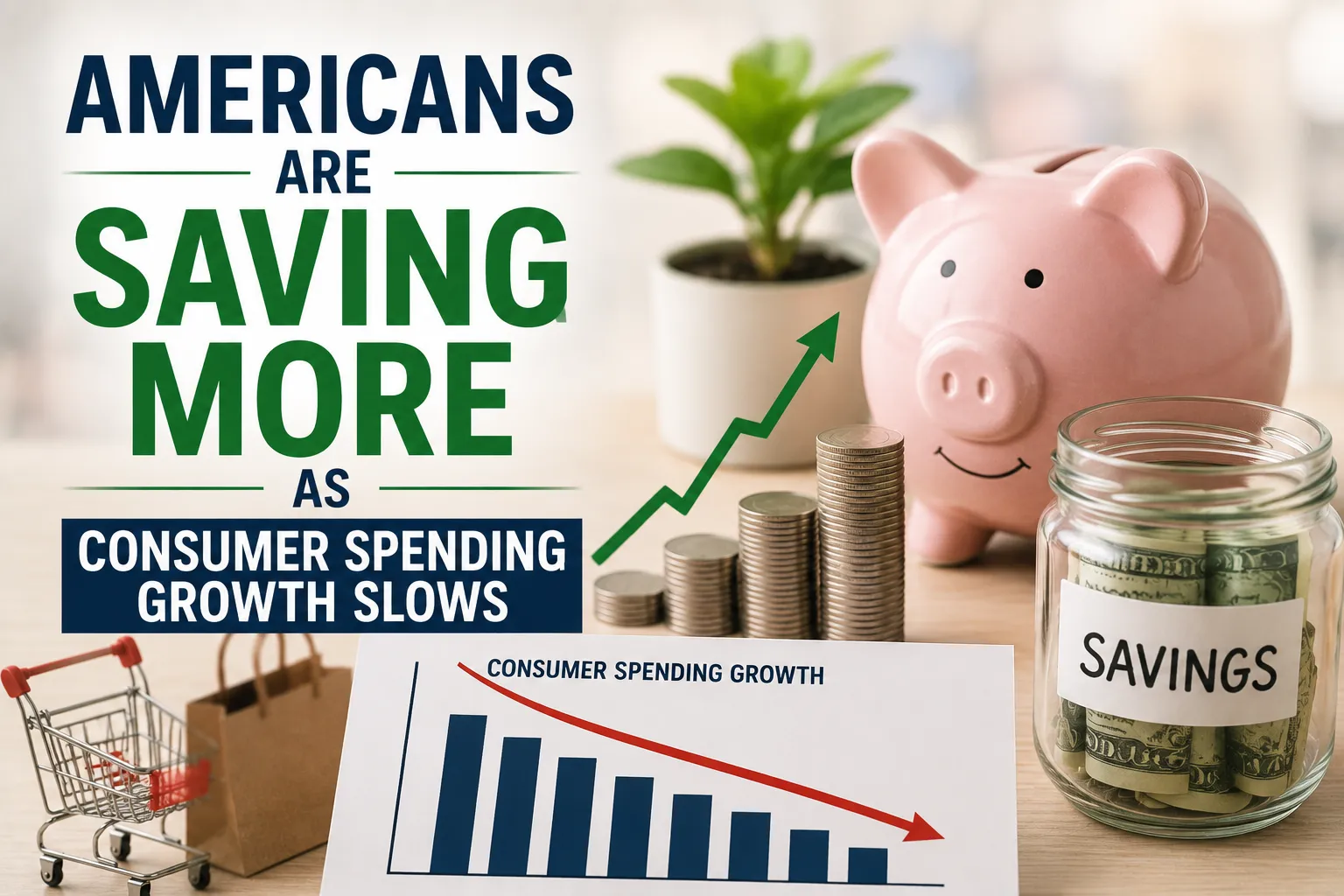
After months of strong consumer activity, the latest U.S. economic data is showing a subtle shift in household behavior: Americans are still spending, but the pace has slowed while the amount of income being saved has increased.
The change appeared in the latest Personal Income and Outlays report from the U.S. Bureau of Economic Analysis (BEA), which showed that personal consumption expenditures increased just 0.2% in July 2026, compared with a 0.3% increase in June. At the same time, personal income rose 0.4% and disposable personal income increased 0.5%.
The personal saving rate also climbed to 3.0% in July, up from a revised 2.6% in June.
These figures fit into the broader picture of economic indicators and what they reveal about the U.S. economy.
The numbers do not suggest that Americans have stopped spending. Instead, they point to consumers becoming somewhat more selective about where their money goes as households continue to deal with elevated prices and an uncertain economic environment.
Consumer Spending Loses Some Momentum
Consumer spending remains one of the most important drivers of the U.S. economy.
When households buy cars, eat at restaurants, travel, purchase household goods or pay for services, those transactions contribute to economic activity.
But July’s figures showed a noticeable slowdown in the monthly pace of spending.
Current-dollar personal consumption expenditures rose by $36.3 billion, or 0.2%, in July. Spending on services increased by $86.2 billion, while spending on goods fell by $49.9 billion. In inflation-adjusted terms, real consumer spending was essentially unchanged during the month.
That distinction matters.
Consumers may still be spending more dollars, but higher prices can make the increase look stronger than the underlying volume of goods and services being purchased.
Savings Rebound After a Weak June
The increase in the personal saving rate provides another important piece of the picture.
The saving rate measures personal saving as a percentage of disposable personal income. It rose from 2.6% in June to 3.0% in July.
Personal saving reached approximately $712 billion in July.
The improvement came alongside stronger income growth.
Personal income increased by $115.1 billion during July, while disposable personal income rose by $125.9 billion.
In other words, households had more income available after taxes, and spending did not increase as quickly as that income.
That combination naturally leaves more money available for saving.
Why Are Americans Becoming More Cautious?
Several factors may be influencing household decisions.
One is the continued pressure from elevated prices. The PCE price index, the Federal Reserve’s preferred inflation measure, increased 3.7% from a year earlier in July, while core PCE inflation rose 3.3%.
Even when inflation is no longer accelerating rapidly, households can still feel the effects of prices that are considerably higher than they were several years ago.
A family that has already adjusted its budget to higher housing, food, insurance and transportation costs may have less room for discretionary purchases.
That can encourage consumers to delay major purchases, look for discounts or simply keep more cash available.
For a broader look at the relationship between inflation and household finances, see how inflation affects everyday finances.
Goods Spending Shows Signs of Pullback
One of the clearest changes in the July data was the contrast between goods and services.
Spending on goods fell by $49.9 billion in current-dollar terms, while spending on services increased by $86.2 billion.
This suggests that consumers are not necessarily abandoning spending altogether.
Instead, some household budgets may be shifting toward services and essential expenses while purchases of physical goods become more selective.
The distinction is important for retailers, manufacturers and businesses that depend heavily on discretionary merchandise sales.
Higher Savings Can Strengthen Household Finances
From a household-finance perspective, an increase in saving can be positive.
Savings provide a financial cushion that can help families deal with unexpected expenses such as vehicle repairs, medical bills, job interruptions or emergency home repairs.
A larger cash reserve can also reduce dependence on credit cards and other expensive forms of borrowing.
For households that have been living with little financial margin, even a modest increase in savings can improve financial resilience.
But the Saving Rate Is Still Relatively Modest
The increase to 3.0% should be viewed in context.
The personal saving rate is not a measure of how much money every American has in a bank account. It is an aggregate economic measure based on personal saving and disposable income.
A 3% rate also means that most disposable income is still being spent.
That makes the July increase more of a shift in household behavior than evidence of a dramatic savings boom.
Many households continue to face significant expenses, and the ability to save varies substantially depending on income, housing costs, debt and family circumstances.
Income Growth Is Helping
The July data also showed that income is moving in a favorable direction.
Personal income increased 0.4% during the month, while disposable personal income increased 0.5%. Real disposable personal income, which adjusts for inflation, rose 0.4%.
That matters because savings are difficult to increase when income is stagnant and essential expenses are rising.
The combination of rising disposable income and slower spending gives households more room to put money aside.
However, continued progress will depend partly on whether income continues to grow faster than household expenses.
The Economy Is Sending Mixed Signals
The latest consumer figures come against a broader backdrop of mixed economic signals.
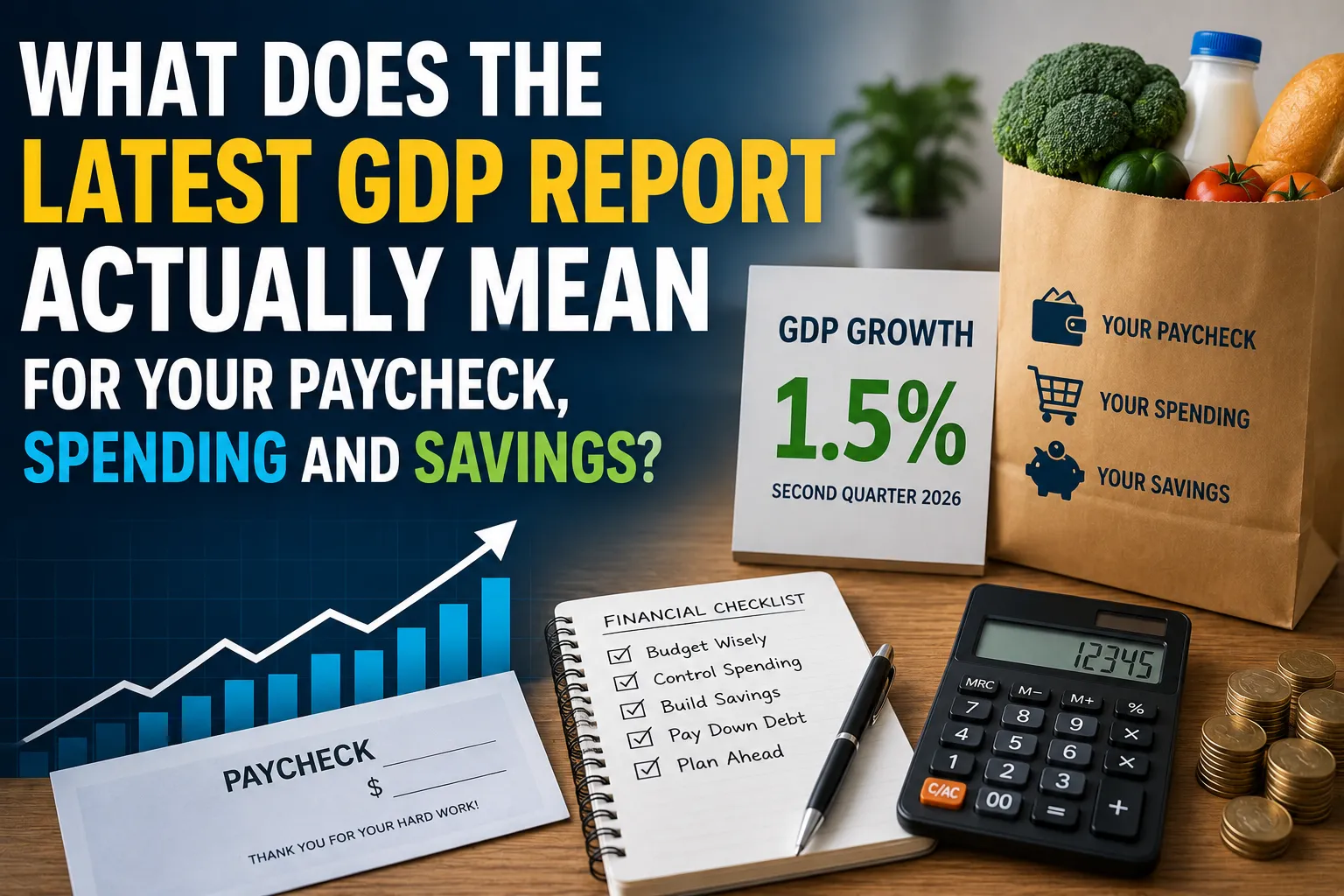
The BEA’s second estimate showed that real U.S. GDP grew at a 1.5% annual rate in the second quarter of 2026, down from 2.1% in the first quarter. Consumer spending, however, remained a significant contributor to economic growth during the quarter.
That creates an important tension.
Consumers remain a major source of economic strength, but July’s softer spending figures raise questions about how much momentum households can maintain.
If consumers continue to become more cautious, businesses that depend on discretionary spending could face greater pressure.
The relationship between economic expansions, slowdowns and consumer activity is explored further in how economic and financial market cycles work.
Retailers Are Already Seeing More Selective Shoppers
Recent reporting suggests that consumers are becoming increasingly deliberate about their purchases.
Shoppers can tighten budgets while continuing to spend selectively, with some households prioritizing essentials and delaying larger purchases.
That behavior can create an unusual retail environment.
A consumer may skip a major appliance purchase while still buying a small treat or paying for an experience.
This helps explain why a slowdown in spending does not necessarily translate into empty stores or a sudden collapse in consumer demand.
Instead, consumers can remain active while becoming more price-conscious.
What Higher Savings Could Mean for Household Budgets
For individual households, the recent trend offers a useful reminder about the value of maintaining a financial buffer.
When income rises, it can be tempting to immediately increase spending.
But directing part of an income increase toward savings can improve long-term financial stability without requiring major lifestyle changes.
For example, a household might divide additional income among:
- Emergency savings
- Retirement accounts
- High-interest debt repayment
- Short-term financial goals
- Necessary household expenses
- Discretionary spending
The appropriate balance depends on individual circumstances, but the principle is straightforward: not every increase in income has to become an increase in spending.
Emergency Savings Remain Especially Important
An emergency fund is one of the most practical uses for additional savings.
The purpose is not necessarily to maximize investment returns. It is to create accessible money for unexpected expenses.
A household with an emergency reserve may be less likely to rely on credit cards or personal loans when an unexpected bill arrives.
Building such a reserve can be difficult when budgets are already tight, but even small automatic contributions can gradually create a financial cushion.
Higher Savings Could Eventually Affect Economic Growth
There is also a broader economic trade-off.
Saving is beneficial for individual households because it improves financial resilience.
But consumer spending is also a major component of economic activity.
If millions of households simultaneously reduce spending, businesses may experience weaker demand. That can affect sales, hiring and investment.
Economists therefore pay close attention to changes in the saving rate because it can provide clues about how consumers feel about their financial future.
A modest increase in saving is not necessarily concerning.
A sustained and sharp pullback in spending could be more significant.
Inflation Remains Part of the Story
The continued inflation rate is another reason consumers may be cautious.
The July PCE price index rose 3.7% from a year earlier, while prices excluding food and energy increased 3.3%.
For consumers, the issue is not simply whether inflation is rising or falling in a particular month.
What matters is the cumulative effect of years of price increases.
Households that have already experienced higher grocery bills, rent, insurance premiums and other expenses may continue to feel financially stretched even if the rate of inflation moderates.
For additional context, the 2.9% inflation rate and what it means for household budgets, savings and borrowing provides another look at how changes in prices can affect consumers.
What Consumers Can Learn From the Trend
The latest data offers a useful personal-finance lesson.
When spending growth slows while income increases, it can create an opportunity to strengthen household finances.
Consumers do not necessarily need to make dramatic lifestyle changes.
Small decisions can have a meaningful effect over time:
- Automate savings after each paycheck.
- Build an emergency fund.
- Review recurring subscriptions.
- Compare insurance and utility costs.
- Pay down high-interest debt.
- Delay unnecessary large purchases.
- Save part of future raises or bonuses.
- Separate short-term spending money from long-term savings.
The goal is to make saving automatic rather than dependent entirely on whatever money happens to remain at the end of the month.
Businesses Will Be Watching the Consumer Closely
The direction of household spending will remain important for businesses and investors.
Retailers need to understand whether consumers are temporarily postponing purchases or permanently changing their spending habits.
Restaurants, travel companies, entertainment businesses and other service providers face similar questions.
If households continue shifting toward necessities and selectively spending on experiences, companies may need to adjust pricing, promotions and product offerings.
The distinction between a resilient consumer and an exhausted consumer could become increasingly important in the months ahead.
A Small Change With Bigger Implications
Americans are not suddenly abandoning consumption.
The latest data tells a more nuanced story: income increased, spending growth slowed, and the share of disposable income being saved moved higher.
That could reflect greater financial caution, stronger household balance sheets, or simply a temporary pause after periods of stronger spending.
For families, the development offers a potential opportunity to build financial security.
For the broader economy, however, the question is whether this represents a healthy normalization of spending or the beginning of a more significant slowdown in consumer demand.
The next several months of income, spending and saving data should provide a clearer picture of whether Americans are simply becoming more selective—or preparing for a more uncertain economic period.