What Passive Income Really Means and How Passive Income Works
The idea of earning money while you sleep has made passive income one of the most appealing concepts in personal finance. It often appears in social media posts, investment advertisements and online business discussions as a shortcut to financial freedom.
The reality is more nuanced.
Passive income does not usually mean receiving money without doing anything. Most passive income opportunities require upfront work, capital, knowledge or ongoing maintenance. What makes an income stream passive is that it can continue generating revenue without requiring the same amount of active labor for every dollar earned.
Understanding that distinction is important for anyone considering passive income as part of a broader financial strategy.
For a broader look at how freelancing, independent work and different approaches to earning income fit together, see the complete guide to freelancing and independent work.
What Is Passive Income?
Passive income generally refers to money earned from an asset, investment, business system or intellectual property that does not require continuous active labor.
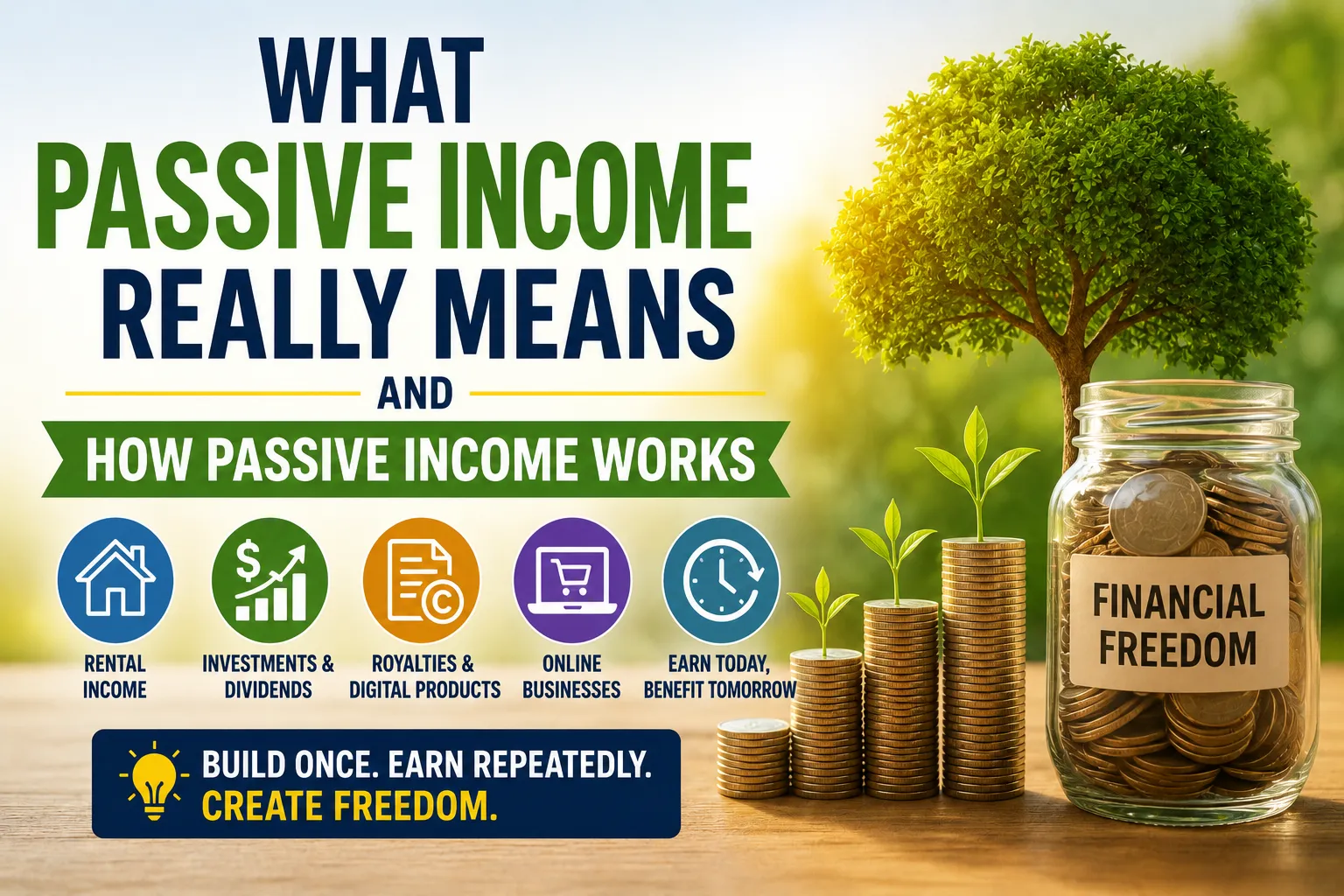
Examples can include:
- Rental income from property
- Interest from savings or bonds
- Dividends from investments
- Royalties from intellectual property
- Income from certain digital products
- Earnings from a business that operates with limited day-to-day involvement
The degree of passivity varies.
A rental property, for example, may generate income without the owner working a traditional job at the property every day, but it can still require maintenance, tenant communication, insurance, taxes and management.
Likewise, an online course may continue producing sales after it has been created, but it could require updates, marketing and customer support.
Passive income is therefore better understood as income that is less directly tied to hours worked rather than income that requires zero effort.
How Passive Income Differs From Active Income
Active income is generally tied directly to work.
A salary is a straightforward example. An employee performs work and receives compensation.
Freelancers, consultants, contractors and many small-business owners also earn primarily active income because their earnings depend heavily on their ongoing participation.
If they stop working, their income may stop or decline quickly.
Passive income works differently.
An asset or system performs some of the work of generating revenue.
For example, an investor can purchase shares of a company and potentially receive dividends without performing work for that company. A property owner can rent out a home and receive rental payments, although managing the property still requires resources.
The distinction is essentially between selling your time directly and building or owning something that can generate income repeatedly.
Passive Income Usually Requires Something Upfront
One of the biggest misconceptions about passive income is that it requires no initial investment.
In reality, most passive income streams require at least one of three things:
- Money
- Time
- Expertise
Sometimes they require all three.
An investor may need significant capital to generate meaningful investment income.
A person creating a digital product may invest hundreds of hours before making the first sale.
Someone purchasing rental property may need a substantial amount of money as well as knowledge about financing, property management and local regulations.
The “passive” part generally happens after the initial asset or system has been established.
Investments Are One of the Most Common Forms
Financial investments are among the most accessible forms of potentially passive income.
Investors can own assets that generate returns through interest, dividends or other distributions.
Potential sources include:
- Savings accounts
- Certificates of deposit
- Bonds
- Dividend-paying stocks
- Bond funds
- Real estate investment trusts
- Broad investment funds
The income characteristics vary considerably.
Some assets provide regular distributions, while others primarily generate returns through changes in market value.
It is also important to distinguish income from investment returns.
A stock that rises in price may increase an investor’s wealth, but that appreciation is not the same as receiving regular income.
Dividends Can Create Investment Income
Dividend-paying stocks are frequently associated with passive income.
When a company distributes part of its profits to shareholders, investors who own eligible shares may receive dividend payments.
For example, an investor holding shares that pay quarterly dividends could receive four distributions during a year.
However, dividends are not guaranteed.
Companies can reduce, suspend or eliminate dividends depending on their financial condition and decisions by management.
Investors should therefore avoid assuming that a stock’s historical dividend automatically represents a permanent source of income.
Interest Income Is Another Example
Interest is money earned for allowing someone else to use your capital.
Banks may pay interest on certain deposit accounts, while governments and companies can pay interest to bondholders.
Interest income can be relatively predictable compared with some other investments, but the amount earned depends on factors such as:
- Interest rate
- Principal invested
- Account or security type
- Maturity
- Inflation
- Taxes
- Credit risk
Higher potential yields can sometimes come with higher risks.
Understanding the relationship between return and risk is essential when evaluating supposedly passive investments.
Real Estate Can Generate Rental Income
Rental property is another commonly discussed passive-income strategy.
A property owner purchases or owns a home, apartment, commercial property or other real estate and receives payments from tenants.
At first glance, this can look highly passive.
In practice, rental property can require substantial involvement.
Owners may need to deal with:
- Property repairs
- Maintenance
- Insurance
- Taxes
- Vacancies
- Tenant communication
- Advertising
- Legal requirements
- Property management
Hiring a property manager can reduce the owner’s workload, but management fees reduce the income generated by the property.
Real estate can therefore provide relatively passive cash flow, but it should not automatically be described as completely hands-off.
Real Estate Investment Trusts Can Be More Hands-Off
People who want exposure to income-producing real estate without directly managing properties may consider publicly traded real estate investment trusts, commonly known as REITs.
REITs allow investors to own an interest in portfolios of income-producing real estate without personally handling tenants or repairs.
Some REITs distribute a portion of their income to shareholders.
However, REITs are investments and can fluctuate in value. Their distributions are also not necessarily guaranteed.
They should be evaluated based on the underlying properties, business model, financial position, valuation and broader market conditions.
Digital Products Can Become Semi-Passive
The internet has created another category of potential passive income: digital products.
These can include:
- E-books
- Online courses
- Templates
- Design assets
- Educational materials
- Software
- Photography
- Music
- Digital guides
A creator may spend substantial time developing a product once and then sell copies repeatedly.
The marginal cost of producing another digital copy can be very low.
That creates the possibility of scaling revenue without increasing labor proportionally.
For a deeper look at this model, see how to create and sell digital products for sustainable income.
However, digital products rarely sell indefinitely without attention.
Marketing, customer support, competition, platform changes and product updates can all require ongoing work.
Royalties Can Continue After Creation
Royalties are another example of income that can become relatively passive.
A creator may receive payments when intellectual property is licensed or used.
Depending on the agreement and type of work, royalties can come from:
- Books
- Music
- Photography
- Patents
- Software
- Designs
- Other intellectual property
The creator generally performs most of the work before the income begins.
That makes royalties a good example of the underlying principle behind passive income: work can be converted into an asset that continues generating revenue after the initial effort.
Affiliate Marketing Is Often Called Passive Income
Affiliate marketing involves earning a commission when people purchase products or services through a qualifying referral.
A website, newsletter, social media account or other platform can contain affiliate links.
If an article continues attracting search traffic months or years after publication, it may continue generating commissions.
That can make affiliate income relatively passive.
But building the audience in the first place is usually anything but passive.
Successful affiliate marketing can require:
- Content creation
- Search engine optimization
- Audience development
- Product research
- Website maintenance
- Compliance with disclosure requirements
- Performance analysis
The income may eventually become less dependent on daily labor, but the underlying asset still needs to be built and maintained.
A Business Can Become More Passive Over Time
Business ownership can also produce income that is less directly tied to the owner’s daily labor.
The key is developing systems that allow the business to operate without the owner personally handling every task.
That may involve:
- Hiring employees
- Automating repetitive processes
- Documenting procedures
- Outsourcing specialized work
- Using software
- Developing recurring revenue
- Creating standardized products
A business owner who must personally perform every service is essentially selling their labor.
A business with reliable systems and a capable team can become significantly less dependent on the owner’s time.
That transition can take years.
Passive Income and Recurring Income Are Not the Same
The terms “passive income” and “recurring income” are sometimes used interchangeably, but they describe different concepts.
Recurring income means revenue occurs repeatedly.
Passive income refers to how much ongoing active effort is required to generate that revenue.
A subscription business may have recurring revenue but require considerable daily work.
Conversely, a bond investment may generate interest with relatively little ongoing effort.
The two concepts can overlap, but they should not be treated as identical.
Passive Income Does Not Mean Risk-Free Income
Another common misconception is that passive income is inherently safe.
It is not.
Every income-producing asset carries some combination of risk.
Investments can lose value.
Tenants can stop paying rent.
Properties can remain vacant.
Businesses can lose customers.
Digital products can become obsolete.
Online platforms can change their rules.
Interest rates can change.
Even seemingly stable income streams can be affected by economic conditions, taxes and inflation.
A passive income strategy should therefore begin with understanding the underlying asset rather than simply focusing on how much money it might produce.
Taxes Can Affect Passive Income
Passive income is generally not automatically tax-free.
The tax treatment depends on the type of income and the jurisdiction involved.
Interest, dividends, rental income, business income and royalties can each receive different treatment.
Expenses and deductions may also differ.
Anyone building a significant passive-income portfolio should understand the applicable tax rules and consider professional advice when the situation becomes complicated.
The amount of money generated before taxes is not necessarily the amount that can actually be spent.
Inflation Can Reduce the Value of Passive Income
An income stream that remains unchanged over many years may lose purchasing power as prices rise.
For example, receiving the same amount of cash every year can become less valuable if housing, food, transportation and other expenses increase.
This is why long-term passive-income planning should consider both income generation and purchasing power.
Some assets may have the potential for income growth over time, while others may provide relatively fixed payments.
The appropriate balance depends on the investor’s goals, risk tolerance and financial situation.
How Much Money Do You Need to Generate Passive Income?
There is no universal number.
The amount of capital required depends on:
- Desired annual income
- Expected return
- Risk level
- Taxes
- Inflation
- Investment costs
- Whether the income is expected to grow
For illustration, suppose someone wanted $12,000 per year from an investment portfolio.
At a hypothetical 4% annual income rate, generating $12,000 would require approximately $300,000 in capital before taxes and other considerations.
That simple example demonstrates why investment-based passive income can require substantial capital.
Higher expected yields may reduce the amount of capital needed, but they generally come with additional risk.
Why Building Assets Matters
The most useful way to think about passive income is through the concept of assets.
An asset is something that has the potential to provide economic value.
Examples include:
- Investment portfolios
- Rental properties
- Businesses
- Intellectual property
- Digital products
- Websites
- Software
The goal is not necessarily to eliminate work.
Instead, the goal is to create assets where the relationship between time and income becomes less direct.
If every additional dollar requires another hour of labor, income has a natural ceiling.
If an asset can produce revenue repeatedly, that ceiling can potentially become higher.
Start With Active Income
For many people, active income is the foundation for eventually developing passive income.
A salary or business income can provide the money needed to build assets.
A simplified progression might look like:
Earn → Save → Invest → Build assets → Generate income → Reinvest
This process can take years.
Trying to skip the early stages by searching for instant passive income opportunities can lead people toward unrealistic promises or unnecessarily risky schemes.
Reinvesting Can Accelerate Growth
One of the most powerful features of income-producing assets is the ability to reinvest the money they generate.
Instead of spending every dividend, interest payment or business profit, an investor can potentially use some of that money to acquire additional assets.
Over time, those additional assets can generate their own returns.
This is the basic principle behind compounding.
The effect can become increasingly significant over long periods because returns can themselves generate additional returns.
Beware of “Get Rich While You Sleep” Claims
Passive income has become a popular marketing term, which means consumers should approach exaggerated claims carefully.
Warning signs include promises of:
- Guaranteed high returns
- Immediate wealth
- No work whatsoever
- No risk
- Secret systems
- Exclusive investment opportunities
- Guaranteed monthly income
Real income-producing assets have trade-offs.
If someone promises extraordinary returns with virtually no effort or risk, skepticism is appropriate.
The more attractive the promised return, the more important it becomes to understand where that return is supposedly coming from.
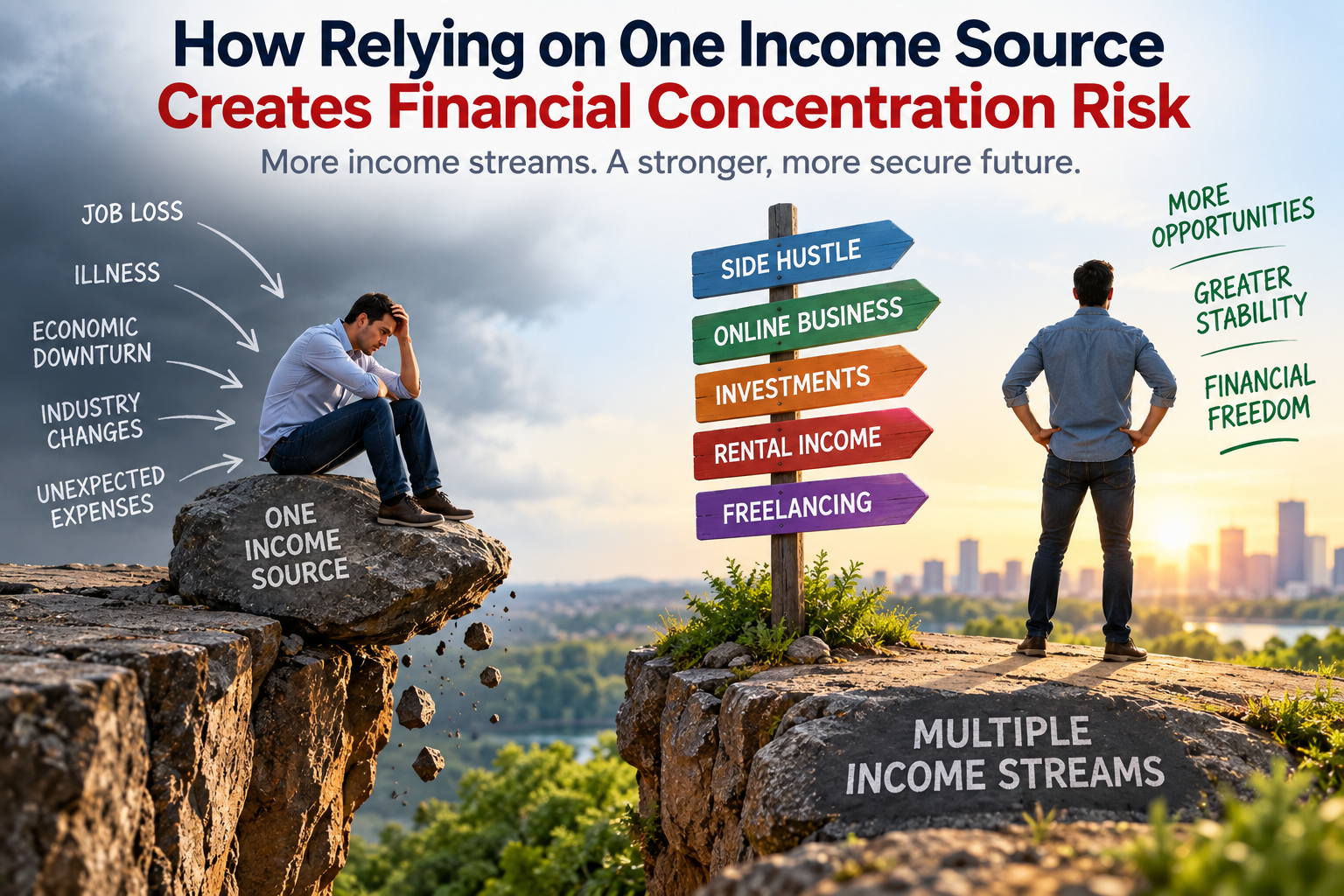
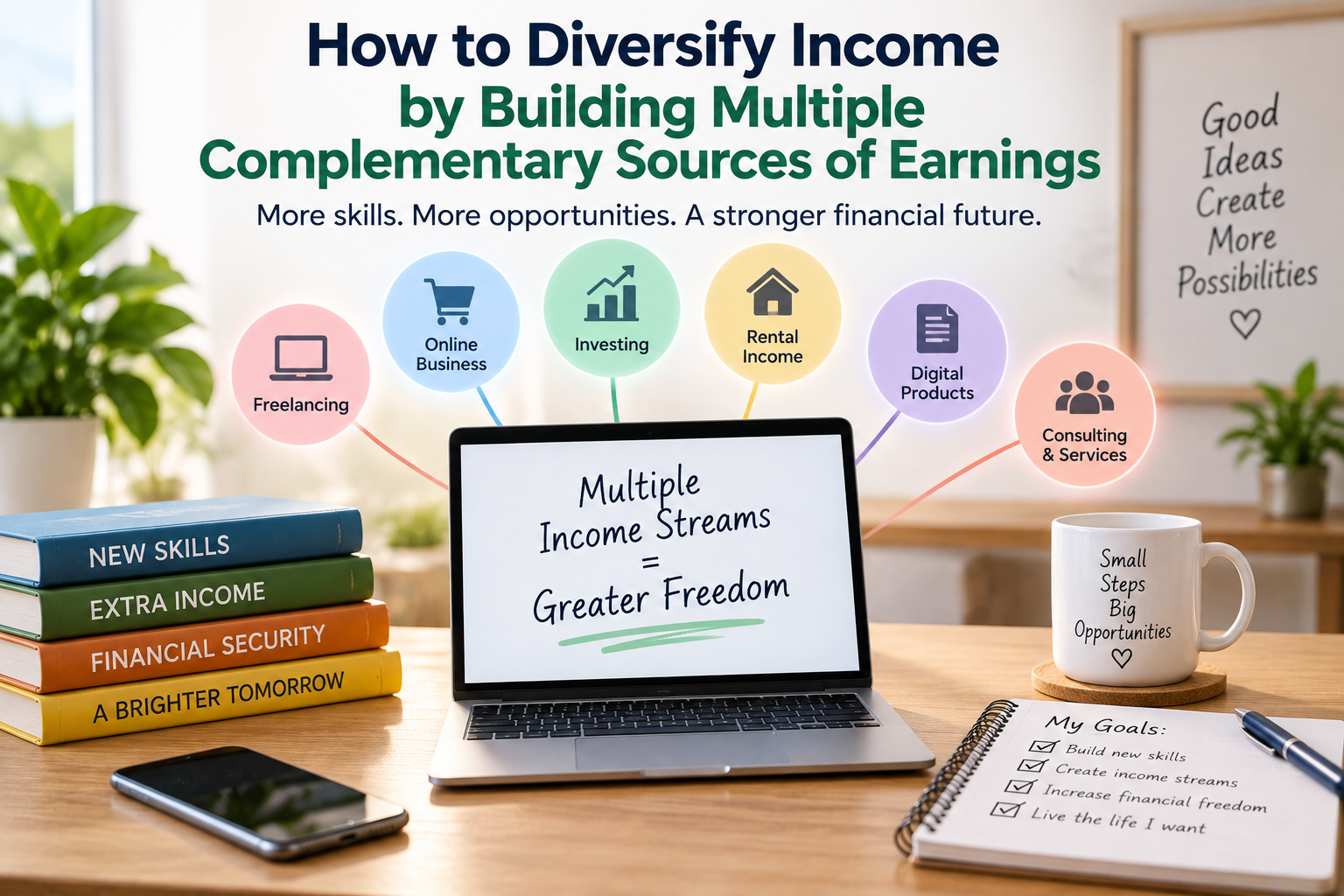
Build Multiple Income Sources Carefully
Diversification can also apply to income.
Someone might eventually have a combination of:
- Employment income
- Investment income
- Rental income
- Business income
- Digital-product income
Having several sources can reduce dependence on any single one.
For a broader look at how different income sources can be developed and managed, see how to create multiple income streams.
However, diversification does not mean collecting as many income streams as possible.
Managing ten complicated side projects can create more stress than value.
A smaller number of understandable, sustainable income sources may be more useful than a large collection of poorly managed ones.
The Best Passive Income Strategy Depends on the Person
There is no universally superior passive-income method.
Someone with substantial investment capital may prefer financial assets.
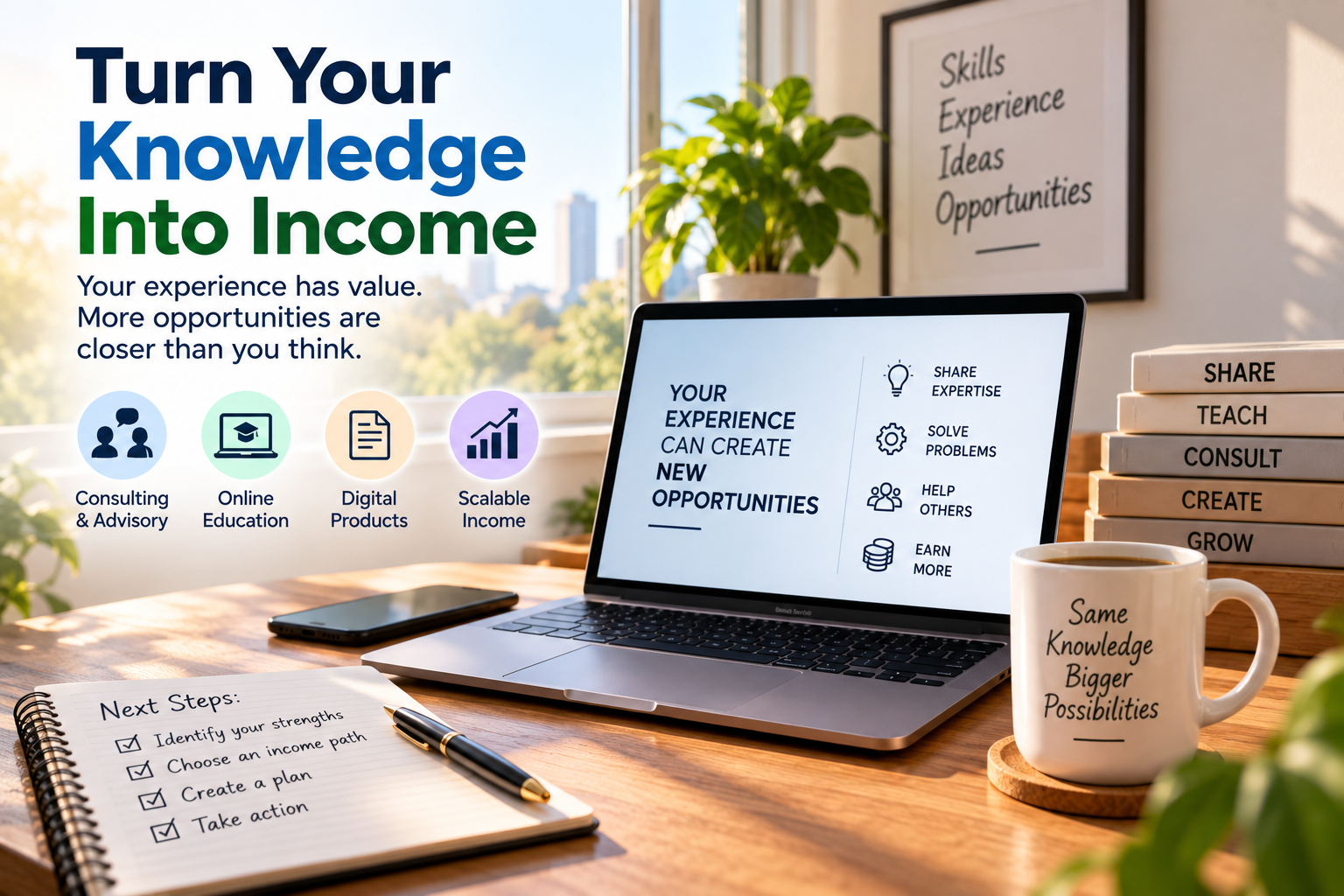
Someone with strong writing or design skills may have greater opportunities through intellectual property or digital products.
An entrepreneur may prefer building a business.
A real estate investor may focus on rental properties.
The best option depends on available capital, skills, time, risk tolerance and long-term objectives.
Focus on Sustainability Rather Than Hype
A sustainable passive-income strategy usually begins with realistic expectations.
Ask:
- How much can I afford to invest?
- How much time can I commit initially?
- What skills do I already have?
- What risks am I taking?
- How predictable is the income?
- What expenses will reduce the returns?
- How much maintenance will be required?
- What happens if the income falls?
- Can the asset grow over time?
These questions are much more useful than simply asking which passive-income opportunity pays the most.
Passive Income Is Really About Leverage
At its core, passive income is a form of leverage.
Instead of relying exclusively on hours worked, you use capital, technology, intellectual property, systems or other assets to help produce income.
That leverage can take different forms.
Money can be invested.
Knowledge can become a course.
Writing can become a book.
Software can serve thousands of customers.
A business can use employees and systems.
Property can generate rent.
The underlying principle remains the same: create or acquire something that can continue producing economic value without requiring an equal amount of additional labor each time.
Building Passive Income Takes Time
The biggest reality check is that passive income is rarely instant.
The asset usually comes first.
Income comes later.
A person might spend years building an investment portfolio, developing a business, creating intellectual property or acquiring real estate before the resulting income becomes meaningful.
That can make passive income less exciting than the promises found online, but it also makes it more realistic.
The strongest income-producing assets are often built gradually.
Turning Effort Today Into Income Tomorrow
Passive income is not a magic formula for becoming wealthy without working.
It is better understood as a strategy for decoupling income from constant active labor.
Investments can generate interest or dividends. Property can produce rent. Intellectual property can generate royalties. Digital products can continue selling. Businesses can develop systems that allow revenue to continue without the owner’s direct involvement in every transaction.
Each approach has different risks, costs and maintenance requirements.
The most important idea is that passive income usually begins with active effort—earning money, developing skills, building products or acquiring assets. Over time, those efforts can create systems and investments capable of producing income with less day-to-day involvement. That shift, rather than the promise of effortless money, is what makes passive income a useful part of a long-term financial strategy.