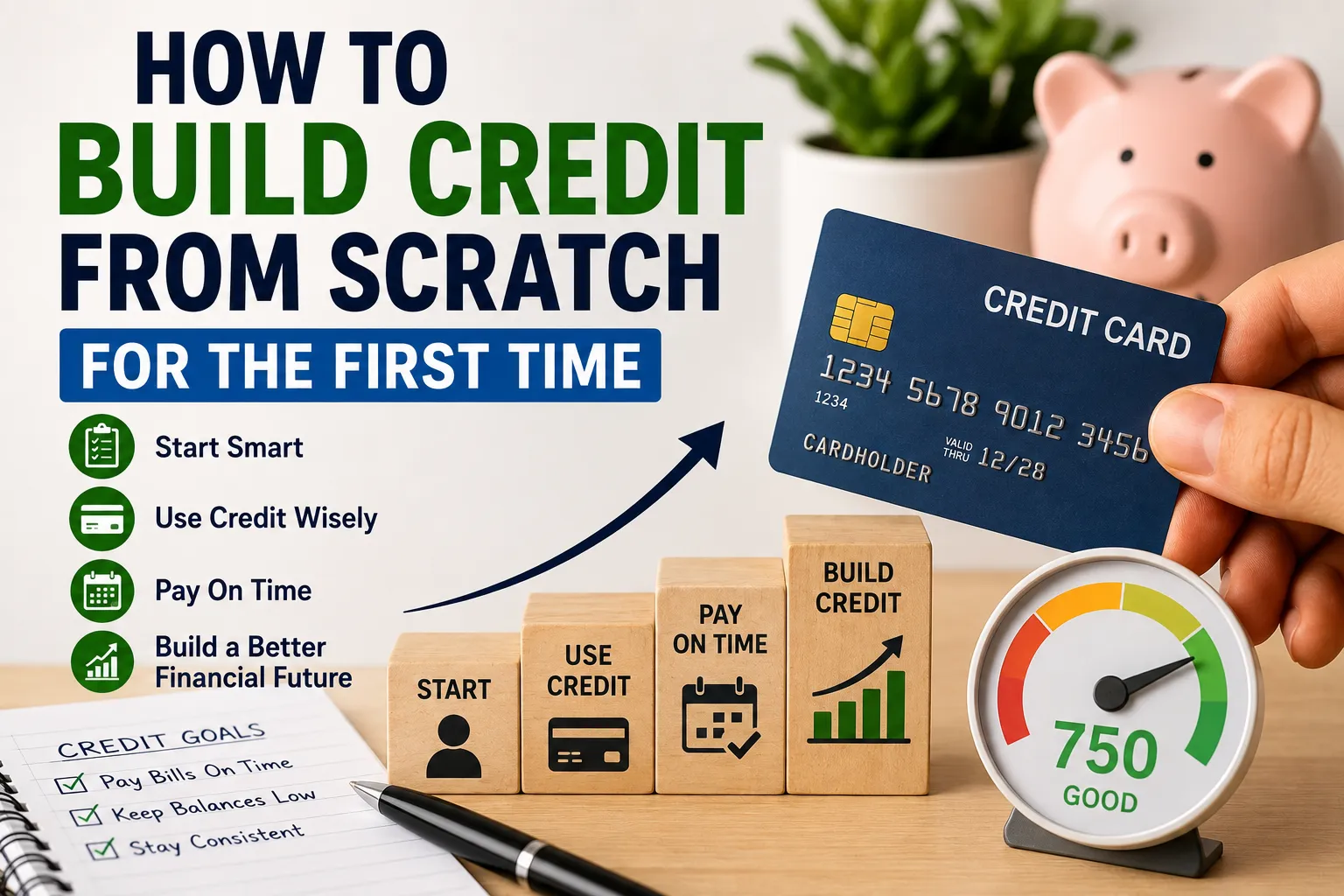
How to Build Credit From Scratch for the First Time
Building credit for the first time can feel like a frustrating process. You may need a credit history to qualify for certain financial products, yet you cannot build that history until lenders are willing to extend credit to you.
The good news is that starting with no credit history is different from having bad credit. A person with no established credit simply has not demonstrated a track record of borrowing and repaying money. With responsible habits and the right financial products, that history can gradually develop.
Whether you are a young adult opening your first financial accounts, a newcomer to the credit system or simply someone who has never borrowed money, the basic strategy is the same: use a manageable amount of credit, make payments on time and give the record time to develop.
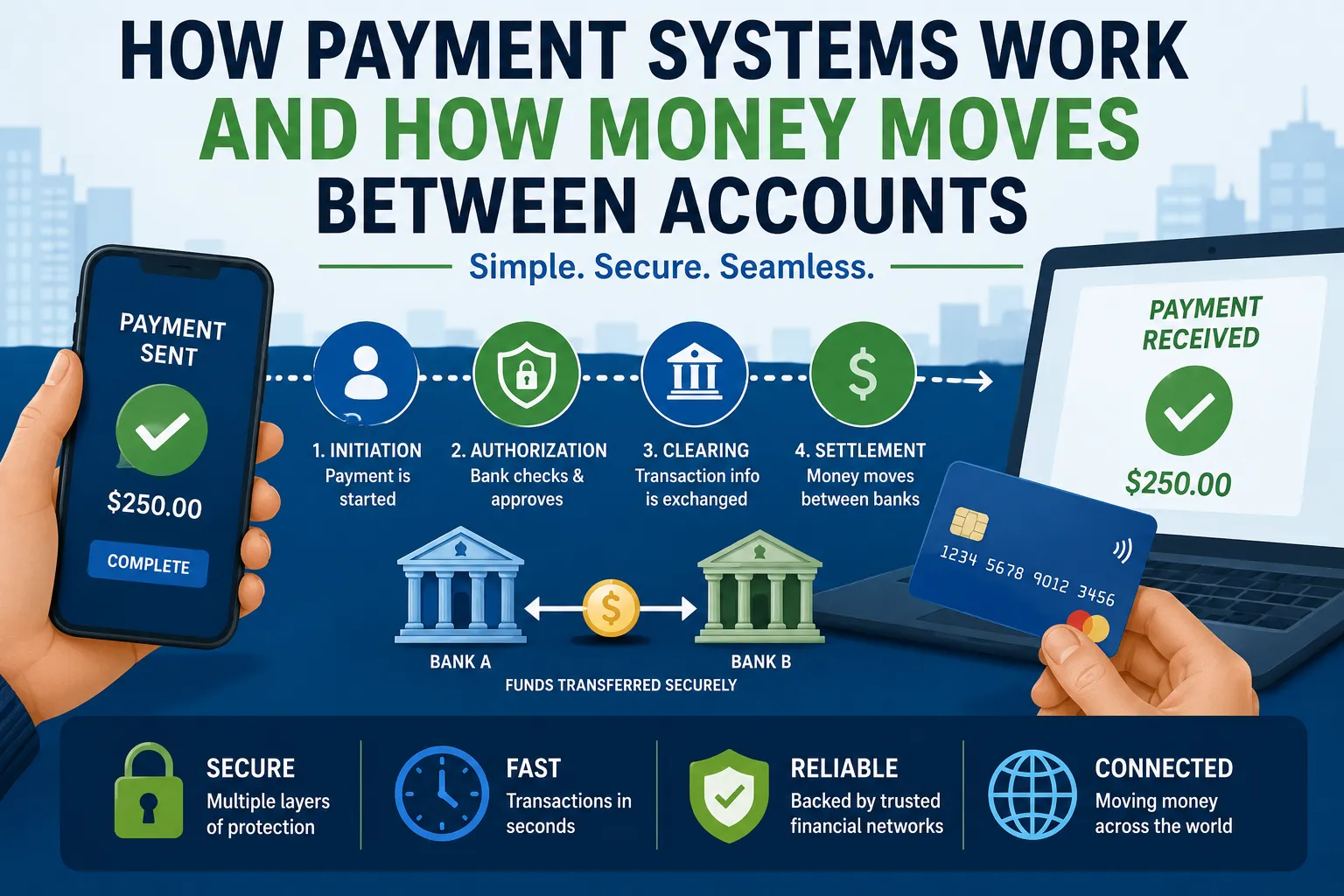
For a broader overview of how credit cards, credit scores, loans, debt and other borrowing tools fit together, see the Complete Guide to Credit Tools.
What Does It Mean to Have No Credit?
Having no credit history generally means there is not enough information in your credit reports for lenders to evaluate how you have handled borrowed money.
This is different from having a poor credit history.
Someone with bad credit may have a record of missed payments, defaults or other negative events. Someone with no credit may simply have never had a credit card, loan or another account that was reported to the credit bureaus.
That distinction matters because the solution is different.
If you have no credit, the goal is to establish a positive record.
If you have damaged credit, the process may involve rebuilding an existing history.
For more on how credit reports and scores work, see the Complete Guide to Credit Scores and Credit Reports.
Why Credit History Matters
Credit reports and scores can influence how lenders evaluate applications.
Depending on the country and financial system, credit information may be considered when you apply for:
- Credit cards
- Personal loans
- Auto financing
- Mortgages
- Certain insurance products
- Rental housing
- Utility services
- Other financial accounts
A stronger credit profile can make it easier to qualify for credit and may help you obtain more favorable terms.
However, credit is only one part of your overall financial profile. Income, employment, existing debts, assets and other factors can also influence a lender’s decision.
Start by Understanding Your Credit Profile
Before applying for several products, find out what information already exists in your credit file.
If you have never used credit, you may discover that your file is very limited or nonexistent.
Check whether any accounts are already associated with your name.
This can also help identify errors or accounts you do not recognize.
Credit-reporting systems vary by country, so use the official credit-reporting resources available where you live.
Regularly reviewing your reports can also help you understand how your credit profile develops over time. Credit-monitoring services can provide another way to track changes, although the information and features available vary between providers.
A Bank Account Does Not Automatically Build Credit
One common misconception is that simply opening a checking or savings account will establish a credit history.
Generally, ordinary deposit accounts are not the same thing as credit accounts.
Keeping money in a bank account can demonstrate financial responsibility to yourself and help you manage your finances, but it does not necessarily create the borrowing and repayment history used to calculate a credit score.
That does not mean a bank account is unimportant.
A stable checking account can provide the foundation for managing credit responsibly because it gives you a place to receive income and make payments.
Consider a Secured Credit Card
A secured credit card can be one option for people who have difficulty qualifying for a traditional credit card.
With a secured card, you typically provide a refundable cash deposit that serves as security for the account.
For example, a card might require a $300 deposit and provide a corresponding credit limit, depending on the issuer’s terms.
The important point is that the deposit is not the same thing as your monthly payment.
You still need to make your required payments according to the account terms.
If the issuer reports your account activity to the major credit bureaus, responsible use can help establish a credit history.
Before applying, confirm that the issuer reports payments to the relevant credit-reporting agencies.
Understanding how different card types work can also help you choose an appropriate first account. The Complete Guide to Credit Cards and How They Work explains the basic mechanics of credit cards and the factors borrowers should understand before using them.
Keep Your First Credit Limit Manageable
A large credit limit is not necessary to build credit.
In fact, a modest limit can make it easier to control spending.
Suppose you receive a card with a $500 limit.
You do not need to spend hundreds of dollars every month simply because the credit is available.
You could use the card for one or two predictable expenses, such as a recurring subscription or a small household purchase, and then pay the balance according to your plan.
The purpose is to establish a consistent record of responsible credit management rather than maximize your borrowing.
Pay Every Bill on Time
Payment history is one of the most important aspects of credit management.
A missed payment can potentially damage your credit profile, depending on the account, reporting rules and how late the payment is.
The easiest way to avoid accidentally missing a payment is to automate it when possible.
You can set up:
- Automatic minimum payments
- Calendar reminders
- Banking alerts
- Notifications before the due date
Automation is particularly useful because a missed payment can happen even when you have enough money to pay the bill.
Paying the Minimum Is Not Always the Best Strategy
Making at least the required minimum payment can help you avoid being considered late, but carrying a balance can result in interest charges.
If you can afford to pay the full statement balance by the due date, doing so can help you avoid interest on purchases when the card’s terms provide a grace period.
This also keeps debt from accumulating unnecessarily.
The ideal approach is not simply to make payments on time. It is to borrow only what you can comfortably repay.
If balances have already started becoming difficult to manage, debt repayment tools can help organize different payoff approaches. The article on How Debt Repayment Tools Help Plan Debt Payoff explores how these tools can help borrowers create a more structured repayment plan.
Credit Utilization Matters
Credit utilization refers broadly to how much of your available revolving credit you are using.
For example, if a credit card has a $1,000 limit and you have a $200 balance, your utilization would be 20%.
High utilization can be viewed negatively by many credit-scoring models, particularly when balances remain high relative to available credit.
You do not need to obsess over a specific percentage every day.
Instead, focus on keeping balances manageable and paying them down consistently.
Don’t Max Out Your First Card
Having a $500 credit limit does not mean you should spend $500 every month.
Maxing out a card can make your finances more difficult even if you eventually pay the bill.
It can also result in high reported utilization.
Using credit for expenses you already have the cash to cover is often a safer way to begin.
For example, you might use your first card for groceries that are already included in your monthly budget, then pay the balance from the money you set aside for groceries.
You Don’t Need to Carry a Balance to Build Credit
This is an especially persistent misconception.
Carrying a credit-card balance from one month to another is generally not necessary for building a credit history.
You can use a credit card, receive a statement and pay the balance according to the card’s terms.
If you can pay the full statement balance and avoid interest, there is usually little reason to deliberately carry debt simply to demonstrate credit activity.
Building credit is about demonstrating responsible management, not paying unnecessary interest.
Become an Authorized User
Another possible way to establish credit is becoming an authorized user on someone else’s credit-card account.
If the card issuer reports authorized-user activity to credit bureaus, the account may appear on the authorized user’s credit report.
However, this strategy depends heavily on the issuer’s reporting practices and the account holder’s behavior.
If you become an authorized user on an account with missed payments or high balances, the arrangement may not produce the benefit you expect.
Only consider this option with someone you trust and after understanding how the issuer handles authorized-user reporting.
Consider a Credit-Builder Loan
Credit-builder loans are designed specifically to help people establish or strengthen credit.
Unlike a conventional personal loan, the borrowed amount may be held in a savings account or similar arrangement while you make scheduled payments.
Once the loan is completed, the funds are generally released to you according to the lender’s terms.
As with any financial product, fees and interest matter.
Before signing up, verify that the lender reports payments to the credit bureaus and calculate the total cost.
There is little value in paying unnecessary fees simply to create a credit record.
Don’t Apply for Everything at Once
When you’re trying to establish credit, it can be tempting to apply for multiple credit cards and loans.
That is usually unnecessary.
Each application can involve a credit inquiry, depending on the product and lender. Multiple applications within a short period can also make your financial profile appear more credit-seeking.
A better approach is to research your options first and apply selectively for products that fit your circumstances.
Prequalification Can Sometimes Help
Some lenders allow prospective applicants to check whether they are likely to qualify without submitting a full application that results in a hard credit inquiry.
These tools are sometimes described as prequalification or preapproval.
However, the terminology and effect on your credit report vary by lender.
Read the terms carefully to determine whether the process involves a hard inquiry.
Prequalification is not a guarantee of approval, but it can sometimes help you narrow your choices before submitting an application.
Be Careful With Buy Now, Pay Later Products
Buy now, pay later services can make purchases appear easier to afford because the cost is divided into several payments.
But splitting a purchase does not make it cheaper.
Depending on the provider and product, payment activity may or may not be reported to credit bureaus.
That means using such services is not necessarily an effective strategy for establishing a traditional credit history.
More importantly, accumulating several payment plans can make it difficult to keep track of your obligations.
If you’re trying to build credit, a simple credit product that you fully understand may be easier to manage.
Don’t Take Out a Loan Just for the Sake of Building Credit
You do not need to borrow money you don’t need simply to create a credit history.
Taking out an expensive personal loan, financing an unnecessary purchase or paying interest on debt you could have avoided can undermine your broader financial goals.
Credit-building should fit into your financial life rather than become the purpose of your financial life.
If you need a loan anyway, responsible repayment can contribute to your credit history where the lender reports the account.
But borrowing solely for the sake of generating a credit account requires careful consideration of the costs.
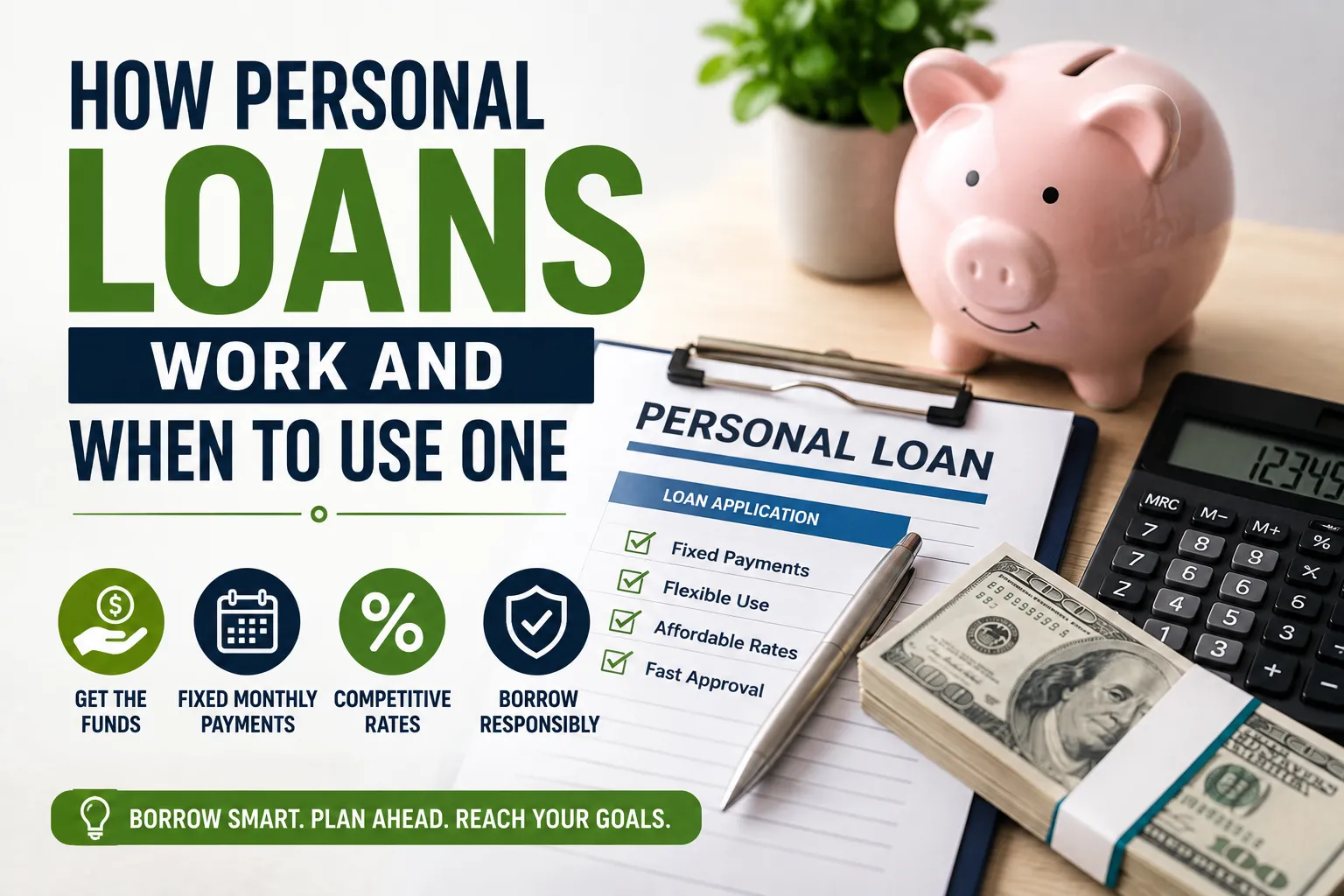
If you are considering borrowing for a genuine need, understanding How Personal Loans Work and When to Use One can help put the decision into context.
Keep Old Accounts Open When Appropriate
The age of your credit accounts can contribute to how your credit history is evaluated.
As a result, closing an older account can sometimes affect your credit profile.
However, keeping an account open is not automatically the right decision.
Consider closing a card if:
- It has an expensive annual fee
- You struggle to manage it responsibly
- It encourages unnecessary spending
- The account terms no longer make sense for you
If an account has no annual fee and is easy to manage responsibly, keeping it open may be worth considering.
Don’t Close Your First Account Too Quickly
Your first credit card may not offer the rewards or features you eventually want.
That does not necessarily mean you should close it immediately when you qualify for another card.
If the account has no significant cost and you can manage it responsibly, keeping it open may allow the account to continue contributing to the length of your credit history over time.
Before closing an account, consider the potential effects on your available credit and overall credit profile.
Keep Your Personal Information Secure
Building credit also means protecting the identity information connected to your accounts.
Be cautious about sharing:
- Social Security or national identification numbers
- Bank-account information
- Credit-card numbers
- Online banking passwords
- One-time security codes
Fraudulent accounts can damage your finances and potentially create credit problems that take time to resolve.
Use strong, unique passwords and enable multi-factor authentication where available.
Watch for Credit-Report Errors
Even if you are new to credit, periodically reviewing your credit reports can be useful.
Look for:
- Accounts you don’t recognize
- Incorrect balances
- Incorrect payment information
- Duplicate accounts
- Incorrect personal information
- Accounts that should have been removed
If you find an error, follow the appropriate dispute process with the credit-reporting agency and, when appropriate, the company that supplied the information.
Don’t Pay a Company Just to “Create” a Credit Score
You do not need a mysterious credit-repair service to begin building a normal credit history.
Be skeptical of companies that promise an instant credit-score transformation or claim they can create a legitimate credit history without responsible account management.
Building credit takes time.
The fundamentals are relatively straightforward:
Open appropriate accounts, use them responsibly, pay on time and allow the history to develop.
Be Careful With Credit-Repair Promises
Companies may advertise services promising to remove negative information or dramatically improve credit scores.
Some legitimate organizations provide useful financial education or assistance, but consumers should be cautious about unrealistic guarantees.
Accurate negative information generally cannot simply be erased because someone pays a company to remove it.
If you are starting with no credit, you usually do not need an elaborate repair strategy.
You need a sustainable credit-building strategy.
Build Credit Without Abandoning Your Budget
A credit card should fit inside your existing budget.
Suppose your monthly income is $3,000 and your planned spending is $2,700.
If you put $500 of expenses on a credit card, you still need to account for those purchases in your $2,700 spending plan.
The card does not create an extra $500 of income.
This distinction is fundamental.
Credit gives you a payment mechanism and borrowing capacity. It does not increase your underlying ability to afford something.
Use Credit for Planned Purchases
One of the simplest strategies for a first credit card is to use it for expenses you already expect to make.
For example:
- A phone bill
- A streaming subscription
- Groceries
- Transportation
- A small recurring household expense
The exact purchase doesn’t matter.
What matters is that the expense is already in your budget and you have the money available to pay the resulting bill.
This approach reduces the temptation to spend simply because credit is available.
Create a Payment Routine
A predictable payment routine can make credit management almost automatic.
For example:
Throughout the month: Use the card for planned expenses.
Before the statement closes: Check your balance.
When the statement arrives: Review every transaction.
Before the due date: Pay the statement balance if financially possible.
Every month: Review your credit report and overall budget periodically.
The goal is to turn responsible credit use into a habit rather than something you have to think about constantly.
How Long Does It Take to Build Credit?
There is no universal timeline.
Credit-scoring systems need enough information to evaluate your borrowing behavior, and different lenders report information on different schedules.
You may begin generating credit information relatively quickly after opening a qualifying account, but developing a strong and established profile takes longer.
The most important factor is consistency.
A person who responsibly manages one modest account for years can potentially develop a much stronger credit history than someone who opens five accounts within a few months and struggles to manage them.
Credit Scores Can Change Over Time
A credit score is not a permanent grade.
It can change as information in your credit reports changes.
Factors that may influence a score include:
- Payment history
- Credit utilization
- Length of credit history
- Types of credit accounts
- New credit activity
Different scoring models can weigh information differently.
That means there is no single action that guarantees a particular score.
The best strategy is to develop habits that are broadly responsible regardless of which scoring model a lender uses.
Don’t Chase a Perfect Credit Score
Once people start paying attention to credit scores, it is easy to become obsessed with achieving a particular number.
A high score can be useful, but your broader financial health matters more.
A person with a very high credit score but substantial high-interest debt may be in a weaker financial position than someone with a more modest score and substantial savings.
Your priorities should be:
- Pay bills on time.
- Avoid unnecessary debt.
- Keep credit-card balances manageable.
- Maintain emergency savings.
- Spend within your income.
- Review your credit reports.
- Give your credit history time to develop.
Building Credit Is a Long-Term Financial Habit
Starting credit from scratch does not require complicated financial tricks.
The strongest foundation is usually a simple one: choose an appropriate starter product, confirm that the account reports to the relevant credit bureaus, use only a small amount of credit, pay every bill on time and avoid borrowing more than you can afford.
Over time, those small decisions create a record.
That record can make future financial opportunities easier to access, from qualifying for better credit products to potentially obtaining more favorable borrowing terms.
But the real goal should not be chasing a number on a credit report. The goal is to become someone who can borrow responsibly without allowing debt to control the household budget.
Start small, stay consistent and let time do the heavy lifting.