Gold Investors Await PCE and Jobs Data After a Volatile September
Gold enters October with investors closely watching U.S. inflation, employment and Federal Reserve policy after a turbulent September pushed the precious metal sharply lower from its earlier highs.
The market has already received the latest Personal Consumption Expenditures (PCE) inflation report, but attention is now shifting toward the September employment report due Friday, October 2. The combination of inflation and labor-market data could influence expectations for the Federal Reserve’s next interest-rate decisions and, in turn, the direction of gold.
Gold ended September with a monthly decline of roughly 6.6%, according to Reuters, as higher Treasury yields, a stronger dollar and rising energy prices created headwinds for the non-yielding asset.
September Was a Difficult Month for Gold
The September selloff represented a significant change from the strong momentum gold had displayed earlier in the year.
Spot gold fell to a more than seven-week low near $4,110 an ounce during the final week of September before recovering part of the decline. On September 30, spot gold was around $4,153 per ounce as the market digested new inflation data.
Several forces came together to pressure the metal.
Treasury yields moved sharply higher, the U.S. dollar strengthened and oil prices climbed amid renewed supply concerns. Higher yields can make gold less attractive relative to interest-bearing assets because bullion does not pay interest.
At the same time, concerns that inflation could remain persistent complicated expectations for Federal Reserve policy.
The result was a market in which gold’s traditional appeal as a hedge against inflation and uncertainty was competing with the immediate pressure created by higher interest rates and bond yields.
PCE Inflation Was Softer Than Expected
The latest PCE report provided some relief for investors concerned about another near-term Federal Reserve rate increase.
According to the Bureau of Economic Analysis, the headline PCE price index increased 3.4% from a year earlier in August, while the core PCE index, which excludes food and energy, rose 3.0%. On a monthly basis, headline PCE increased 0.3% and core PCE rose 0.2%.
The numbers were softer than many market participants had expected.
That initially reduced expectations for an October rate hike and provided some support for gold. Reuters reported that the probability assigned by markets to an October Federal Reserve hike fell after the inflation release.
However, the reaction was not straightforward.
Gold remained under pressure because Treasury yields and energy prices were still elevated. That illustrates why investors rarely look at one economic indicator in isolation.
For a broader explanation of how different asset classes respond to economic developments, Complete Guide to Financial Markets and How They Work provides useful context for understanding the connections between bonds, currencies, commodities and other markets.
The Fed Still Has Inflation to Consider
The Federal Reserve raised its target federal funds rate by a quarter percentage point at its September meeting, bringing the range to 3.75% to 4.00%. The central bank said inflation remained elevated and that the policy action was intended to support a return toward its 2% inflation goal.
That means the latest PCE reading, while softer than expected, does not eliminate the broader inflation problem.
Headline PCE remains well above the Fed’s 2% target, while core PCE is also running above that level. The central bank therefore still has to weigh whether inflation is moving sustainably lower or whether energy costs and other price pressures could keep inflation elevated.
That distinction matters for gold because interest-rate expectations can have a substantial influence on the opportunity cost of holding bullion.
A market expecting higher rates can create pressure on gold, while expectations of lower rates can reduce that pressure.
The relationship between central-bank decisions and asset prices is explored more broadly in How Monetary Policy Affects Financial Markets.
Friday’s Jobs Report Could Become the Next Major Catalyst
The next major scheduled economic release is the U.S. Employment Situation for September, due from the Bureau of Labor Statistics on October 2 at 8:30 a.m. Eastern Time.
The report will include nonfarm payroll growth, the unemployment rate, wage information and other indicators of labor-market conditions.
That makes it particularly important for markets trying to determine how much room the Federal Reserve has to change interest rates.
A stronger-than-expected employment report could reinforce expectations that the economy remains resilient enough to tolerate restrictive monetary policy. A weaker report could increase attention on the possibility that the central bank will need to place greater weight on labor-market risks.
Neither outcome automatically determines where gold will trade, because the metal also responds to the dollar, Treasury yields, geopolitical developments, investor positioning and broader risk sentiment.
Still, employment data can influence several of those variables simultaneously.
ADP Already Offered a Mixed Labor Signal
The private-sector employment data released September 30 provided an early indication of what investors could see from the official report.
ADP reported that private payrolls increased by 90,000 in September, up from a revised 36,000 increase in August and above economists’ expectations for a 70,000 increase.
However, ADP itself does not provide a reliable one-for-one forecast of the government’s monthly employment report. The two measures use different methodologies and can diverge considerably.
Reuters reported that economists surveyed ahead of the BLS report expected September nonfarm payrolls to rise by about 90,000, with unemployment forecast at 4.1%.
That leaves Friday’s report as an important test of whether the labor market is maintaining the resilience suggested by some recent indicators.
Investors looking to understand why markets can react differently to individual economic releases can also explore How Investors Interpret Economic Data.
Treasury Yields Remain a Critical Part of the Gold Story
One of the most important factors for gold right now is the bond market.
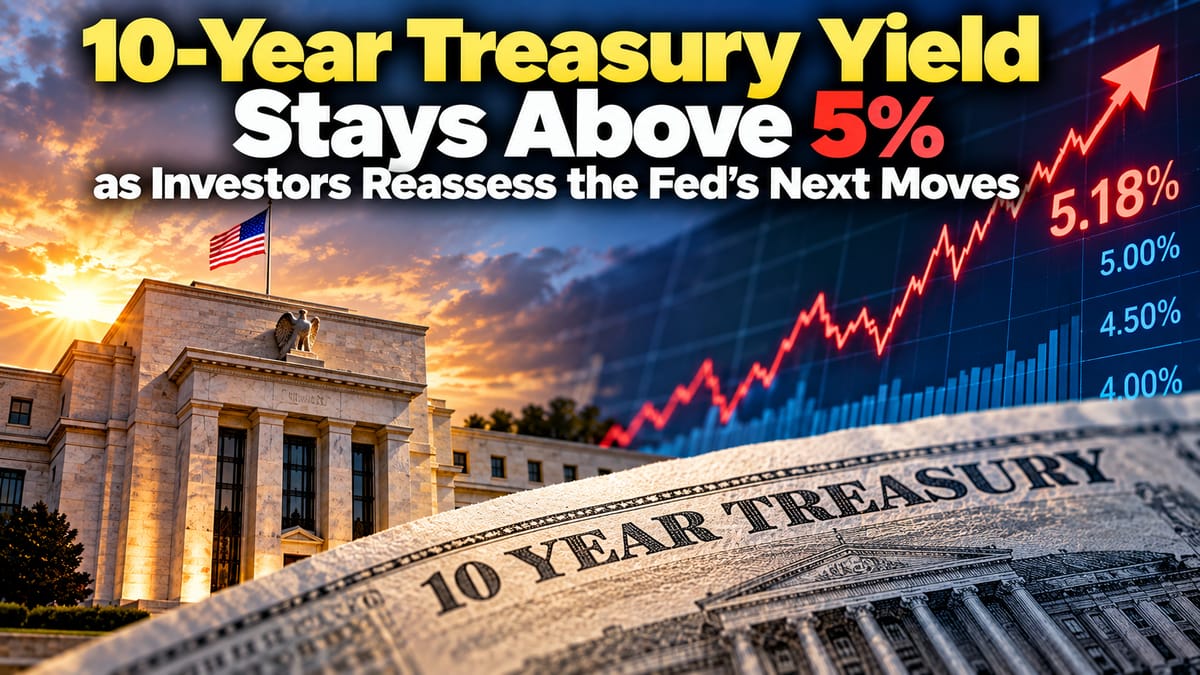
Even after the softer PCE figures reduced expectations for an immediate October rate increase, longer-term Treasury yields remained elevated. Reuters reported on October 1 that the 10-year Treasury yield had reached its highest level in more than two decades, limiting gold’s ability to capitalize fully on the softer inflation data.
This creates a difficult environment for bullion.
Gold does not generate interest income. When Treasury yields rise, investors have more incentive to consider interest-bearing securities, particularly when economic conditions appear strong enough to keep rates elevated.
The dollar also matters. A stronger dollar generally makes dollar-denominated gold more expensive for international buyers, potentially reducing demand at the margin.
The interaction between yields, currencies and commodities is therefore likely to remain important even after the jobs report passes.
Gold’s Volatility Has Become Part of the Story
September’s decline also demonstrated how quickly conditions can change in commodity markets.
Gold moved from strength earlier in the year into a sharp late-September correction, with the metal falling more than 3% on September 28 alone before partially recovering.
Such moves highlight the importance of distinguishing between the long-term role of gold in a portfolio and its short-term price behavior.
Gold can be used by investors for diversification, inflation protection or as a potential store of value during periods of uncertainty. None of those characteristics prevents the price from experiencing significant short-term swings.
The broader mechanics of market turbulence are covered in How Stock Market Volatility Works and What Causes Market Volatility. Although the article focuses on stocks, many of the underlying drivers of volatility—economic surprises, interest-rate expectations, investor positioning and changing risk sentiment—also affect commodities.
Oil Prices Are Adding Another Layer of Uncertainty
Gold’s September decline also occurred against a backdrop of rising energy prices.
That is significant because oil can influence both inflation expectations and monetary-policy expectations. If energy prices remain elevated, investors may worry that inflation will prove more persistent even when underlying price measures show signs of moderation.
Reuters reported that higher oil prices helped push Treasury yields higher after the September PCE report, limiting the positive effect that softer inflation might otherwise have had on gold.
This creates a complicated feedback loop.
Higher oil prices can increase inflation concerns. Persistent inflation can reduce expectations for easier monetary policy. Higher expected rates can lift yields and support the dollar. Those moves can then create additional pressure on gold.
As a result, gold investors are watching more than the bullion market itself.
What Gold Investors Are Watching in October
With the PCE report now released, several indicators are likely to remain central to the gold market as October begins.
Employment
Friday’s September jobs report could influence expectations for the Federal Reserve’s next policy decisions. Payroll growth, unemployment and wage growth will all matter.
Treasury Yields
The direction of 10-year Treasury yields will remain important because higher yields can increase the relative attractiveness of interest-bearing assets.
The U.S. Dollar
Currency movements can amplify or offset changes in gold prices. A stronger dollar can create an additional headwind for dollar-priced bullion.
Inflation
Although August PCE has now been released, investors will continue looking for evidence that inflation is moving sustainably toward the Federal Reserve’s 2% objective.
Oil and Geopolitical Risks
Energy prices and geopolitical developments can quickly change inflation expectations and demand for defensive assets.
The Next Move May Depend on the Combination of Data
Gold’s recent behavior shows why the market cannot be reduced to a simple inflation-versus-gold relationship.
September brought persistent inflation concerns, higher energy prices, rising Treasury yields and a stronger dollar, all of which contributed to the metal’s decline. Yet softer PCE inflation at the end of the month reduced expectations for an immediate October rate hike and provided some support.
The September employment report could now provide another piece of the puzzle.
A labor market that remains resilient could reinforce expectations for restrictive monetary policy, while signs of weakening employment could shift attention toward economic risks and the possibility of a less aggressive rate path.
For gold investors, the important issue is therefore not simply whether one report is positive or negative for bullion. It is how inflation, employment, Treasury yields, the dollar and Federal Reserve policy expectations interact.
After one of gold’s most volatile months of 2026, that broader economic picture is likely to remain at the center of the market as the fourth quarter gets underway.