Complete Guide to Bank Accounts and Account Types
A bank account is more than a place to keep money. The right account can make it easier to manage everyday spending, build savings, receive income, pay bills, transfer money and work toward long-term financial goals.
But banks offer many different account types, and each is designed for a particular purpose. A checking account may be convenient for daily transactions, while a savings account can help you build an emergency fund. Certificates of deposit can offer a fixed return in exchange for locking money away, while business accounts are designed around the needs of companies and entrepreneurs.
Understanding these differences can help you choose accounts that fit your financial situation instead of simply opening the first account a bank offers.
What Is a Bank Account?
A bank account is a financial account maintained by a bank or other regulated financial institution to hold and manage money.
Depending on the account type, you may be able to:
- Deposit money
- Withdraw cash
- Pay bills
- Receive wages or other income
- Transfer money
- Make purchases
- Earn interest
- Save toward specific goals
- Access loans or other financial services
Different accounts come with different rules, fees, interest rates and access options.
That is why choosing an account should begin with a simple question:
What do you want the account to help you accomplish?
Why People Use Bank Accounts
A bank account can provide several practical benefits.
Convenience
Instead of keeping large amounts of cash at home, you can store money electronically and access it through cards, transfers, ATMs or digital banking services.
Security
Keeping money with a regulated financial institution can reduce some of the risks associated with holding significant amounts of physical cash.
Money Management
Bank statements and transaction histories can make it easier to track income and spending.
Payments
Bank accounts can be used for bills, subscriptions, purchases, transfers and other payments.
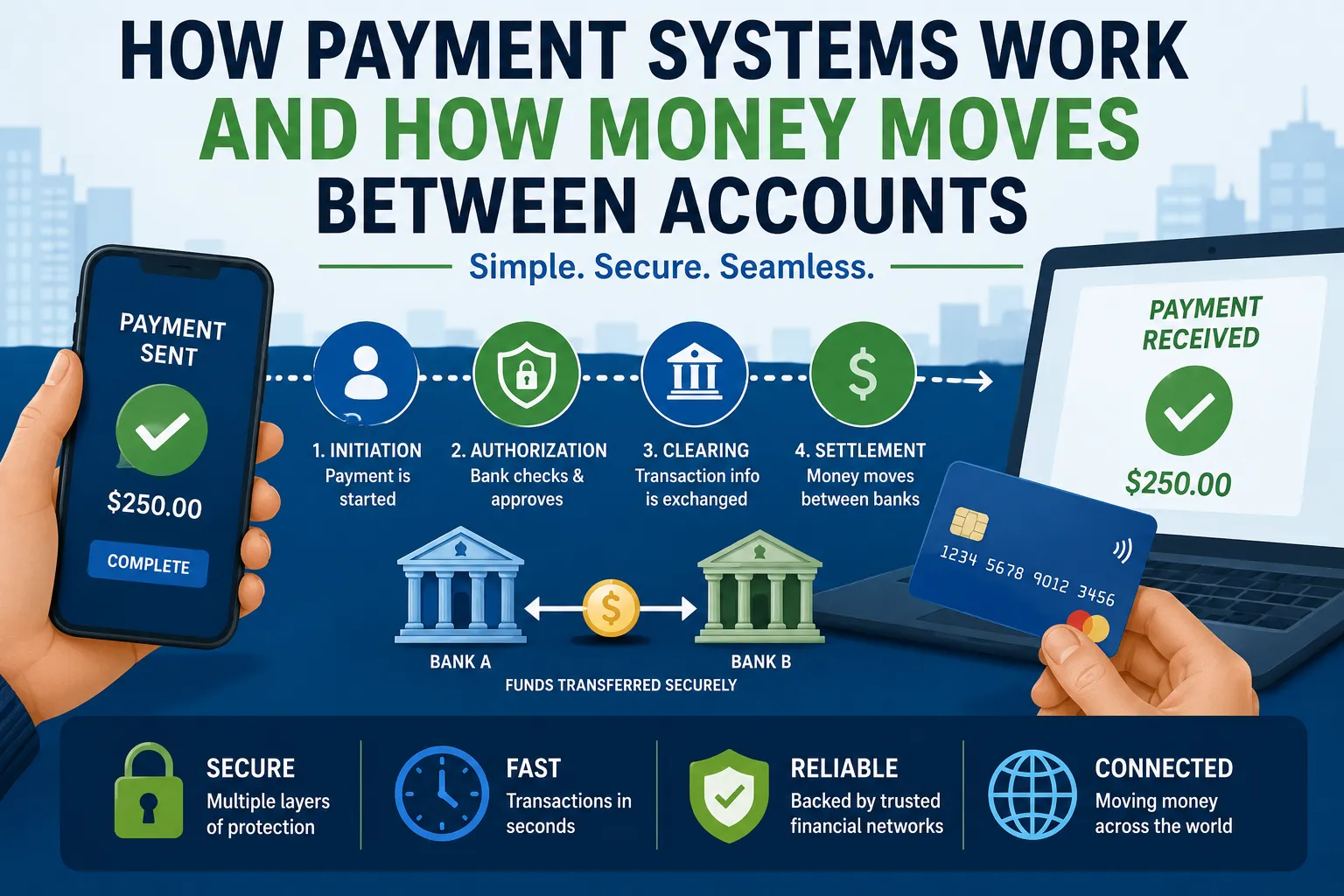
For a deeper look at how everyday transactions move through the banking system, see how payment systems work and how money moves between accounts.
Saving
Savings accounts and other deposit products can help separate money intended for future needs from everyday spending.
Financial History
Regular use of financial accounts can create records of deposits, payments and other transactions that may be useful when managing personal finances.
The Main Types of Bank Accounts
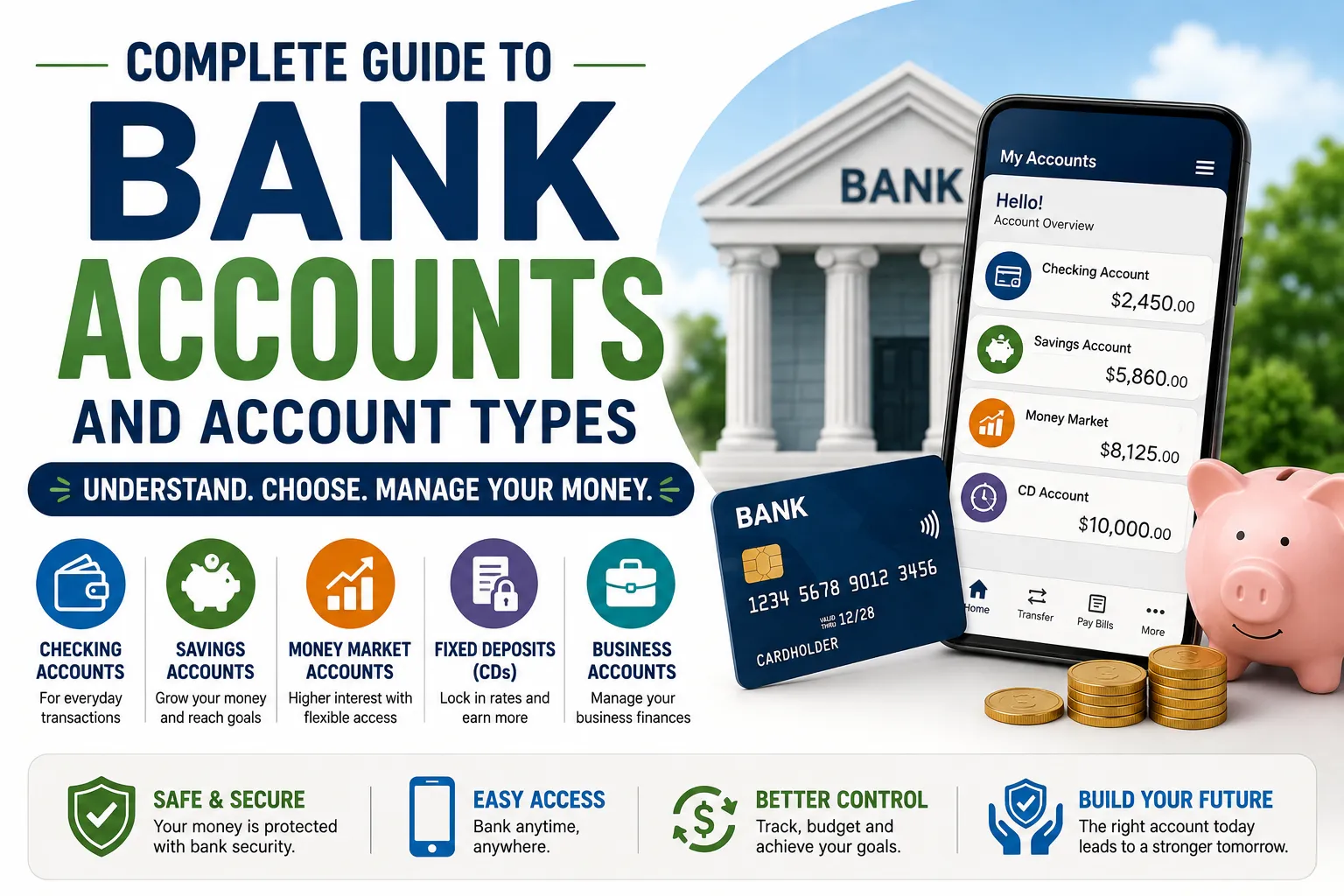
Although products vary between countries and institutions, the most common categories include:
- Checking or current accounts
- Savings accounts
- Money market accounts
- Certificates of deposit and fixed-term deposits
- Business accounts
- Joint accounts
- Student and youth accounts
- Specialized savings accounts
- Foreign-currency accounts
Each serves a different purpose.
Let’s examine them individually.
1. Checking or Current Accounts
A checking account, often called a current account in some countries, is primarily designed for everyday transactions.
You might use one to:
- Receive your salary
- Pay rent
- Pay utility bills
- Make purchases
- Withdraw cash
- Send money
- Receive transfers
- Set up recurring payments
The major advantage is accessibility.
You generally don’t want your everyday spending money locked away for months. A checking or current account gives you relatively convenient access to funds.
For a broader look at how these accounts function in everyday financial management, see the complete guide to checking accounts and everyday banking.
Features of Checking Accounts
Common features may include:
- Debit cards
- ATM access
- Online banking
- Mobile banking
- Bank transfers
- Direct deposits
- Bill payments
- Standing orders
- Account statements
Some accounts may also provide check-writing facilities, although the importance of checks varies significantly between countries.
Checking Account Fees
A checking account may come with fees for certain services.
Potential charges include:
- Monthly maintenance fees
- ATM fees
- Overdraft fees
- International transaction fees
- Transfer fees
- Cash-handling fees
- Replacement-card fees
Some banks waive certain fees if you maintain a minimum balance, receive regular deposits or meet other requirements.
Always check the fee schedule before opening an account.
If you want a more detailed breakdown of common charges and strategies for reducing them, see banking fees explained and how to avoid them.
2. Savings Accounts
A savings account is designed primarily for storing money you do not expect to spend immediately.
You might use one for:
- Emergency savings
- Holiday expenses
- Education
- A home deposit
- Major purchases
- Short-term financial goals
Savings accounts may pay interest on deposited funds, although rates vary considerably between products and institutions.
The main advantage is that a savings account can create a psychological and practical separation between money available for spending and money intended for the future.
Why Have a Separate Savings Account?
Keeping savings in the same account used for everyday purchases can make it easier to spend the money unintentionally.
A separate savings account creates a simple barrier.
For example:
Current account: monthly expenses
Savings account: emergency fund
Investment account: long-term investments
Separating money according to purpose can make financial management easier.
3. High-Yield Savings Accounts
Some banks offer savings accounts that pay higher interest rates than their standard savings products.
These are often marketed as high-yield savings accounts.
The appeal is straightforward:
Your money earns more interest while remaining relatively accessible.
However, a higher advertised rate should not be the only factor you consider.
Check:
- Whether the rate is variable
- Minimum balance requirements
- Monthly fees
- Withdrawal conditions
- Eligibility requirements
- Whether the advertised rate is promotional
- How frequently interest is credited
A high rate can lose some of its advantage if the account comes with significant fees or restrictions.
For more guidance on evaluating attractive savings rates and deciding whether moving your money makes sense, see what savers should check before moving their money to a high-yield savings account.
4. Money Market Accounts
A money market account is a deposit account that typically combines some characteristics of checking and savings products.
Depending on the institution and jurisdiction, it may offer:
- Interest earnings
- Debit-card access
- Check-writing capabilities
- Higher minimum balances
- Transaction restrictions
Money market accounts can be useful for people who want some combination of accessibility and interest earnings.
However, the exact features vary significantly between banks.
Don’t assume that every product with “money market” in its name works the same way.
5. Certificates of Deposit and Fixed-Term Deposits
A certificate of deposit, commonly known as a CD, allows you to deposit money for a specified period in exchange for an agreed interest rate.
Similar products are often called fixed deposits or term deposits in other countries.
Terms can range from relatively short periods to several years.
For example, a bank might offer:
- 3-month terms
- 6-month terms
- 12-month terms
- 24-month terms
- Longer terms
The key feature is that your money is committed for a defined period.
Why Use a Fixed-Term Deposit?
The main attraction is predictability.
If the product provides a fixed rate, you know the interest rate for the agreed term.
This can be useful when you:
- Don’t need immediate access to the money.
- Want predictable returns.
- Prefer not to monitor changing savings rates.
- Have a specific financial goal and timeline.
The Downside of CDs and Fixed Deposits
The main disadvantage is reduced flexibility.
Depending on the product, withdrawing money before maturity may result in:
- An early-withdrawal penalty
- Lost interest
- Additional fees
- Restrictions on access
Before locking money away, make sure you won’t need it during the term.
Your emergency fund generally should not be placed somewhere that makes emergency access difficult.
6. Business Bank Accounts
Business accounts are designed for companies, partnerships, sole proprietors and other commercial activities.
They can help separate business finances from personal money.
Depending on the institution, business accounts may provide:
- Business debit cards
- Payment processing
- Payroll services
- Business transfers
- Multiple authorized users
- Cash deposits
- Accounting integrations
- Business loans and credit facilities
Keeping business and personal transactions separate can also make bookkeeping and financial reporting easier.
Why Businesses Should Separate Their Finances
Mixing personal and business expenses can create confusion.
For example, imagine a business owner receives customer payments into a personal account while paying business suppliers from the same account.
It can become difficult to determine:
- How much the business earned
- How much was spent
- Which expenses were business-related
- How much money the owner personally contributed
- How much the owner withdrew
A dedicated business account creates clearer financial records.
7. Joint Bank Accounts
A joint account is held by two or more people.
It may be used by:
- Married couples
- Partners
- Family members
- Business partners
Joint accounts can simplify shared expenses.
For example, two partners might use one account for:
- Rent or mortgage payments
- Utilities
- Groceries
- Household expenses
- Shared savings goals
However, joint accounts also require trust.
The account holders need to understand how withdrawals, transfers and other transactions are handled.
Joint Accounts Require Clear Agreements
Before opening a joint account, discuss:
- Who contributes money
- What the money is for
- How withdrawals are handled
- Whether both people need to approve certain transactions
- What happens if the relationship ends
- What happens if one account holder dies
The exact legal consequences of joint ownership vary by jurisdiction and account agreement.
8. Student Bank Accounts
Student accounts are designed around the financial circumstances of students.
They may offer features such as:
- Reduced fees
- Lower minimum balances
- Debit cards
- Mobile banking
- Educational resources
- Promotional benefits
Eligibility requirements often depend on age, enrollment status or institution.
A student account can be useful while studying, but remember that promotional conditions may change once you graduate or reach a specified age.
9. Youth and Children’s Accounts
Some banks offer accounts designed for children and teenagers.
These accounts can help young people learn about:
- Saving
- Spending
- Budgeting
- Banking
- Financial responsibility
Depending on the product, a parent or guardian may have some level of oversight.
Teaching children how bank accounts work can provide useful financial skills before they begin managing money independently.
10. Foreign-Currency Accounts
A foreign-currency account allows customers to hold funds in currencies other than their primary domestic currency.
These accounts can be useful for people who:
- Receive international payments
- Travel frequently
- Work with overseas clients
- Import or export goods
- Hold assets in multiple currencies
- Receive income from another country
However, foreign-currency accounts may involve additional fees and exchange-rate considerations.
Understanding Interest Rates
Interest is one of the most important differences between bank accounts.
For savings products, the bank generally pays you interest for allowing it to use your deposited funds.
The rate may be expressed as:
- Annual interest rate
- Annual percentage yield
- Effective annual rate
- Another locally applicable measure
The terminology varies by country.
The important question is:
How much will my money actually earn after considering the rate, compounding, fees and taxes where applicable?
Simple vs. Compound Interest
Simple Interest
Simple interest is calculated primarily on the original principal.
For example, if you deposit $10,000 at a simple annual rate of 5%, one year’s interest would be $500.
Compound Interest
Compound interest allows previously earned interest to become part of the balance on which future interest is calculated.
Over time, this can create a snowball effect.
The more frequently interest compounds, the more significant the difference can become, although the advertised annual rate and actual yield should always be compared carefully.
What Is APY?
APY stands for Annual Percentage Yield.
It generally accounts for the effect of compounding over a year.
When comparing savings products, APY can make it easier to compare the actual annual earning potential of accounts with different compounding schedules.
Always check the definition used by the bank and the applicable local regulations.
What Is an Account Minimum Balance?
Some bank accounts require customers to maintain a minimum balance.
For example, an account may require you to keep a certain amount deposited to:
- Avoid a monthly fee
- Earn a particular interest rate
- Qualify for account benefits
- Remain eligible for certain services
If you regularly spend most of the money in your account, an account with a high minimum-balance requirement may not be suitable.
Understanding Bank Fees
Fees can quietly reduce the value of an account.
Before opening one, look for:
Monthly Maintenance Fees
Some accounts charge a recurring fee for maintaining the account.
ATM Fees
Using another institution’s ATM may incur a charge.
Transfer Fees
Some transfers may carry fees, particularly international transactions.
Overdraft Fees
These may apply when transactions exceed the available balance, depending on the account and local rules.
Foreign Transaction Fees
International card purchases or withdrawals may involve additional charges.
Early Withdrawal Fees
Fixed-term products may charge penalties for withdrawing funds before maturity.
How to Compare Bank Accounts
Don’t compare accounts based on one feature.
Create a checklist.
| Feature | Account A | Account B | Account C |
|---|---|---|---|
| Monthly fee | |||
| Interest rate | |||
| Minimum balance | |||
| ATM access | |||
| Transfer fees | |||
| Mobile banking | |||
| Withdrawal restrictions | |||
| Customer support | |||
| Deposit insurance |
This makes it easier to see the total value of each account.
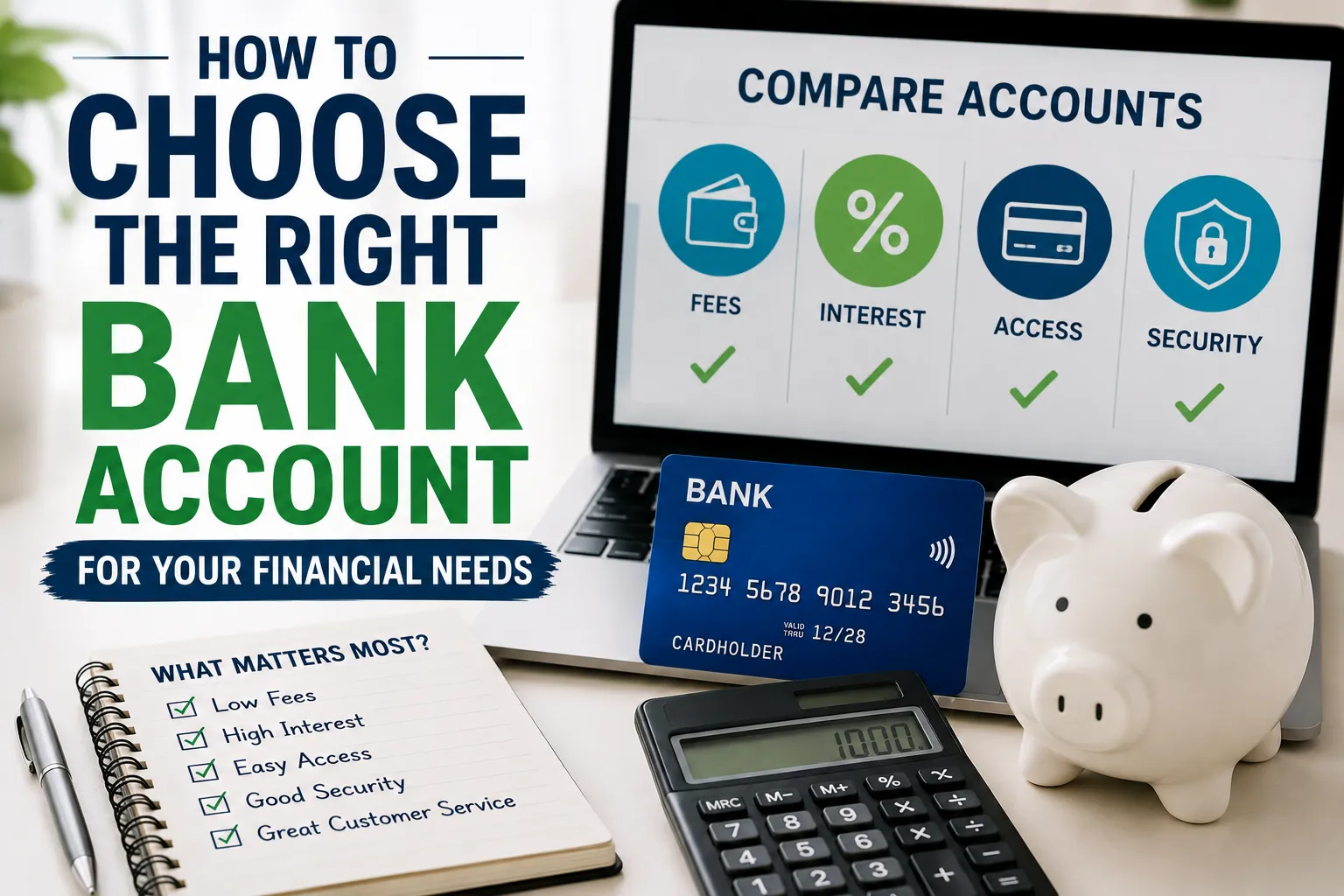
If you are comparing accounts or other financial products more broadly, you can also learn how to choose the right bank account for your financial needs by considering your goals, access requirements, fees and account features.
What Is Deposit Insurance?
In some countries, deposit insurance protects eligible deposits up to a specified limit if a covered bank fails.
The organization responsible, coverage limits and eligible accounts vary by country.
Before depositing a large amount of money, understand:
- Whether the institution participates in a deposit-protection scheme
- Which accounts qualify
- The coverage limit
- Whether the limit applies per depositor, per institution or according to another structure
Do not assume that every financial institution or every financial product has identical protection.
Bank Accounts vs. Mobile Money Accounts
In many countries, mobile money services provide convenient ways to store and transfer funds.
A mobile money wallet and a traditional bank account are not necessarily the same thing.
They may differ in:
- Regulation
- Deposit structure
- Interest earnings
- Transaction limits
- Access methods
- Credit products
- Deposit protection
- Available services
Both can be useful, depending on your financial needs.
Some people use both: a bank account for broader financial management and mobile money for convenient everyday transactions.
Digital Banking and Online Accounts
Modern banking increasingly takes place through websites and mobile apps.
Digital banking can allow customers to:
- Check balances
- Transfer money
- Pay bills
- Deposit checks where supported
- Freeze cards
- Download statements
- Manage beneficiaries
- Monitor transactions
Some banks operate primarily online, while traditional banks may offer both physical branches and digital services.
For a deeper explanation of how these services operate, see how digital banking and online banking work.
Are Online Banks Safe?
An online bank can be legitimate and secure if it is properly regulated and follows applicable financial and cybersecurity requirements.
However, customers should verify the institution before depositing money.
Check:
- Regulatory status
- Deposit-protection eligibility
- Physical or registered presence where relevant
- Customer-service channels
- Security practices
- Terms and conditions
Do not transfer money to an institution simply because its website looks professional.
Bank Account Security
You are an important part of your account’s security.
Good practices include:
- Use strong, unique passwords.
- Enable multi-factor authentication when available.
- Never share your PIN.
- Don’t disclose one-time authentication codes.
- Avoid clicking suspicious banking links.
- Keep your phone and computer updated.
- Monitor account activity.
- Report suspicious transactions quickly.
- Avoid conducting sensitive banking activity on untrusted networks.
Your bank will have its own security procedures, but basic digital hygiene remains essential.
For a dedicated guide to protecting your banking credentials and accounts, see how to protect your bank account from fraud.
Beware of Banking Scams
Criminals often impersonate banks, financial institutions and government agencies.
Common tactics include:
- Fake text messages
- Phishing emails
- Fake customer-service calls
- Fraudulent websites
- Social-engineering attacks
- Fake investment opportunities
- Requests for one-time passwords
- Urgent warnings about supposed account problems
A legitimate-looking message is not necessarily legitimate.
If you receive an unexpected request for sensitive information, contact your bank through an official channel rather than using the contact details supplied in the suspicious message.
How Many Bank Accounts Should You Have?
There is no universal ideal number.
One person may be perfectly comfortable with:
- One everyday account
- One savings account
Another might benefit from separate accounts for:
- Bills
- Emergency savings
- Short-term goals
- Long-term savings
- Business finances
The goal is not to accumulate accounts.
The goal is to make your financial system easier to manage.
A Simple Three-Account System
For people who want a straightforward structure, consider:
Account 1: Everyday Spending
Use it for:
- Groceries
- Transportation
- Bills
- Regular purchases
Account 2: Emergency Savings
Use it for unexpected expenses such as:
- Urgent repairs
- Medical costs
- Temporary loss of income
- Essential emergencies
Account 3: Goal-Based Savings
Use it for planned expenses such as:
- Travel
- Education
- Home improvements
- A vehicle
- A major purchase
This approach creates clear boundaries between different types of money.
Should Your Emergency Fund Be in a Bank Account?
For most people, emergency money needs to be accessible.
A savings account can be appropriate because it can provide relatively quick access while potentially earning interest.
The exact amount needed depends on your income, expenses, job stability and personal circumstances.
The key principle is that emergency money should not be invested in something where a sudden withdrawal could create unnecessary losses or restrictions.
Bank Accounts and Budgeting
A bank account can support a budgeting system.
For example, you can review your monthly statement and categorize transactions into:
- Housing
- Food
- Transportation
- Utilities
- Entertainment
- Debt payments
- Savings
- Investments
- Other expenses
This can reveal where your money is actually going.
A budget based on real transaction data is often more useful than one based on assumptions.
Automating Your Savings
Automation can make saving easier.
You might arrange for a fixed amount to move automatically from your everyday account into savings after receiving your income.
This approach is sometimes called paying yourself first.
Instead of saving whatever remains at the end of the month, you make saving part of the initial financial plan.
Even relatively small automated transfers can add up over time.
Bank Accounts and Credit Scores
A common misconception is that simply having a bank account automatically builds a strong credit score.
Generally, a deposit account and a credit account serve different purposes.
Credit scores are typically influenced by information related to borrowing and repayment, depending on the credit-reporting system in your country.
A bank account can still be useful for managing money and paying bills, but maintaining a checking or savings account alone should not be confused with building credit history.
Overdrafts Explained
An overdraft occurs when a transaction causes an account balance to fall below zero or otherwise exceeds the available funds under an overdraft arrangement.
Depending on the bank and local rules, overdrafts may involve:
- Fees
- Interest
- Credit arrangements
- Transaction declines
Some accounts allow customers to opt in or out of particular overdraft services.
The safest approach is to understand exactly how your account handles transactions when there isn’t enough money available.
How to Avoid Unnecessary Bank Fees
A few habits can reduce avoidable costs.
Monitor Your Balance
Know how much money is available before making large transactions.
Use Your Bank’s ATMs Where Practical
This can help reduce third-party ATM fees.
Choose the Right Account
Don’t pay for features you don’t need.
Check Fee Waivers
Some banks waive fees if certain conditions are met.
Review Statements
Small recurring fees can go unnoticed for months.
Compare Accounts Periodically
Bank products change, and another account may eventually offer better terms.
How to Close a Bank Account
Closing an account should be done carefully.
Before closing:
- Review recurring payments.
- Move direct deposits.
- Cancel automatic transfers.
- Update subscriptions.
- Transfer remaining funds.
- Download important statements.
- Check for pending transactions.
- Follow the bank’s closure procedure.
- Confirm the account is actually closed.
Don’t simply stop using an account.
An account can sometimes remain open and continue accumulating fees or other charges.
What to Do When Opening a New Account
Before opening an account, gather the information the bank requires.
Depending on the institution and jurisdiction, you may need:
- Government-issued identification
- Proof of address
- Tax information
- Contact details
- Employment or income information
- Business registration documents for business accounts
Requirements vary by bank and account type.
Questions to Ask a Bank Before Opening an Account
Ask:
- What fees does this account charge?
- Is there a minimum balance?
- Does the interest rate change?
- How often is interest paid?
- Are there withdrawal restrictions?
- What ATM network can I use?
- Are transfers free?
- Are international transactions available?
- Is the account covered by applicable deposit protection?
- What happens if I close the account?
- Are there introductory or promotional conditions?
These questions can prevent unpleasant surprises.
Choosing the Right Account for Your Goal
Your financial goal should influence the type of account you choose.
| Goal | Potentially suitable account |
|---|---|
| Everyday spending | Checking/current account |
| Emergency fund | Savings account |
| Short-term savings | Savings/high-yield savings |
| Fixed-term goal | CD/fixed deposit |
| Shared household expenses | Joint account |
| Business operations | Business account |
| Student finances | Student account |
| Holding foreign currency | Foreign-currency account |
These are general categories rather than universal recommendations.
The best option depends on the product terms available in your country.
Common Bank Account Mistakes
Choosing an Account Based Only on the Interest Rate
A high rate isn’t necessarily valuable if the account has restrictive conditions or high fees.
Ignoring Fees
Small monthly charges can add up significantly over time.
Keeping All Money in One Account
Combining spending and savings can make budgeting harder.
Locking Up Emergency Money
A fixed-term product may be unsuitable for funds you might need immediately.
Not Reading the Terms
Important restrictions may be buried in account documentation.
Ignoring Security
Even a well-regulated bank account can be compromised if customers share passwords or authentication codes.
Keeping Unused Accounts Open
Old accounts can create unnecessary administrative work and potentially fees.
How to Organize Multiple Bank Accounts
If you have several accounts, organization becomes important.
Give each account a clear purpose.
For example:
Current Account — Everyday Spending
Savings Account — Emergency Fund
Savings Account — Home Purchase
Fixed Deposit — Long-Term Goal
Review your accounts periodically and ask whether each one still serves a useful purpose.
If you cannot explain why you have an account, it may be worth reconsidering whether you need it.
Bank Accounts for Different Life Stages
Your banking needs can change over time.
Students
Focus on low fees, accessibility and learning good money-management habits.
Young Professionals
You may need efficient salary deposits, bill payments, savings and credit services.
Families
Shared expenses, emergency savings and goal-based accounts can become more important.
Business Owners
Separate business banking can simplify financial management.
Retirees
Accessibility, predictable income and low fees may become particularly important.
Your account structure should evolve with your financial circumstances.
Bank Accounts and the Broader Banking System
Bank accounts don’t operate in isolation.
Commercial banks are influenced by broader monetary and financial conditions, including interest rates set by central banks.
Understanding how central banks affect commercial banks can help explain why deposit rates, lending rates and other banking conditions can change over time.
Rate decisions can also influence how households think about saving and borrowing. For example, changes in Australian interest rates can affect the attractiveness of savings products and the cost of borrowing, as discussed in how an Australian rate decision could change saving and borrowing strategies.
Bank Accounts Are Tools, Not Financial Goals
Opening a new account does not automatically improve your finances.
The account is simply a tool.
The more important questions are:
- Are you spending within your means?
- Are you building savings?
- Are you managing debt?
- Are you protecting emergency funds?
- Are you investing appropriately for long-term goals?
- Are you monitoring fees?
- Are you protecting your financial information?
A sophisticated collection of bank accounts cannot compensate for a financial plan that does not work.
A Practical Bank Account Checklist
Before opening or changing an account, review:
Purpose
- What will I use this account for?
- Do I need easy access to the money?
Cost
- Is there a monthly fee?
- Are there ATM charges?
- Are transfers charged?
- Are there overdraft fees?
Interest
- Does the account pay interest?
- Is the rate fixed or variable?
- How often is interest calculated and paid?
- Are there conditions for earning the advertised rate?
Access
- Can I use a debit card?
- Are ATMs readily available?
- Is mobile banking available?
- Can I make transfers easily?
Protection
- Is the institution regulated?
- Is the account eligible for applicable deposit protection?
Restrictions
- Is there a minimum balance?
- Are withdrawals limited?
- Are there penalties for early withdrawal?
The Right Bank Account Can Simplify Your Financial Life
There is no single bank account that is perfect for everyone.
A student may prioritize low fees and convenient digital banking. A family may need shared accounts and organized savings. A business owner may need dedicated commercial services. Someone building an emergency fund may care more about accessibility and interest than transaction features.
The key is matching the account to its purpose.
Before opening an account, look beyond the advertised interest rate or promotional offer. Examine fees, access, minimum balances, withdrawal rules, security, customer service and applicable deposit protection.
Most importantly, keep your banking system simple enough that you understand where your money is and what each account is designed to do.
A good bank-account strategy is not about having the most accounts—it is about having the right accounts, using them intentionally and regularly reviewing whether they still fit your financial goals.